


 SK Hynix Shares Fall as Workers Reject Wage Deal
  New Zealand Moves to Ban Social Media for Children Under 16
  Trump Buys SpaceX Shares After Record IPO
  U.S. Disrupts China-Linked Hacking Campaign Targeting Government Agencies
  OpenAI Data Center Chief Chris Malone Exits Ahead of Planned 2027 Listing
  PayPal Shares Sink as $50 Billion Takeover Bid Collapses
  Itochu Offers $1.56 Billion to Privatize Dentsu Soken
  Nvidia Pauses AI Cloud Financing Deals Amid Antitrust Concerns
  BofA Names ASML Top Semiconductor Equipment Pick on Growth, Valuation
  Google Changes EU Spam Policy Amid Antitrust Scrutiny
  Jefferies Names AMEC Top China Semiconductor Equipment Pick
  Salesforce Shares Surge as AI Demand Powers Q2 Earnings Beat
  HP Stock Drops 9% Despite Q3 Earnings Beat and Raised 2026 Outlook
  Nvidia Options Price in $280 Billion Earnings Swing
  SoftBank Eyes $20 Billion Bond Sale to Refinance OpenAI Loan
  Unitree Shares Plunge 45% After Blockbuster IPO, Raising China Tech Bubble Fears
  Nvidia Reportedly Eyes $13 Billion Hugging Face Acquisition


 Add as a preferred source on Google
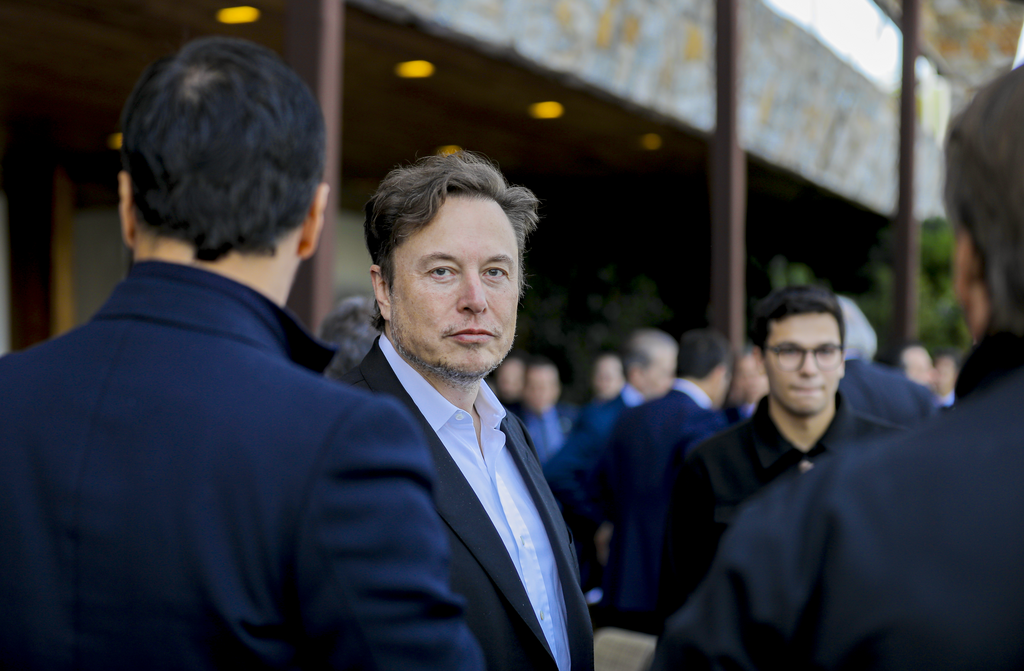
Tesla CEO Elon Musk has cautioned investors and technology enthusiasts that the early production rate of the company’s highly anticipated Cybercab robotaxi and Optimus humanoid robot will be “agonizingly slow” before accelerating significantly over time. His comments highlight the manufacturing challenges Tesla faces as it moves deeper into autonomous driving technology and robotics, two areas that are increasingly central to the company’s long-term valuation and strategy.
Tesla’s market capitalization, currently around $1.39 trillion, is driven largely by investor optimism surrounding its self-driving capabilities and humanoid robots, even though electric vehicle sales remain the company’s primary source of revenue and profit. Responding on X to a post claiming Cybercab production could begin in less than 100 days, Musk explained that manufacturing speed depends heavily on complexity. According to him, production rates are inversely proportional to the number of new parts and manufacturing steps required.
“For Cybercab and Optimus, almost everything is new, so the early production rate will be agonizingly slow, but eventually end up being insanely fast,” Musk said. This reflects Tesla’s approach of enduring early bottlenecks in exchange for long-term scalability.
The Cybercab is a fully autonomous, two-seater robotaxi designed without traditional manual controls such as a steering wheel or pedals. Tesla has previously stated that it remains on track to begin volume production of the Cybercab in 2026, while Optimus humanoid robot production is expected to start, hopefully, toward the end of that year.
Tesla has already made progress in robotaxi testing. In December, Musk revealed that the company was testing autonomous vehicles without safety monitors in the front passenger seat. Last year, Tesla also launched a limited robotaxi service in Austin, Texas, using Model Y vehicles equipped with Full Self-Driving software. These early robotaxi operations were geo-fenced and included human safety monitors.
Musk has repeatedly emphasized that Optimus could eventually surpass Tesla’s vehicle business in value. He believes humanoid robots could unlock massive economic potential by handling tasks humans are unwilling or unable to perform, positioning Tesla at the forefront of AI, robotics, and autonomous mobility.







