


 Bangladesh GDP Growth Accelerates to 4.6% on Industrial Rebound
  France to Release 10 Million Barrels of Diesel to Ease Fuel Prices
  Oil Prices Trim Gains After Trump Rules Out Iran Strikes Before Midterms
  Crypto Market Selloff Wipes Out $100B as Bitcoin Falls Below $83K
  Gold Prices Fall as Fed Signals Another Rate Hike
  US Treasury Yields Ease After Strong 10-Year Auction as Global Bonds Struggle
  Wall Street Falls as Oil Prices Rise and Tech Stocks Slide
  Iran Refuses to Halt Uranium Enrichment Amid US Nuclear Demands
  European Stocks Fall as Oil Rises Ahead of Fed Minutes
  Oil Prices Rise as Gulf Hurricane and Middle East Supply Risks Mount
  Gold Prices Fall as Stronger Dollar Weighs on Bullion


 Add as a preferred source on Google
Trade surplus in excess of USD 1bn used to prompt cheers in the markets but this was not the case for July's USD 1.3bn. Perhaps markets are no longer concerned about the current account (C/A) deficit, which has indeed narrowed to a sustainable 2% of GDP in 1H15. More importantly though, markets seem to have fully understood that poor import growth (and not strong export growth) has been driving Indonesia's trade surplus so far this year.
The holiday distortions mean that we can't just single out the July trade data. Still, for the year-to-date, imports are down by close to 20%. It is not simply due to currency valuation as the rupiah has lost about 10% of its value against the dollars. Slower underlying demand must have explained the other 10%-pt fall in imports this year.
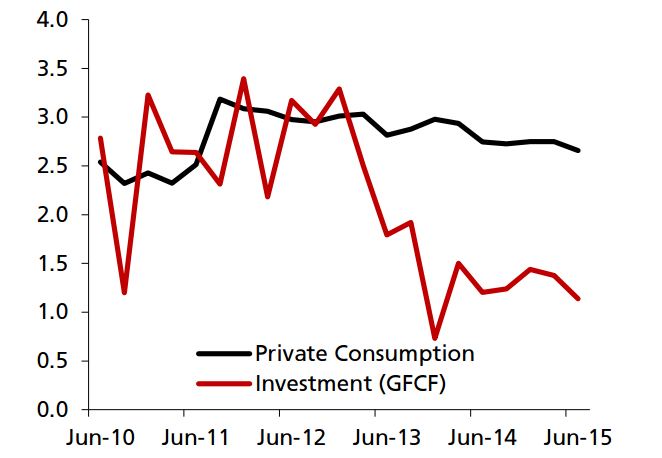
Investment growth is the biggest drag to overall GDP growth this year. A lot has been said about the moderation in consumption but consumption growth is still trending a decent 5%. It is investment growth that has been disappointing in 1H15 and the government was partly to blame. Up until mid-July, disbursement of capital expenditure was only about 15% of the full-year's target. Given the poor sentiment in the private sector, the economy needs this acceleration in public investment to provide the much-needed support.
Until there are signs that export growth has turned the corner, a wider trade surplus may only mean a further slump in domestic demand. And this is a worrying sign at a time when there are plenty of downside risks to GDP growth.







