


 FDA Adds Fatal Risk Warning to J&J and Legend Biotech’s Carvykti Cancer Therapy
  Is space worth the cost? Accounting experts say its value can’t be found in spreadsheets
  Eli Lilly’s Inluriyo Gains FDA Approval for Advanced Breast Cancer Treatment
  Neuralink Plans High-Volume Brain Implant Production and Fully Automated Surgery by 2026
  Rice feeds billions of people – but its role in fueling climate change is growing
  Trump Signs Executive Order to Boost AI Research in Childhood Cancer
  NASA Resumes Cygnus XL Cargo Docking with Space Station After Software Fix
  Blue Origin New Glenn Rocket Explodes During Launch Pad Test, Delaying Space Ambitions
  Drug pollution in water is making salmon take more risks – new research
  SpaceX’s Starship Completes 11th Test Flight, Paving Way for Moon and Mars Missions
  Cogent Biosciences Soars 120% on Breakthrough Phase 3 Results for Bezuclastinib in GIST Treatment
  Rise of the Zombie Bugs takes readers on a jaw-dropping tour of the parasite world
  SpaceX Prioritizes Moon Mission Before Mars as Starship Development Accelerates
  Swimming in the sweet spot: how marine animals save energy on long journeys


 Add as a preferred source on Google
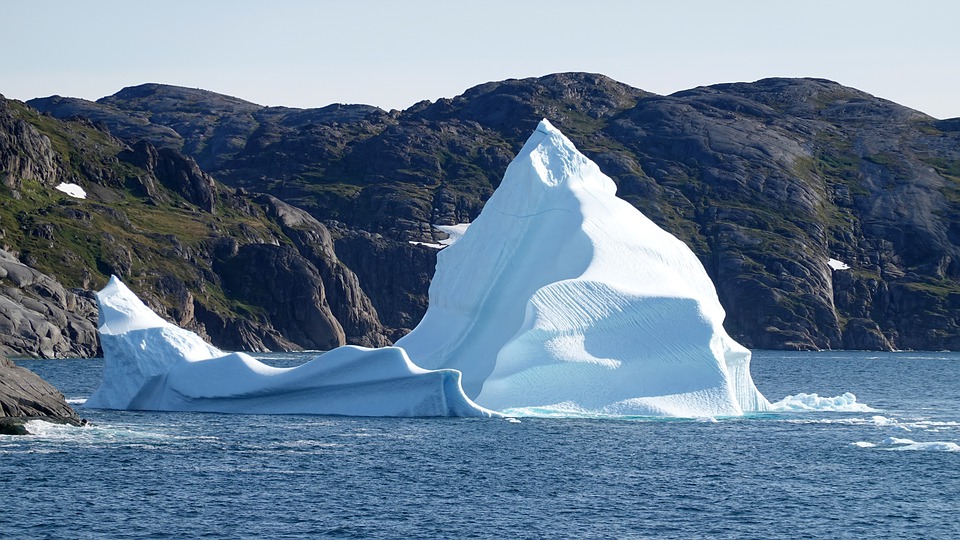
The warming global temperatures from climate change have dangerous consequences that will affect the world in the long run in the form of rising sea levels among others. As the climate change problem remains, a satellite image reveals that Greenland’s ice sheet has lost a significant amount of ice.
Greenland and Antarctica are the two regions that will be affected by climate change the most due to the amount of ice they have. Satellite images have now shown the toll climate change is taking on Greenland, with a large chunk of the Nioghalvfjerdsfjorden Glacier breaking off. Researchers revealed that the ice sheet has lost 70 square miles or 113 square kilometers as a result of the rising temperatures. 2019 was the hottest year for the icy country and the Arctic region is already warming twice as fast.
“When you observe large parts of an ice shelf breaking off, you do raise an eyebrow, but with current developments in the Arctic, there is also the realization that this is to be expected,” said Dr. Niels J. Korsgaard of The Geological Survey of Denmark and Greenland. “Temperatures in the Arctic are rising faster than the global average. More heat is available from air and ocean to melt away the bottom and surface of ice shelves, and the thinning ice shelves are more susceptible to breaking up.”
According to Professor Jason Box, also from the same organization, the focus should now be on the progressively melting ice shelf in the Arctic. This ice shelf also happens to be the largest remaining ice shelf in the frozen continent.
Previously, a study published in the journal Nature Climate Change found that the ice caps in the world’s polar regions are now melting at a rate that now matches the worst-case scenario predictions made by the Intergovernmental Panel on Climate Change or IPCC. The researchers from the University of Leeds found that should the rate the ice caps are melting continue, this will lead to the rise of sea levels by 6.7 inches.
Between 1992 and 2017 alone, Greenland and Antarctica have already lost an overall 6.4 trillion tones of ice.







