


 U.S. Markets Slip Amid Iran Conflict Uncertainty as Oil Prices Retreat
  Iran-Israel War Sparks Global Oil Crisis as Tankers Burn in Gulf Waters
  Asia FX Steady as Iran War Signals and U.S. Inflation Data Weigh on Sentiment
  Dollar Strengthens Amid Oil Price Surge and Inflation Fears
  Gold Prices Climb Above $5,200 as Iran War Uncertainty and Inflation Data Loom
  Trump Administration Launches Trade Investigations Against 16 Countries Over Industrial Overcapacity
  Iran-U.S. Oil Tensions Escalate as Revolutionary Guards Threaten Strait of Hormuz Blockade
  IEA Plans Record Emergency Oil Release Amid Iran Strait of Hormuz Crisis
  IEA Releases Record 400 Million Barrels of Oil Amid U.S.-Iran War
  Gold Prices Slip as U.S.-Israel-Iran War Fuels Dollar and Oil Demand
  Venezuela Names Paula Henao as New Oil Minister Amid U.S.-Led Industry Overhaul
  Bank of Japan Expected to Hold Rates at 0.75% Before June Hike Amid Middle East War Uncertainty
  U.S. Solar Market Contracts in 2025 as Trump Rolls Back Renewable Energy Incentives
  RBA Set for Back-to-Back Rate Hikes, Westpac Forecasts
  UK Housing Market Slows Amid Geopolitical Tensions and Mortgage Rate Fears
  U.S.-Israel War on Iran Sends Crude Oil Prices Surging Amid Strait of Hormuz Tensions
  U.S. Futures Slide as Oil Prices Surge on Middle East Shipping Attacks


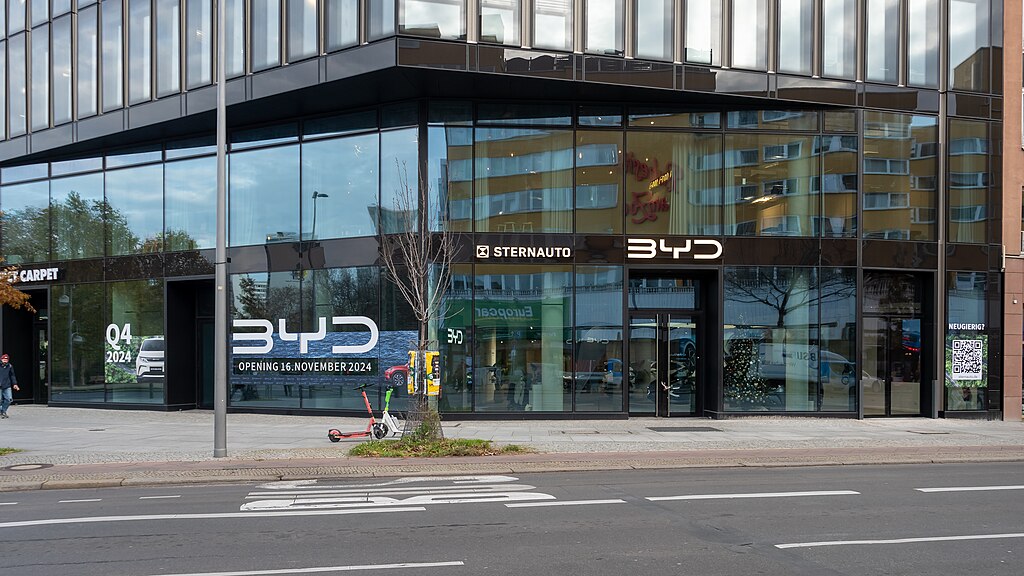
Shares of major Chinese electric vehicle (EV) manufacturers climbed sharply on Tuesday after the European Commission outlined conditions that could allow China-based automakers to avoid import tariffs in the European Union. The news boosted investor confidence in Chinese EV stocks, lifting both Hong Kong-listed automakers and the broader Hang Seng Index.
BYD, one of China’s largest EV makers and a key player in the European market, rose 3.1% in Hong Kong trading. Other leading EV companies also posted gains, with Li Auto advancing 1.1%, NIO increasing 1.4%, and Xpeng jumping 3.1%. Additional automakers such as Zhejiang Leapmotor Technology, Geely Automobile Holdings, and Chery Automobile saw share prices rise between 1% and 3%, contributing to a roughly 1% gain in the Hang Seng Index. On the mainland, SAIC Motor added around 1%.
The rally followed an announcement from the European Commission on Monday, which detailed scenarios under which Chinese EV manufacturers could avoid tariffs by agreeing to minimum pricing levels for vehicles sold in Europe. The Commission also indicated it would consider Chinese investments within the EU when assessing trade measures, a signal that cooperation could mitigate some of the impact of tariffs.
Europe introduced tariffs on Chinese-made EVs in 2024, following similar action by the United States. However, EU duties were lower, capped at around 35%, which still allowed Chinese automakers to expand their presence in the region. BYD has notably gained market share in Europe and recently surpassed Tesla in certain segments, highlighting the growing competitiveness of Chinese electric vehicles.
European regulators have expressed concern over intense competition from lower-priced Chinese EVs, which they believe could pressure local automakers. At the same time, Chinese manufacturers are increasingly focused on overseas expansion as domestic competition intensifies. A prolonged price war in China’s EV market has squeezed margins, while slowing economic growth and reduced government subsidies have weighed on local demand.
Against this backdrop, Europe has emerged as a strategic growth market. BYD and other Chinese automakers have outlined plans to expand sales networks and even build manufacturing plants in the region, underscoring the long-term importance of the European EV market despite ongoing trade tensions.













