


 Japan Economy Poised for Q4 2025 Growth as Investment and Consumption Hold Firm
  Japanese Pharmaceutical Stocks Slide as TrumpRx.gov Launch Sparks Market Concerns
  Dollar Steadies Ahead of ECB and BoE Decisions as Markets Turn Risk-Off
  Gold Prices Slide Below $5,000 as Strong Dollar and Central Bank Outlook Weigh on Metals
  Dow Hits 50,000 as U.S. Stocks Stage Strong Rebound Amid AI Volatility
  Asian Stocks Slip as Tech Rout Deepens, Japan Steadies Ahead of Election
  Silver Prices Plunge in Asian Trade as Dollar Strength Triggers Fresh Precious Metals Sell-Off
  Fed Governor Lisa Cook Warns Inflation Risks Remain as Rates Stay Steady
  Bank of Japan Signals Readiness for Near-Term Rate Hike as Inflation Nears Target
  China Extends Gold Buying Streak as Reserves Surge Despite Volatile Prices
  South Africa Eyes ECB Repo Lines as Inflation Eases and Rate Cuts Loom
  Russian Stocks End Mixed as MOEX Index Closes Flat Amid Commodity Strength
  Global Markets Slide as AI, Crypto, and Precious Metals Face Heightened Volatility
  South Korea Assures U.S. on Trade Deal Commitments Amid Tariff Concerns
  Trump’s Inflation Claims Clash With Voters’ Cost-of-Living Reality
  India–U.S. Interim Trade Pact Cuts Auto Tariffs but Leaves Tesla Out
  Trump Endorses Japan’s Sanae Takaichi Ahead of Crucial Election Amid Market and China Tensions


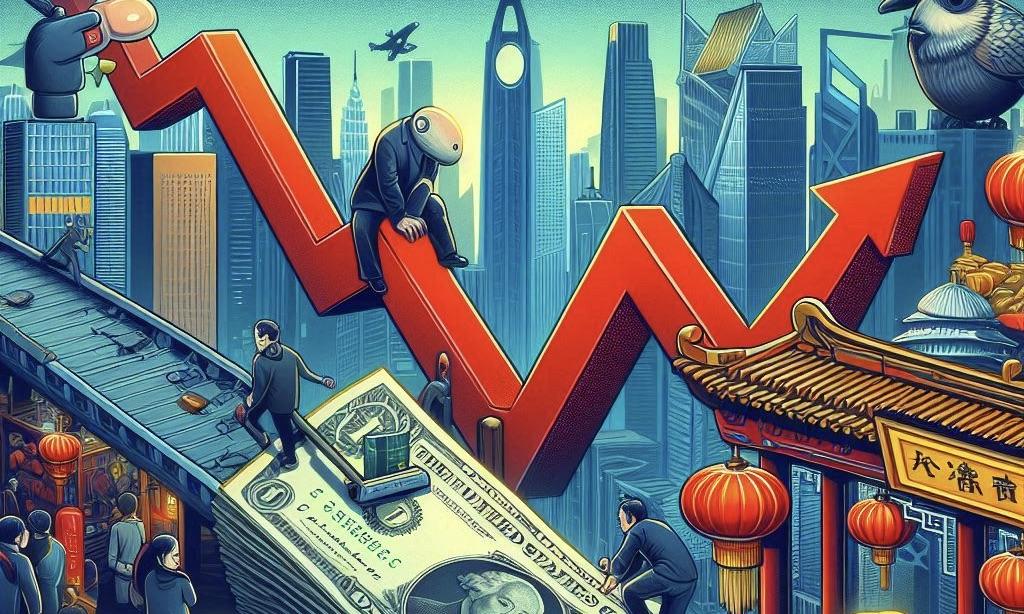
China’s latest monetary easing policies have failed to address the economy’s core challenge: persistently low consumer demand. While liquidity injections by the People's Bank of China have boosted market sentiment, analysts suggest that fiscal measures are needed to stimulate spending and drive real economic growth.
Despite PBOC’s Liquidity Boost, Analysts Warn Fragile Consumer Demand and Property Woes Threaten Growth
China's central bank has implemented a more aggressive easing strategy; however, its policy instruments overlook the primary obstacle to economic expansion: persistently low consumer demand. Market sentiment has been strengthened by the People's Bank of China's (PBOC) liquidity injections and reduced borrowing costs, declared on September 24. However, the optimism is primarily based on anticipating an imminent complementary fiscal package.
Due to fragile consumer confidence and a severe property downturn, China, the world's second-largest economy, is at risk of failing to achieve its approximately 5% growth target and is confronted with substantial deflationary pressures. According to analysts (via Reuters), the demand shortfall can be effectively addressed by directing additional funds directly into the hands of consumers through fiscal policies, such as increased pensions and social benefits.
"The central bank's policies exceeded expectations, but the main problem in the economy today is not a lack of liquidity," said Shuang Ding, chief economist for Greater China and North Asia at Standard Chartered. "In terms of helping the real economy, I think there will be another policy package, especially fiscal policies."
Fred Neumann, the chief Asia economist at HSBC, concurred that increasing demand is imperative and acknowledged that this would likely necessitate fiscal measures. The PBOC's current actions are its most ambitious endeavor since the pandemic; however, the stimulus's overall impact still needs to be questioned due to its limited scope.
The efficacy of the 1 trillion yuan ($142 billion) scheduled to be released into the financial system through a reduction in bank reserve requirements is called into question due to the weak credit demand from households and businesses. Analysts anticipate that a significant portion of this liquidity will be allocated to acquiring sovereign bonds rather than lending to the actual economy.
Weak Consumer Spending and Corporate Caution Undermine PBOC's Easing Efforts, Analysts Warn
According to the China Beige Book, businesses have hesitated to borrow for years due to poor corporate sentiment, and households are unlikely to increase spending in response to diminished savings returns. Even a reduction in current mortgage rates, anticipated to free up 150 billion yuan annually for households, is only 0.12% of the annual economic output. A significant portion of this amount may be reserved for early mortgage repayments.
The limited impact of monetary measures is underscored by Raymond Yeung, the chief Greater China economist at ANZ, who estimates that Chinese consumers spend only 35 yuan for every 100 yuan they receive. The 20-basis point reduction in the key interest rate is more substantial than the norm; however, it is still below the scale typically observed in the easing policies of global central banks, such as the 50-basis point reduction implemented by the U.S. Federal Reserve last week.
Gavekal Dragonomics analysts characterized the economic impact of the PBOC's program as "modest," noting that the measures had been implemented previously with minimal effect. They contended that the significance is in the potential for this package to facilitate additional policy steps.
Neumann posits that the PBOC generates an opportunity for the government to issue additional debt to provide further stimulus by injecting liquidity. He observes that the market is optimistic that this action indicates the impending announcement of a substantial bond issuance program.
Analysts Urge Demand-Side Support as China's Investment-Heavy Strategy Faces Calls for Consumer Stimulus
ING's chief economist for Greater China, Lynn Song, emphasized that increasing government investment is the most effective method of stimulating the economy in the short term. Nevertheless, she recognized that economists increasingly advocate for demand-side support, such as consumption vouchers or similar policies, to boost consumer spending.
Beijing announced in October last year that it would issue an additional 1 trillion yuan in special treasury bonds to finance infrastructure projects and achieve the 2023 growth objective. The extent to which any future stimulus package will differ from previous initiatives remains to be determined. In July, officials signaled a slight shift in spending toward consumers, with subsidies for purchases of new appliances and other goods. However, this was a minor step toward addressing the longstanding investment-consumptionimbalance.
China's household consumption as a share of annual economic output is about 20 percentage points below the global average, while investment—often government-driven and debt-funded—accounts for 20 points above. Analysts suggest that transfers from the state sector to consumers could address this imbalance.
In a note on the PBOC package, Nomura analysts suggested that Beijing could raise pensions and medical benefits for low-income groups or provide subsidies for childbirth. Still, they cautioned that such steps may take a while.
"We do not believe these monetary and financial policies alone are enough to arrest the worsening economic slowdown," the analysts warned, adding, "We believe fiscal stimulus should take the front seat, although we encourage investors to manage their expectations."













