


 Best Gold Stocks to Buy Now: AABB, GOLD, GDX
  RBA Hikes Interest Rate to 4.60% as Inflation Risks Rise
  Asian Stocks Rise as Bond Yields Ease Ahead of U.S. Inflation Data
  Gold Holds Near Seven-Week Low as Fed Rate Hike Bets Rise
  Dollar Eases Near Two-Month High as Yen Rebounds
  BOJ Signals Faster Rate Hikes as Inflation Risks Grow
  Oil Prices Jump Nearly 3% as Iran Holds Firm on Hormuz Conditions
  XRP Price Targets $1.70 as Bullish Momentum Builds
  Gold Rebounds as Oil Falls and Treasury Rout Eases
  South Korea Exports Set for 16th Monthly Gain on AI Chip Demand


 Add as a preferred source on Google
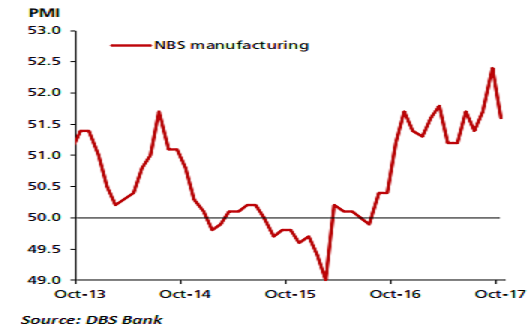
China’s Official manufacturing purchasing managers’ index (PMI) fell to 51.6 in October from 52.4 in September. It was, however, still at the average level for January-September. New orders dropped to 52.9 from 54.8, while production edged lower to 53.4 from 54.7.
The moderation, in part, was the result of week-long holidays and a slowdown in industries cutting production to reduce air pollution ahead of the Party Congress. Meanwhile, it could also be attributed to regulators’ drive to rein in financial risks. Last month, short-term corporate loans contracted by RMB52 billion, the first decline since October 2016. Entrusted loans also registered a 47 percent fall on a yearly basis.
Looking ahead, tightening credit and rising borrowing costs will continue to weigh on activities. Adding to the pressure is the anti-pollution campaign. According to the Ministry of Environmental Protection, new measures will be introduced in Beijing, Tianjin, Hebei, Henan, Shanxi, and Shandong to tackle winter air pollution. That will likely result in production disruptions.
Fears of winter shortages will keep commodity prices at relatively high levels. Elevated PPI, in turn, lowers real interest rates and boosts industrial profits. This, together with the uptick in CPI inflation in Q3, suggesting that the People's Bank of China will maintain its prudent and neutral monetary policy stance.
Meanwhile, FxWirePro launches Absolute Return Managed Program. For more details, visit http://www.fxwirepro.com/invest







