


 RBA Set for Back-to-Back Rate Hikes, Westpac Forecasts
  Venezuela Names Paula Henao as New Oil Minister Amid U.S.-Led Industry Overhaul
  Russian Drone Strikes Hit Kharkiv and Dnipro, Injuring Over 20 Civilians
  IEA Plans Record Emergency Oil Release Amid Iran Strait of Hormuz Crisis
  U.S.-Israel War on Iran Sends Crude Oil Prices Surging Amid Strait of Hormuz Tensions
  Chinese AI Stocks Surge as Tencent, MiniMax, and Zhipu Launch Agentic AI Programs
  ANZ and Westpac Forecast Two RBA Rate Hikes in March and May 2026
  Oil Prices Surge Toward $100/Barrel After Tanker Attacks in Iraqi Waters
  Pentagon Taps Wall Street Talent to Manage $200 Billion Defense Investment Fund
  Shots Fired at U.S. Consulate in Toronto in Suspected National Security Incident
  Bipartisan Housing Bill Advances in Senate, Aims to Tackle U.S. Affordability Crisis
  Iran-U.S. Oil Tensions Escalate as Revolutionary Guards Threaten Strait of Hormuz Blockade
  U.S. Markets Slip Amid Iran Conflict Uncertainty as Oil Prices Retreat
  Boeing Secures $289 Million Smart Bomb Contract With Israel
  U.S. Calls for Reassessment of International Aid to Taliban-Ruled Afghanistan
  Trump Hints at Possible U.S. Takeover of Cuba Amid Deepening Humanitarian Crisis
  Trump Announces New U.S. Oil Refinery in Texas with Indian Energy Giant Reliance


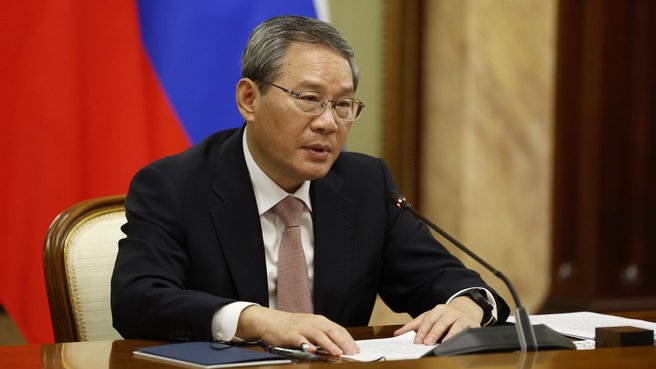
China has sent a fresh signal about the growing strategic importance of rare earth minerals as Premier Li Qiang, the country’s second-ranking official, inspected rare earth facilities in Jiangxi province this week, according to state media outlet Xinhua. The high-profile visit comes as Beijing and Washington face intensifying competition over critical minerals that underpin global manufacturing, green technology, and modern defense systems.
Such inspections ahead of the Lunar New Year are closely watched, as they often serve as indicators of upcoming policy direction from China’s top leadership. This time, Li’s visit underscored how rare earths have become a central lever in China’s economic and geopolitical strategy, particularly amid escalating U.S. restrictions on Chinese investment and technology access.
Rare earth elements are essential for producing electric vehicles, wind turbines, smartphones, semiconductors, and advanced military equipment. China dominates much of the global supply chain, from mining to processing, giving Beijing significant influence over industries worldwide. Li was quoted as saying that the “important value of rare earths in developing advanced manufacturing and promoting green and low-carbon transformation is becoming increasingly prominent,” a statement widely interpreted as a subtle reference to last year’s disruption caused by tighter Chinese export controls.
Those controls rattled global manufacturers after Washington imposed additional limits on Chinese investment in sensitive U.S. sectors. Li also emphasized the need to deepen cooperation between industry, academia, and research institutions, and to broaden the application of rare earth technologies, signaling continued state backing for innovation and industrial upgrading.
Analysts suggest the competition between the U.S. and China over long-term access to critical minerals could intensify further if Beijing introduces new regulations. One proposal under discussion would require companies using even minimal amounts of Chinese rare earths to report their plans to China’s commerce ministry, potentially expanding Beijing’s influence over global corporate decisions.
Although Li did not explicitly mention the United States, his visit included a Chinese Academy of Sciences research institute and several enterprises across the rare earth supply chain, reinforcing the strategic message. This comes as U.S. Vice President JD Vance recently outlined plans to form a preferential trade bloc with allies focused on critical minerals, including coordinated price mechanisms, highlighting how rare earths are rapidly becoming a focal point of global economic competition.













