


 Gold Prices Fall Amid Rate Jitters; Copper Steady as China Stimulus Eyed
  Best Gold Stocks to Buy Now: AABB, GOLD, GDX


 Add as a preferred source on Google
The continued weakness in trade data shows that both the Chile's domestic economy and the external demand environment have yet to show any sign of revival.
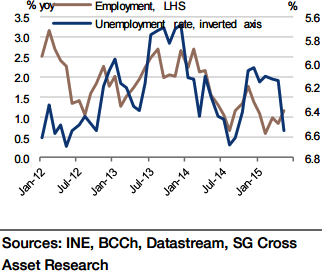
Despite the fact that significant fiscal spending is underway, the economy in Q2 continued to grow significantly below its trend rate, that itself has declined by nearly 25% over the past couple of years. In that respect, the strength of the labour market early this year was a bit puzzling. May labour market data, that saw the unemployment rate rising to 6.6% from 6.1% in April.
"This seems to have ended this conundrum although part of the rise in the unemployment rate could be due to the base effect. The unemployment rate to have risen one tick to 6.7% in June assuming a slightly lower pace of growth in both the labour force and employment. Both these indicators grew faster than their recent pace in May and some moderation is expected in June", says Societe Generale.
The developments in the labour market in the context of improving but still sub-trend growth have been quite remarkable. A stronger labour market, a pre-condition for stronger consumption growth, will require a significant surge in investment activity.
"The labour market has been improving on the back of significant public spending, and there remain considerable limitations to this strategy in the medium term", added Societe Generale.

- News

- Economy

- Central Banks
- Investing
- Research
- Roundups
- Digital Currency
- Insights
- Technical Analysis
- Technology
- Business
- Law
- Health
- Nature
- Fintech
- Science
- Topic
- Opinions
- ©Econometrics LLC . All Rights Reserved.
Chile's unemployment rate likely increased to 6.7% in June
Friday, July 31, 2015 5:36 AM UTC
Editor's Picks



- Market Data
Most Popular




