


 RBA Hikes Interest Rate to 4.60% as Inflation Risks Rise
  FxWirePro: Daily Commodity Tracker - 21st March, 2022
  BlackRock’s Rick Rieder Favors Bonds Over Stocks as Treasury Yields Surge
  Trump Demands Powell Resign Over Fed Renovation Cost Overruns
  Fed’s Hammack Says More Data Needed Before Next Rate Move
  Fed’s Logan Signals 50 Basis Points More in Rate Hikes
  BOJ Raises Interest Rate to 31-Year High as Yen Weakens


 Add as a preferred source on Google
As Russia was the earliest of a group of commodity-oriented emerging market economies to abandon the peg, the current turmoil has not surprised Russian markets, neither has the spike in the rouble's volatility, which has risen to the level seen in May 2015, although it is still far from the elevated level of January 2015.
This time, the central bank of Russia (the CBR) is staying on the sidelines, resisting FX or even verbal intervention in order to avoid the risk of losing credibility.
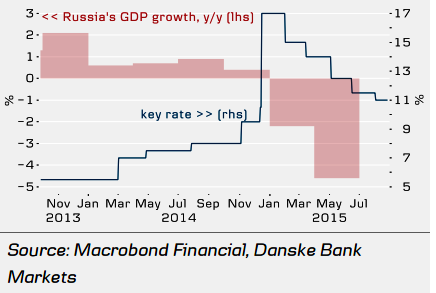
"The renewed fall of the rouble will halt CPI growth deceleration and may push consumer prices further in the short run. Thus, the CBR is expected to halt its rate cuts on 11 September", says Danske Bank.
However, possible price increases will not be as dramatic as in early 2015, when the December 2014 devaluation was transferred into consumer prices. During 2015, the CBR has been consistent in its monetary policy, cutting its key rate by 600bp YTD as consumer price growth slowed and inflation expectations have eased on a stabilised rouble, after peaking at 16.9% y/y in March 2015.
"The CPI is expected to post 11% y/y in December 2015 on a high base effect and falling economic activity", added Danske Bank.

- News

- Economy

- Central Banks
- Investing
- Research
- Roundups
- Digital Currency
- Insights
- Technical Analysis
- Technology
- Business
- Law
- Health
- Nature
- Fintech
- Science
- Topic
- Opinions
- ©Econometrics LLC . All Rights Reserved.
CBR set to halt monetary easing
Thursday, August 27, 2015 4:19 AM UTC
Editor's Picks



- Market Data
Most Popular




