


 Gold Drops Over 1% as Dollar, Treasury Yields Surge on Fed Rate Hike Bets
  Vietnam, US Trade Deal Could Be Signed Soon, To Lam Says
  US 10-Year Treasury Yield at 6% Emerges as New Market Risk Threshold
  Oil Prices Surge as U.S.-Iran Diplomacy Hopes Fade
  Gold Prices Fall Amid Rate Jitters; Copper Steady as China Stimulus Eyed
  Japan Private-Sector Growth Slows as Domestic Demand Weakens
  Mexico-US Trade Talks Delayed to October as Tariff Negotiations Continue
  Oil Prices Ease as Iran Tensions Clash With Diplomacy Hopes
  Asian Currencies Muted as Dollar Firms Ahead of Trump-Xi Summit
  Best Gold Stocks to Buy Now: AABB, GOLD, GDX
  China’s ‘Lipstick King’ Says AI Won’t Replace Livestream Hosts
  US Stock Futures Rise as Meta Muse Fuels AI Rally


 Add as a preferred source on Google
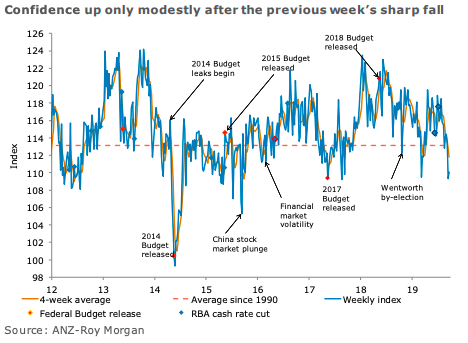
Australian ANZ-Roy Morgan consumer confidence gained 0.7 percent last week after losing 3.5 percent in the previous reading. Strength was relatively broadly based across the sub-indices, although the “time to buy a household item” index dropped a sharp 3.8 percent and is now at its lowest level in ten years.
Current financial conditions gained 1.9 percent and remain above the long run average, while future financial conditions gained 1.6 percent. The economic conditions sub-indices also rose, with current economic conditions up 3.6 percent and future economic conditions up 1.0 percent.
Both economic sub-indices remain well below their long run averages. The four week moving average for inflation expectations remained stable at 4.1 percent.
"The modest rise in confidence leaves it well below its long run average. The weakness in the time-to-buy-a-household-item index is particularly disappointing, given that tax cuts should be supporting this measure. Rising concerns over the impact of the stimulus, combined with the lift in the unemployment rate in August and ongoing global easing in monetary policy settings, suggest to us that the RBA will likely cut rates again in October. So far, though, consumers seem impervious to both fiscal and monetary stimulus, and the combination of weak wage growth and high levels of debt may prove to be the more dominant driver of confidence and spending," said Felicity Emmett, ANZ’s Senior Economist.







