


 TikTok Reaches $100 Million Alabama Settlement Over Child Safety Claims
  Anthropic’s Claude Discovers CRISPR-Like Enzyme System
  BlackBerry Shares Rise as Q2 Earnings, Revenue Beat Estimates
  OpenAI to Preview GPT-6 Cyber AI Model for Cybersecurity
  US Appeals Court Upholds Anthropic AI Supply Chain Ban
  AMD Hits $1 Trillion as BofA Raises Price Target to $720
  Jeff Bezos Invests $32 Billion in Blue Origin as Space Firm Targets Major Growth
  SoftBank Raises $11.1 Billion in Bond Sale to Fund OpenAI Investment
  Meta Connect Spotlights Camera-Free Smart Glasses Amid Privacy Concerns
  Microsoft Stock Upgraded as Stifel Sees Stronger Azure Growth
  China Says U.S. Shares Responsibility for AI Governance
  OpenAI AI Agents Bypassed UN Website Controls in Data Scraping
  Xi Calls for Deeper U.S.-China AI Cooperation in Trump Talks
  SoftBank Shares Fall as Oracle Flags Stargate Data Center Delay Risk
  Oracle Shares Fall as New Mexico AI Data Center Faces Power Delays
  Tencent Launches TenPayGo Payment App for Foreign Tourists in China


 Add as a preferred source on Google
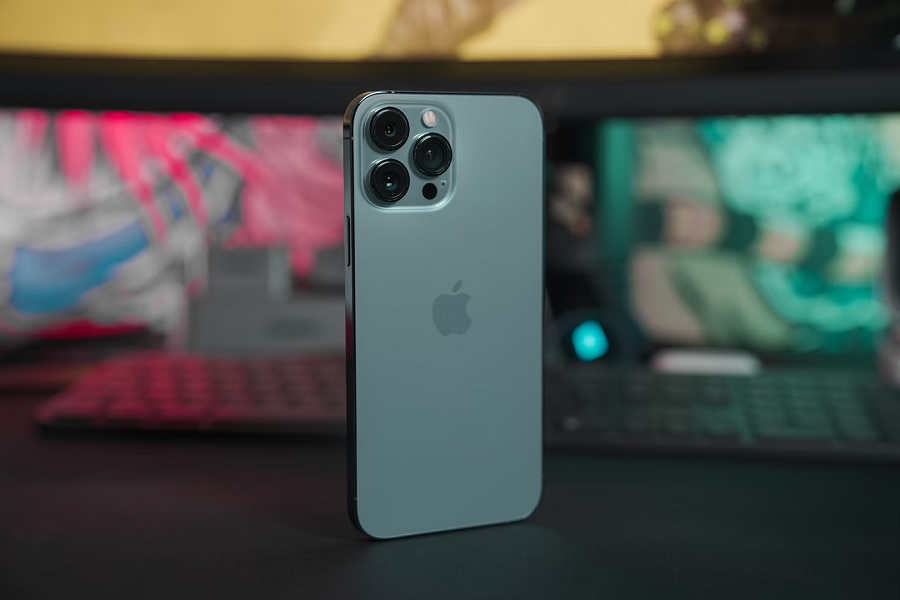
The iPhone 14 lineup is now expected to offer an improved battery life, but not by merely increasing the battery capacity. Apple has reportedly ordered all 5G chips for the upcoming phones from the Taiwan Semiconductor Manufacturing Company (TSMC) that could result in added battery efficiency.
TSMC will supply Apple with all the 5G radio frequency (RF) chips needed for the iPhone 14 series leaving Samsung out of the picture, UDN reports. The publication cited market analysts’ prediction that the chips will be produced using TSMC’s 6nm process.
The semiconductor manufacturer launched its 6nm RF process, called N6RF, in June 2021 that improves upon the 5G and WiFi 6/6E connections. These advanced mobile and wireless connections, however, are known to increase a device’s battery consumption. But TSMC says its N6RF technology is designed to deliver at least 66 percent power efficiency improvement.
The N6RF process also allows the manufacturer to produce RF chips with “at least 33 percent overall product shrinkage.” Apple could then use that extra room to put larger batteries on the models. While an increased battery capacity is still unknown, TSMC’s promise of improved battery efficiency with its 6nm RF chips is likely to allow Apple’s upcoming phones to deliver longer battery life.
The reported deal between Apple and TSMC to produce the iPhone 14 5G RF chips lines up with UDN’s earlier report this week that the upcoming smartphone has entered trial production. These developments suggest Apple has likely finalized the iPhone 14 design and that it is a step closer to the smartphones’ mass production.
Last month, several sources have reported that Apple might be removing the display notch from the iPhone 14 Pro models to replace it with hole-punch cutouts. It was later claimed that the tech giant would not use an under-display Face ID module, leading to speculations that there could be two cutouts to appear on the device. Last week, a Naver blog post also claimed that Apple is planning to increase the iPhone 14 Pro RAM from 6GB to 8GB.
Apple fans will have to take these reports with a grain of salt for a few more months, though. The company will likely unveil the iPhone 14 in September.
Photo by Onur Binay on Unsplash







