

 Menu
Menu

 Search

- News

- Economy

- Central Banks
- Investing
- Research
- Roundups
- Digital Currency
- Insights
- Technical Analysis
- Technology
- Business
- Law
- Health
- Nature
- Fintech
- Science
- Topic
- Opinions
- ©Econometrics LLC . All Rights Reserved.
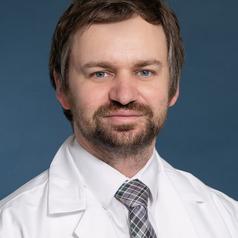
Benjamin Botsford
Assistant Professor of Ophthalmology, UMass Chan Medical School
Born and raised in Rhode Island, Benjamin Botsford, MD joined the Department of Ophthalmology & Visual Sciences in the summer 2022. He is delighted to serve the ophthalmology needs of a diverse patient population and collaborate with his UMass Memorial Eye Center colleagues.
After graduating from Phi Beta Kappa from New York University with a degree in neuroscience, he went on to receive his medical degree from Tufts University School of Medicine in Boston. He completed an ophthalmology residency at the University of Pittsburgh Medical Center and completed a vitreoretinal fellowship at NY Presbyterian-Weill Cornell Medical Center. He has published over 20 peer-reviewed articles and book chapters and presented at numerous regional and national conferences.
He has volunteered at a diabetes outreach clinic for Veterans Inc. in Worcester where he performed ophthalmology screenings for veterans and their families. He also presented on “Diabetes and Your Eyes” for the UMass Memorial Eye Center’s inaugural “See Better! Live Fuller!” patient webinar series this past fall.
With a special interest in retinal disease and macular degeneration, Dr. Botsford looks forward to providing medical and surgical care to the community, as well as teaching the enthusiastic and stellar ophthalmology residents at the Hahnemann and Northborough offices.
Clinical Expertise:
Surgical and medical management of vitreoretinal disease
Diabetic Retinopathy
Macular degeneration
Retinal vascular disease

Less 
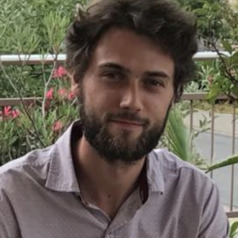
Benjamin Bouchard
Étudiant-chercheur au doctorat en génie des eaux, Université Laval
Je suis étudiant-chercheur au doctorat en génie des eaux à l'Université Laval. Je m'intéresse à la neige comme ressource en eau dans les milieux naturels. Plus spécifiquement, mon sujet de recherche porte sur les intéractions physiques entre la forêt boréale et le manteau neigeux pour mieux comprendre l'évolution de celui-ci pendant l'hiver. Je cherche aussi à comprendre comment ces interactions et le régime hydrologique des bassins versants forestiers seront modifiées par des hivers plus chauds où le manteau neigeux sera plus mince.
Less
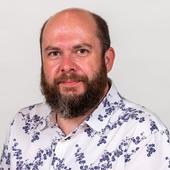
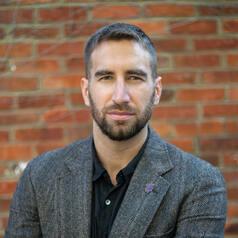
Benjamin Case
Postdoctoral research scholar at the Center for Work and Democracy, Arizona State University
Benjamin Case is a political sociologist specializing in social movements, democracy, and political violence. He is a Postdoctoral Research Scholar at Arizona State University's Center for Work and Democracy and he has more than two decades experience in political, labor, and community organizing.
Less
Benjamin Chrisinger
Assistant Professor, Community Health, Tufts University
Benjamin Chrisinger is an Assistant Professor in the Department of Community Health. His research is at the intersection of urban planning and public health, using both quantitative and qualitative methods with a focus on the effects of place on health. Dr. Chrisinger comes to Tufts from the University of Oxford, where he was an Associate Professor of Evidence-Based Policy Evaluation in the Department of Social Policy and Intervention, and a Research Fellow with Green-Templeton College. Prior to Oxford, he was a postdoctoral research fellow in the Cardiovascular Disease Prevention Training Program at Stanford University School of Medicine. He received his PhD in City and Regional Planning, with a certificate in College & University Teaching, from the University of Pennsylvania.
Less
Benjamin Cowie
Director, WHO Collaborating Centre for Viral Hepatitis, The Peter Doherty Institute for Infection and Immunity
Director, WHO Collaborating Centre for Viral Hepatitis, The Doherty Institute
Epidemiologist, Victorian Infectious Diseases Reference Laboratory, The Doherty Institute
Infectious Diseases Physician, Victorian Infectious Diseases Service, Royal Melbourne Hospital
Associate Professor, Department of Medicine, University of Melbourne
Less
Benjamin Dean
Benjamin Dean is a Fellow for Internet Governance and Cyber-security at Columbia University's School of International and Public Affairs in New York City. In this role, he works at the intersection of technology and public policy.
Benjamin has lived and worked in seven countries over the past decade: his native Australia, China, India, Bhutan, France, the USA and Venezuela. He spent three years working as a research assistant in the Organisation for Economic Co-operation and Development's (OECD) Center for Entrepreneurship, Small and Medium Enterprises (SMEs) and Local Development. In this role, he worked on a variety of projects including entrepreneurship and innovation policy reviews of Thailand and Mexico, the SME Financing Scoreboard and intellectual property rights management by SMEs.
For the past few years, Benjamin has concentrated on digital and information policy as well as working in New York's start-up scene. He is presently interested in developing alternatives to the advertising business model, which has led to the wide-spread surveillance and control of information on the internet.
Less
Benjamin Dowling
Lecturer of Cybersecurity, University of Sheffield
Benjamin Dowling is a lecturer of cybersecurity in the security of advanced systems group at the University of Sheffield. His research is concerned with provable security and applied cryptography, and he has works published in top cryptography and cybersecurity venues.
His work assesses the security of real-world cryptographic protocols and standards, including secure messaging protocols used by millions today. His work also proposes modifications to such protocols to improve their security, and introduces new cryptographic protocols that improve upon the state of the art, to create and influence future standards.
Less
Benjamin Fath
Senior Lecturer, Management and International Business, University of Auckland, Waipapa Taumata Rau
Ben Fath is Senior Lecturer in Management at the University of Auckland. He specializes in entrepreneurship and International Business. He is the Director of the Southeast Asia Studies Center at the University of Auckland Business School.
Less

Benjamin Gearey
Lecturer in Environmental Archaeology, University College Cork
Benjamin Gearey is lecturer in environmental archaeology, University College Cork, with a wide range of research interests focused on wetland and especially peatland environments. He is PI for the ongoing IRC COALESCE funded project IPeAAT, and was CO-I for the recently completed EU Joint Planning Initiative/Cultural Heritage funded project ‘WetFutures’ and other IRC funded projects.
He is a member of the United Nations Global Peatlands Initiative and an elected member of the JPICH Scientific Advisory Committee with expertise in past climate change. He is editor of The Journal of Wetland Archaeology and has published extensively on aspects of peatland heritage, environmental change and human impact, in peer reviewed journals and books, including the recently published 'An Introduction to Peatland Archaeology and Palaeoenvironments' (Oxbow Books, 2023).
Less
Benjamin Goldstein
Assistant Professor of Sustainable Systems, University of Michigan
Benjamin Goldstein, Ph.D, is Assistant Professor of Environment and Sustainability and head of the Sustainable Urban-Rural Futures (SURF) lab. The SURF Lab (www.surf-lab.ca) studies and emphasizes urban sustainability at multiple scales. Through his work at the SURF Lab, Benjamin helps understand how urban processes and urban form drive the consumption of materials and energy in cities and produce environmental change inside and outside cities. He develops methods and tools to quantify the scale of these changes and the locations where they occur using life cycle assessment, input-output analysis, geospatial data, and approaches from data science. Benjamin is particularly interested in combining quantitative methods with theory rooted in social science to explore multiple dimensions of sustainability and address issues of distributive justice. His topical foci include urban food systems (esp. urban agriculture), agri-commodities, residual resource engineering, global supply chains, sustainable production and consumption, and energy systems.
Less
Benjamin Hurrell
Assistant Professor of Research in Molecular Microbiology and Immunology, University of Southern California
I have studied the murine and human immune systems for more than 10 years and have made several key findings in the field that have significantly changed the prevailing disease paradigms. Much of my career has been dedicated to the understanding of the complex early innate mechanisms driving long-term diseases, yielding 30+ peer-reviewed publications. I have a broad background in Immunology with expertise in key research areas including innate immune regulation, mucosal immunity and immunometabolism.
Less
Benjamin Koger
Assistant Professor, School of Computing and Department of Zoology and Physiology, University of Wyoming
Ben Koger trained as an electrical engineer and a biologist. His work focuses on using imaging and computer vision to record and study the natural world.
Less
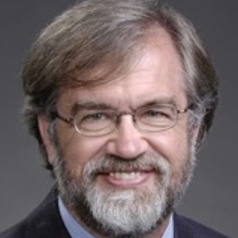
Benjamin Kuipers
Professor of Computer Science and Engineering, University of Michigan
Benjamin Kuipers joined the University of Michigan in January 2009 as Professor of Computer Science and Engineering. Prior to that, he held an endowed Professorship in Computer Sciences at the University of Texas at Austin. He received his B.A. from Swarthmore College, and his Ph.D. from MIT.
He investigates the representation of commonsense and expert knowledge, with particular emphasis on the effective use of incomplete knowledge. His research accomplishments include developing the TOUR model of spatial knowledge in the cognitive map, the QSIM algorithm for qualitative simulation, the Algernon system for knowledge representation, and the Spatial Semantic Hierarchy model of knowledge for robot exploration and mapping. He has served as Department Chair at UT Austin, and is a Fellow of AAAI, IEEE, and AAAS.
Less
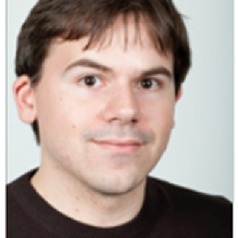
Benjamin Leruth
I am a Research Associate at the University of Kent, working as part of the NORFACE research project entitled 'Welfare State Futures: Our Children’s Europe' (WelfSOC). My research interests include Euroscepticism, differentiated integration in the European Union and comparative party politics in Europe.
I hold a PhD in Politics from the University of Edinburgh, a LL.M. in European Law from the University of Kent and a BA in Political Science from the University of Namur (Belgium). Prior to joining Kent, I worked as a Teaching Fellow in Politics at the University of Bath, and as a guest researcher at the ARENA Centre for European Studies (University of Oslo). I tweet @BenLeruth.
Less
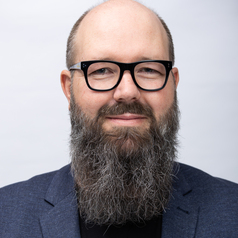
Benjamin Miller
Lecturer in English and Writing, University of Sydney
Benjamin's teaching and research draws connections between rhetorical theory, Australian literary studies, theatre history and Indigenous studies. Benjamin's expertise teaching first-year writing and senior-level rhetorical theory units is built upon research into Aboriginal writing, early Australian theatre, hip-hop, and political oratory.
Less

Benjamin Park
Associate Professor of History, Sam Houston State University
Benjamin E. Park is an associate professor of history at Sam Houston State University and the author of Kingdom of Nauvoo: The Rise and Fall of a Religious Empire on the American Frontier. His next book, American Zion: A New History of Mormonism, will appear in January 2024.
Less

Benjamin Perrin
Professor of Law, University of British Columbia
Benjamin Perrin is a professor at the University of British Columbia, Peter A. Allard School of Law. He served in the Prime Minister’s Office as in-house legal counsel and lead criminal justice and public safety advisor, and was also a law clerk at the Supreme Court of Canada. Professor Perrin is a national best-selling author. His books include "Indictment: The Criminal Justice System on Trial" (University of Toronto Press, 2023); "Overdose: Heartbreak and Hope in Canada’s Opioid Crisis" (Penguin Random House, 2022); and "Victim Law: The Law of Victims of Crime in Canada" (Thomson Reuters, 2017). He has testified as an expert witness before legislative committees and regularly provides commentary in the media. He lives in Vancouver, BC. www.benjaminperrin.ca
Less
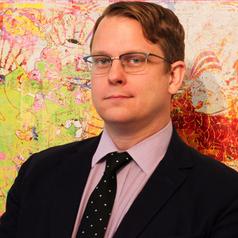
Benjamin Ralston
Assistant Professor, College of Law, University of Saskatchewan
Benjamin Ralston is an Assistant Professor at the University of Saskatchewan College of Law where he teaches courses on environmental law, administrative law, and the relationship between Indigenous peoples and Canadian law. He also teaches a course on environmental law and policy for the University of Saskatchewan School of Environment and Sustainability.
Less
Benjamin Riordan
Research fellow, La Trobe University
Benjamin Riordan is a post-doctoral research fellow in the Centre for Alcohol Policy Research (CAPR). His research interests are broad, but predominantly he focuses on using emerging and new technologies to understand and intervene with young adults who use alcohol. At CAPR, he co-leads the research stream on alcohol, media, and emerging technology, which focuses on understanding:
1) How is alcohol depicted or discussed in media (e.g., social media, films, music)?
2) What is the impact of exposure to alcohol-related content in the media?
3) What are the opportunities for policy change or interventions?
Prior to moving to CAPR, he was a post doctoral researcher in Addiction Medicine at the University of Sydney (where he is still an affiliate; 2019-ongoing), he was a Fulbright Fellow at Brown University (2017-2018; Center for Alcohol and Addiction Studies) and completed his PhD at the University of Otago (2019; Department of Psychology).
Less
Benjamin Rojtman-Guiraud
Doctorant en Science politique, Université de Lorraine
Travaille sur l'extrême droite en Autriche et plus généralement intéressé par les partis politiques au niveau européen.
Less

Benjamin Roulston
Assistant Professor of Physics, Clarkson University
Dr. Benjamin Roulston is an Assistant Professor of Physics and the Director of the Observatory at Clarkson University in Potsdam, NY.
Since joining Clarkson University in 2023, Dr. Roulston has been dedicated to teaching and research, focusing his research on binary stars, specifically post-mass transfer binaries. His research investigates how binary stars can exchange mass and interact together, contributing to the understanding of various astrophysical processes such as common-envelope-evolution.
Dr. Roulston completed his PhD at Boston University while serving as a predoctoral fellow at the Smithsonian Astrophysical Observatory. His doctoral research concentrated on binary stars, particularly dwarf carbon stars, utilizing models and observations from Chandra, Hubble, and various optical telescopes to study their formation and properties.
Before joining Clarkson University, he was a postdoctoral fellow at Caltech working on the Zwicky Transient Facility project. At Clarkson University, Dr. Roulston teaches a range of courses, including introductory physics (Physics 1 and 2), an introductory astronomy course, an advanced astrophysics course, and an aerospace engineering course on the space environment. His teaching philosophy emphasizes engaging students through problem-solving and hands-on experience with real data, bridging the gap between theoretical concepts and practical application.
Less
Benjamin Schneer
Assistant Professor of Public Policy, Harvard Kennedy School
Benjamin Schneer is an Assistant Professor of Public Policy at the Harvard Kennedy School. His research is in American politics and focuses primarily on political representation: how citizens express their preferences, how government responds to them, and what may shape and distort these processes. His most recent papers have studied just how much of an effect the media has on the national political conversation, the role that petitioning has played in American political development, and the returns to elected office based on future earnings from corporate board service and lobbying. His research has been published in journals including Science, the American Journal of Political Science, the Journal of Politics, and Studies in American Political Development and has received coverage in media outlets including the New York Times, the Washington Post, the Los Angeles Times, the Economist, and Fast Company.
He received his Ph.D. in 2016 from the Department of Government at Harvard University. He received his B.A. in History and in Economics from Columbia University and an M.A. in Economics from Stanford University. Prior to joining the Kennedy School, he was an assistant professor in the Department of Political Science at Florida State University.
Less

Benjamin Scott
Research assistant, Monash University
I am a Monash University graduate and research assistant at the Monash Gender and Family Violence Prevention Centre. My research focuses on the intersections between the LGBTQIA+ communities and the police, and intimate partner violence.
Less
Benjamin Selwyn
Professor of International Relations and International Development, Department of International Relations, University of Sussex
Benjamin researches and writes about global value chains, poverty and inequality, and global food systems.
He is author of a number of books, the most recent being The Struggle for Development (Polity: 2017)
At Sussex he teaches various courses on global development, including The Global Politics of Food.
Other publications include A Green New Deal for Agriculture (https://www.tandfonline.com/doi/full/10.1080/03066150.2020.1854740).
His books include 'Workers, State and Development in Brazil: Powers of Labour, Chains of Value' (Manchester University Press: 2012), based upon field research in North East Brazil throughout the 2000s.
The book investigates how the Brazilian state, local public and private institutions and firms collaborated to implement a successful upgrading strategy within highly competitive global horticultural value chains, which resulted in North East Brazil becoming Brazil's main high-value grape exporting region. Within that context he investigated the extent to which workers benefitted from the region's rapid economic growth. The book details how the export boom has impacted on local level develoment, in particular on local labour standards, conditions of work and pay rates, gendering of work and women's participation in rural trade unions.
He is also author of 'The Global Development Crisis' (Polity: 2014) which addresses the central paradox of our times - the simultaneous presence of wealth on an unprecedented scale, and mass poverty. It explores this paradox through an interrogation of the work of some of the most important political economists of the last two centuries - Friedrich List, Karl Marx, Leon Trotsky, Joseph Schumpeter, Alexander Gerschenkron, Karl Polanyi and Amartya Sen. In the book he advance's the concept of 'Labour-Centred Development' as a means of overcoming this paradox.
Less
Benjamin Sonnenberg
Ph.D. Candidate in Ecology, Evolution and Conservation Biology, University of Nevada, Reno
Ben Sonnenberg is a field behavioral ecologist and 7th year Ph.D. candidate in the Ecology, Evolution, and Conservation Biology program at the University of Nevada, Reno. He studies avian cognition in a long-term research system in the Sierra Nevada. His interests include understanding the role of development on the patterns of observed variation in advanced cognitive traits of animals.
Less
Benjamin Stappers
Professor of Astrophysics, University of Manchester
My primary research interests are radio pulsars, neutron stars and rapid radio transients. I am a member of the European Pulsar Timing Array (EPTA) and international Pulsar Tming Array (IPTA) projects which are attempting to use precision timing of radio pulsars to detect gravitational waves which have a freqeuncy in the nano-Hz regime. These waves are thought to have been generated by processes in the early universe, either inflation, cosmic strings or binary supermassive blackholes have been proposed.
I lead an ERC funded project called MeerTRAP which searches for radio transienst, including pulsars and Fast Radio Bursts, with MeerKAT. It operates commensally on many of the observations being undertaken with the Square Kilometer Array (SKA) radio telescope pathfinder called MeerKAT. It has the capability to detect and localise FRBs over a range of redshifts. I am also co-PI of the pulsars and fast transient project TRAPUM which also runs on MeerKAT. It is revealing hundreds of new pulsars in many different environments from globula clusters to our nearest neighbour galaxies. I am also co-PI of the transients key science project of LOFAR and the head of the pulsar science working group for the same telescope. LOFAR is the LOw Frequency ARray which is a very large radio telescope working at frequencies between 10 and 240 MHz. It is the most sensitive telescope ever built at these frequencies and wass the first of the next generation of radio telescopes which uses large numbers of small elements. As well as using these next generation telescopes I am also involved in the specification and building/wirting software for the pulsar and fast transient search capabilities of the SKA itself which will be the world's largest telescope.
Less

Benjamin Tag
Lecturer, Monash University
I am a Lecturer and Researcher at Monash's Human-Centred Computing Group, specializing in mixed-methods research, user experience, usability, and data analysis. I am fortunate to work on fascinating projects delving into Human-AI Interaction and gaining deep insights into human emotion and cognition.
My passion lies in merging cognitive psychology and ubiquitous computing, allowing me to develop cutting-edge techniques for comprehensive, long-term mental state assessments using everyday devices. Through my interdisciplinary approach, I strive to create computing systems that adapt to users' needs, facilitate information processing, and enhance overall well-being.
Less
Benjamin Thompson
Lecturer in Human Geography, Monash University
Benjamin S. Thompson is a Lecturer in Geography at Monash University. His research investigates the governance and financing of environmental management, including approaches such as impact investing, payments for ecosystem services, and applications of digital technology. He evaluates the economic viability, social equity, and environmental effectiveness of these approaches, and highlights implementation challenges related to politics and institutions. He is particularly interested in their implementation in coastal and marine ecosystems.
Less
Benjamin Weger
NHMRC Emerging Leadership Fellow Institute for Molecular Bioscience, The University of Queensland
Less
Benjamin Zunica
Lecturer in Secondary Maths Education, University of Sydney
I received my PhD in 2022 and am currently a lecturer in Education, specialising in Initial Teacher Education for Mathematics. I was a secondary educator for 19 years, until mid 2022, prior to my appointment at the University of Sydney, teaching Mathematics and Computing. I have published and presented in both professional and academic settings. In addition, I have been consulted by NESA for a number of projects, writing Stage 6 curriculum, as a member of a Technical Advisory Group, as a member of a HSC examination committee and as a senior marker for the HSC.
Less
Benjamin E. Goldsmith
Professor of Political Science, Australian National University
Benjamin E. Goldsmith is a Professor at the Australian National University. His research and teaching are in the areas of international relations, comparative foreign policy, and atrocity forecasting. His articles have appeared in leading academic journals including Comparative Political Studies, Journal of Conflict Resolution, Journal of Politics, and World Politics.
Less
Benjamin Gonzalez O'Brien
Associate Professor of Political Science, San Diego State University
Less
Benjamin K. Sovacool
Professor of Energy Policy, University of Sussex
Professor Sovacool is the author of more than 330 refereed articles, book chapters, and reports, including solely authored pieces in Nature and Science, and the author, coauthor, editor, or coeditor of 18 books on energy and climate change topics. These include Climate Change and Global Energy Security (MIT Press), Energy Poverty (Oxford University Press), Global Energy Justice (Cambridge University Press), The Political Economy of Climate Change Adaptation (Nature Publishing Group/Palgrave), and Fact and Fiction in Global Energy Policy (Johns Hopkins University Press). His books have been endorsed by U.S. President Bill Clinton, the Prime Minister of Norway Gro Harlem Brundtland, and the late Nobel Laureate Elinor Ostrom.
Professor Sovacool is the recipient of 20 national and international awards and honors, including the 2015 “Dedication to Justice Award” given by the American Bar Association and a 2014 “Distinguished Visiting Energy Professorship” at the Environmental Law Center at Vermont Law School. He has also received or managed large competitive grants from the U.S. Department of Energy, U.S. National Science Foundation, MacArthur Foundation, Rockefeller Foundation, NordForsk, Energy Technology Development and Demonstration Program of Denmark, and the Danish Council for Independent Research. Additionally, Professor Sovacool is the founding Editor-in-Chief for the international peer-reviewed journal Energy Research & Social Science, published by Elsevier, and he sits on the Editorial Advisory Panel of Nature Energy.
Dr. Benjamin K. Sovacool is Professor of Energy Policy at the Science Policy Research Unit (SPRU) at the School of Business, Management, and Economics, part of the University of Sussex in the United Kingdom. There he serves as Director of the Sussex Energy Group and Director of the Center on Innovation and Energy Demand which involves the University of Oxford and University of Manchester. Professor Sovacool works as a researcher and consultant on issues pertaining to energy policy, energy security, climate change mitigation, and climate change adaptation. More specifically, his research focuses on renewable energy and energy efficiency, the politics of large-scale energy infrastructure, designing public policy to improve energy security and access to electricity, and building adaptive capacity to the consequences of climate change.
Less


- Market Data




