

 Menu
Menu

 Search

- News

- Economy

- Central Banks
- Investing
- Research
- Roundups
- Digital Currency
- Insights
- Technical Analysis
- Technology
- Business
- Law
- Health
- Nature
- Fintech
- Science
- Topic
- Opinions
- ©Econometrics LLC . All Rights Reserved.
Liv Auckland
Lecturer in Fashion Communication and Creative Direction and Curation for Fashion, Nottingham Trent University

Less 

Liyana Kayali
Postdoctoral Research Fellow, University of Sydney
Liyana Kayali is a postdoctoral research fellow at the University of Sydney. She is the author of Palestinian Women and Popular Resistance: Perceptions, Attitudes, and Strategies.
Less

Liz Aguilar
Ph.D. Student in Ecology, Evolution and Behavior, Indiana University
I am a PhD student who is broadly interested in the mechanistic and functional drivers of individual differences in social behavior. My research uses genomic and behavioral approaches to investigate natural variation in aggression among individual female tree swallows. I also explore the role of metabolism and energetics in maintaining such variation.
I received my BS in Neuroscience from Lebanon Valley College, then worked as a research technologist at Penn State Hershey College of Medicine before coming to IU. My graduate research is funded by the NIH (T32 pre-doctoral training program) and the NSF (graduate research fellowship).
Less
Liz Barrett
Research Officer, UNSW Sydney
Liz Barrett is a Research Officer at the Drug Policy Modelling Program in the Social Policy Research Centre. Previously she was a Senior Policy Officer at Uniting where she was instrumental in developing the Fair Treatment campaign for the decriminalisation of drugs in Australia. At DPMP, Liz has conducted research and co-authored a number of reports and evidence reviews on areas such as AOD service purchasing systems, mandatory treatment, stigma and cannabis clubs.
Less

Liz Gloyn
Reader in Latin Language & Literature, Royal Holloway University of London
My research focuses on the intersections between Latin literature, ancient philosophy and gender studies. I also have a strong specialism in classical reception.
My core research is on Seneca the younger and his approach to Stoicism and the family. As a result, I'm interested in his works in general and the social history that provides the context for understanding them, as well as the way that he reshapes Stoicism for Roman culture. In the broader field of Latin literature, I'm interested in innovative approaches to familiar texts, particularly from a feminist perspective or from an angle that incorporates social history and the family.
One half of my classical reception interests focused on classics in popular culture, with a particular interest in film and children's literature. My book on the reception of classical monsters in popular culture was published by Bloomsbury Academic in 2019. The other half is interested in the history of women and classics, in particular how women became professional academic classicists in the late nineteenth and early twentieth centuries.
As well as academic journal articles and books, I have written for publications with a wider public audience including Times Higher Education, History Today and Strange Horizons. I have media experience working with television, documentary film, radio and newspapers.
Less
Liz James
Professor of History of Art, University of Sussex
After a first degree at the University of Durham in Ancient History and Archaeology and then an MA in Byzantine Studies at the University of Birmingham, Liz James did a doctorate in light and colour to the Courtauld Institute in London. She then completed a postdoctoral fellowship at the Barber Institute, University of Birmingham, and a British Academy Post-Doctoral Research Fellowship before starting at Sussex in 1993.
She is a Byzantinist interested in Byzantine things and what they tell us about Byzantium, across the whole range of the Byzantine Empire. She has worked on the perception of light and colour in Byzantine art; the role of women in Byzantium, and in questions around Byzantine gender; and the relationships between art and texts.
Most recently, she was engaged on a research project exploring Byzantine mosaics. With the help of colleagues, she constructed a database of medieval mosaics (available at http://www.sussex.ac.uk/arthistory/research/byzantinemosaics).
She also maintains a website https://medievalmosaics.com which aims to catalogue all surviving medieval mosaics.
Her mosaics work was supported by The Leverhulme Trust through a series of grants between 2003 and 2015.
Less


Liz Rivers
Liz is a Senior Lecturer in HRM at the University of Huddersfield. She is a Chartered Fellow of the CIPD.
Liz has considerable experience of working in HR, in both Senior HR Business Partner generalist roles and also Learning & Development policy roles, having worked for 17 years in the Retail Industry. Since moving into Academia in 2014, she is currently undertaking doctoral research at the University of Bradford School of Management exploring the role of emotions in the work of HR practitioners.
Less

Liz Simmons
PhD Candidate, Griffith University
My professional cabin crew career spanned over the first two decades of this century. I have flown both domestic and internationally, and held a range of positions from line cabin crew to various ranks of cabin crew management.
I hold a Master of Aviation Management (Distinction) from Griffith University and a Grad Cert in Work, Health and Safety from the University of Newcastle.
I commenced my PhD at Griffith University, Nathan, Australia under scholarship.
My research centres on gaining a clearer understanding of cabin crew well-being, particularly the impact of work-related stress on their physical, psychological, and social health outcomes.
Less

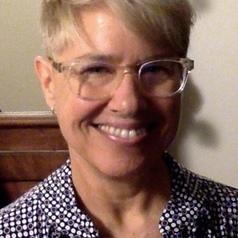
Liz Wilson
Professor of Comparative Religion, Miami University
Liz Wilson is Professor of Comparative Religion at Miami University of Ohio. She earned her doctorate at the University of Chicago Divinity School, specializing in the History of Religions. Her focus is on the religious history of pre-modern South Asia. Her primary training is in Buddhism, especially Gupta-era narrative literatures of pre-modern India. Her secondary training is in Jainism, Hinduism, Islam, and Sikhism, both in South Asia and in diasporic contexts in North America. Wilson’s primary analytical lenses are gender, sexuality, gerontology, and family-formation.
Wilson’s first book _Charming Cadavers: Horrific Figurations of the Feminine in Indian Buddhist Hagiographic Literature_ (University of Chicago Press, 1996) broke new ground in applying a gender studies lens to pre-modern Buddhist literature and practice in the Indian subcontinent.
The question of how renunciant Buddhists relate to those outside the monastery has been a central preoccupation for Wilson. From this foundation of specialized research, she engages in comparative religious studies, writing about styles of celibacy in different religious and secular communities. She has published on how celibacy contributes to family formation and community building in Buddhist, Christian, and other religious communities that laud the benefits of celibacy and exalt the spiritual work of celibate people. She has delineated instances that bear up the assumption that celibate people have more time to give to those outside their biological families and hence have the potential to build community well. She has explored controversial topics such as the status of out lesbians who choose to be celibate in line with what they regard as central teachings of the Roman Catholic church and the question of whether sexual pleasure is a fundamental human right, as advocated by some in the on-line incel (involuntary celibate) community.
Wilson has written on Buddhist modalities of death and dying. She's compared death rituals across a range of South Asian religions. South Asian vampires are a special interest, especially the undead of the Kathmandu Valley of Nepal.
Recent work builds on research in South India among Hindus, Christians, and Muslims in Kerala. In this work, Wilson explores questions about asceticism, gender segregation, and male identity formation in a popular South Indian pilgrimage that has historically prohibited reproductive age women. Wilson’s published essays on the topic cover the stand-off between conservative Hindu nationalists and groups advocating for the right of reproductive age women. She’s currently writing an essay that speculates about the extent to which transwomen are already making the pilgrimage and whether other gender queer people may also be allowed to visit the temple that is the culmination of the pilgrimage experience.
Less

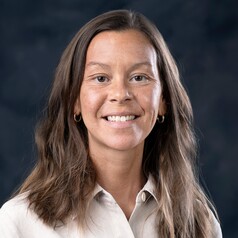
Liza Bondurant
Associate professor of secondary math education, Mississippi State University
Liza (Cope) Bondurant is an associate professor in the Department of Teacher Education and Learning at Mississippi State University. A first-generation college graduate, she began her career as a secondary mathematics teacher in upstate New York. Interested in improving the mathematical experiences of traditionally marginalized students, her research focuses on rehumanizing mathematics through embodied teaching and learning, the development of mathematics identity, and teacher development. She has published numerous articles and book chapters, has given talks at regional and national conferences, and has participated in several grant-funded research projects. She is a Department Editor of the National Council of Teachers of Mathematics (NCTM) Mathematics Teacher: Learning and Teaching PK-12 (MTLT) journal and is on the Editorial Board of the Journal of Urban Mathematics Education (JUME). She has been recognized with awards, such as the College Teacher of the Year by the Mississippi Council of Teachers of Mathematics (MCTM), and has served in various leadership roles, such as the President of the Mississippi Association of Mathematics Teacher Educators (MAMTE). https://www.faculty.msstate.edu/lb2206
Less
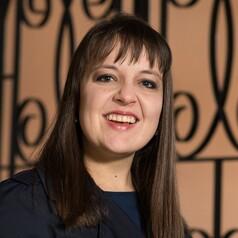
Lizette Diedericks
Lecturer, University of Pretoria
Dr Lizette Diedericks, a lecturer in the Department of Consumer and Food Sciences at the University of Pretoria, holds a PhD in consumer science, specialising in clothing management. Within her teaching role, Dr. Diedericks instructs undergraduate courses covering clothing construction, textiles, and fashion history. Simultaneously, she supervises postgraduate students pursuing studies in consumer science. Her doctoral research delved into the correlation between personal values, store image, and subsequent store choice. Her present research initiatives revolve around exploring the sensory dimensions inherent in clothing and textiles, aiming to understand how clothing enhances consumer well-being. In this interdisciplinary research, she has a longstanding relationship and collaboration with the Department of Occupational Therapy at the University of Pretoria.
Less
Lizzie Manning
Lecturer in Physiology and Neuroscience, University of Newcastle
I am a neuroscience researcher and was recently appointed as a lecturer in the teaching discipline of physiology at the University of Newcastle. My research interest is understanding the change in brain function associated with mental illness, with a particular focus on disturbances in flexible behaviour that occur across different mental illnesses including obsessive compulsive disorder, depression and addiction. My research uses cutting-edge neuroscience approaches to understand the cell types and pathways in the brain that underlie pathological changes in flexible behaviour in disease. Outside the lab, I'm passionate about increasing awareness and understanding about mental illness to reduce stigma, and improving equity in academia including creating new culturally safe opportunities for research training for Aboriginal and Torres Strait Islander students.
https://www.newcastle.edu.au/profile/lizzie-manning
Less

Lizzie Robertson
PhD researcher in Digital Archaeology, University of Glasgow
I am a PhD researcher at the University of Glasgow, and my work is at the intersection between archaeology and digital media practice. Over the course of my research, I've been focussed on the archaeology of the Scottish Highlands, with a particular focus on the landscapes of Glencoe and Rannoch Moor. Through considering the townships, shielings, crofting landscapes, sheep farms and the contemporary landscape, I’ve explored how as archaeologists we might represent stories about these places throughout time.
My research considers how we might create immersive audio that deals sensitively with perception, immersion and reality, especially when it comes to dealing with a past reality that was very different from our own. Drawing in interdisciplinary links from sound studies, sound art, and performance studies, I’m interested in the embodied, sensory experiences of people that lived in these past landscapes and communicating this with audiences today. By creating field recordings, compositions, and immersive audio media, I explore how thinking about sound and archaeology can be a critical and active form of archaeological research.
Less

Lizzie Seal
Professor of Criminology, University of Sussex
Lizzie joined the School of Law, Politics and Sociology after teaching for four years at Durham University. She has published a monograph on gender representations of women who kill and has co-authored, with Maggie O'Neill, a book on cultural criminology and representations of transgression. She has recently completed research on public responses to the death penalty in mid twentieth-century England and Wales.
Less

Lizzie Wright
Postgraduate Researcher in the School of English, University of Leeds
I am a current postgraduate researcher in the School of English at the University of Leeds. My thesis, entitled 'The ‘good for her’ genre and violent revenge in American feminist film (2014-2022)', focuses on contemporary film and television narratives of violent revenge committed by women in unstable states of mind. I examine my texts as a response to the rising misogynist terrorism perpetuated by internet-based incels, which saw an increase from 2019 onwards in the time of the COVID-19 pandemic.
For my Masters by Research in English Literature, I undertook a 30,000 word dissertation titled 'Disability and Disfigurement in Twenty-First Century Comic-Book Films', exploring metaphorical and literal disability in superhero films. I posited that the origin stories of super-abled people serve the same purpose as the account of how the disabled person ‘became’ disabled; creating demand for a story where non-disabled people can explore and exploit extraordinary bodies.
Less
Lizzy Willmington
Lecturer in Law, Cardiff University
Lizzy is an interdisciplinary and critical legal scholar who works at the intersections of immigration law, critical legal studies, critical race studies and art.
Her doctoral research, 'Productions of Ignorance and Co-Productions of Resistance: Britain's Hostile Environment', was funded by Cardiff Law School Scholarship. This research focuses on contemporary UK immigration laws, known as the hostile environment, colonial histories of immigration laws and creative resistances to them. Approaches to this research include doctrinal and historical with critical property and critical race theory to scrutinise immigration laws as technologies of mobility, categorisation and segregation of people. Grassroots and co-productions of resistance to these processes were detailed through the case study of The Hostile Environment Walking Tour (2018), a participatory art project produced by Lizzy as part of the Who Are We? Project, a three-year project at the Tate Exchange.
Less
Llewellyn Spink
AI Corporate Governance Lead, Human Technology Institute, University of Technology Sydney
Less
Llucia Mascorda-Cabre
Postdoctoral Researcher, Applied Marine Ecosystem Research Unit, University of Plymouth
Less
Lluís Montoliu
Investigador científico del CSIC, Centro Nacional de Biotecnología (CNB - CSIC)
Licenciado y doctor en Biología por la Universidad de Barcelona. Ha trabajado en Barcelona, Heidelberg (Alemania) y Madrid. Investiga sobre temas básicos, como la organización de genes en el genoma, y aplicados, como las enfermedades raras, en particular el albinismo, utilizando modelos animales (ratones) editados genéticamente con las herramientas CRISPR-Cas9, de las que fue pionero en su uso y diseminación en Espama. Investigador científico del Centro Nacional de Biotecnología (CNB-CSIC) y del Centro de Investigación Biomédica en Red en Enfermedades Raras (CIBERER-ISCIII). Es Presidente del Comité de Ética del CSIC, miembro del panel de Ética del ERC en Bruselas y Profesor Honorífico de la Universidad Complutense. Presidente de las sociedades científicas internacionales ARRIGE y ESPCR. Miembros de las juntas directivas de la SEBBM, SEG e IFPCS. Director del nodo español del Archivo Europeo de Ratones Mutantes (EMMA-Infrafrontier). Promotor del acuerdo COSCE por la transparencia en experimentación animal. Además de la investigación le apasiona la bioética y la divulgación científica. Ha recibido diversos premios por su trayectoria investigadora y divulgadora.
Less

Llŷr ap Cenydd
Lecturer in Computer Science, Bangor University
I am a lecturer in the School of Computer Science and Engineering at Bangor University, Wales, UK. My research interests include virtual and mixed reality, real-time computer graphics, procedural animation, and artificial intelligence. Alongside my academic work, I also develop commercial VR games, including the underwater safari park experience Ocean Rift.
Less

Loandi Richter-Mouton
Researcher: Environmental Antimicrobial resistance, water quality and food safety, Department of Plant and Soil Sciences, University of Pretoria, University of Pretoria
Less
Loc Do
Professor of Dental Public Health, The University of Queensland
I am a dentist by background. I commenced my research career in early 2000s. I was a Professor at the Australian Research Centre for Population Oral Health, University of Adelaide. I have moved to University of Queensland School of Dentistry since January 2021 as Professor of Dental Public Health.
Less
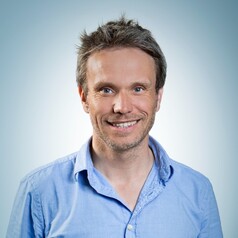
Lode Godderis
Professor in occupational medicine , KU Leuven
I am a professor in Occupational Health at the Centre for Environment and Health of the University of Leuven. I care for healthy people in healthy companies. I am driven by prevention and I aim to improve wellbeing and health through and at work. In this context, I see return to work as an essential and integrated part of the recovery and treatment of sick and disabled individuals.
Less
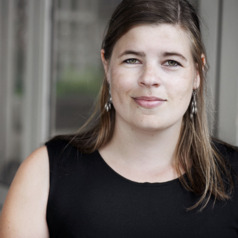
Loes Aaldering
Associate Professor in Comparative Politics, Vrije Universiteit Amsterdam
Loes Aaldering is an associate professor in Comparative Politics at the Department of Political Science and Public Administration of the VU Amsterdam. Her research mainly focuses on issues related to gender and politics, political leadership, political representation and electoral behavior. More specifically, she studies, among other things, how politicians are discussed in the media in terms of their leadership traits; gender differences in media coverage of politicians; (gendered) leadership effects on voters; gender stereotypes; sexism during election campaigns; dark politicians; gender and negative campaigning; fake news; news avoidance; immersive journalism and (affective) polarization.
Less
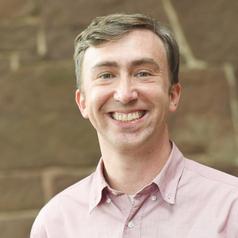
Logan Dancey
Associate Professor of Government, Wesleyan University
Logan Dancey (Ph.D. University of Minnesota, 2010) is an Associate Professor in the Department of Government at Wesleyan University, where he teaches courses in American Politics. His research and teaching interests include the U.S. Congress, campaigns and elections, and public opinion. His work has appeared in such journals as the American Journal of Political Science, Political Research Quarterly, and Political Behavior. He is also a co-author (with Kjersten Nelson and Eve Ringsmuth) of the book It’s Not Personal: Politics and Policy in Lower Court Confirmation Hearings.
Less

Logan Kistler
Curator of Archaeobotany and Archaeogenomics, National Museum of Natural History, Smithsonian Institution
I use archaeology, ancient DNA, and genomics to study the domestication of plants and humans' relationships with the environment.
Less

Logan Pendergrast
PhD Researcher in Integrative Physiology, Karolinska Institutet
Logan Pendergrast is a PhD researcher in the Integrative Physiology Laboratory at Karolinska Institute. His research focus is to characterise the interplay between adipose tissue biology, the circadian clock, and exercise.
Less
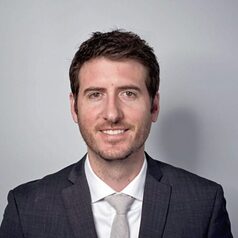
Logan Walsh
Assistant Professor, Department of Human Genetics, McGill University
Logan Walsh est professeur adjoint au département de génétique humaine de l’Université McGill et membre de l’Institut du cancer Rosalind et Morris Goodman. Il a récemment été nommé titulaire de la chaire de recherche sur le cancer du poumon Rosalind Goodman.
Less


- Market Data




