

 Menu
Menu

 Search

- News

- Economy

- Central Banks
- Investing
- Research
- Roundups
- Digital Currency
- Insights
- Technical Analysis
- Technology
- Business
- Law
- Health
- Nature
- Fintech
- Science
- Topic
- Opinions
- ©Econometrics LLC . All Rights Reserved.

Sarita Pillay
Lecturer in the School of Geography, Archaeology and Environmental Studies, University of the Witwatersrand
Dr Sarita Pillay Gonzalez is a lecturer in Human Geography at the School of Geography, Archaeology and Environmental Studies (GAES) at Wits. Sarita was awarded her PhD through the School of Architecture & Planning (SoAP) at Wits in 2022, undertaking fieldwork in Johannesburg and Bangalore. Her research interests in real estate development and the multifarity of the state in the built environment were inspired by her time as a researcher, community organiser and popular educator in affordable housing campaigns in Cape Town from 2016 to 2018. Prior to this, as a Fulbright scholar, Sarita received her Masters in Urban & Regional Planning from the University of Minnesota focused on Spatial Justice & Political Economy.

Less 
Sarvin Hassani
Senior Lecturer in International Business, Anglia Ruskin University
As senior lecturer in international business, I am interested in macroeconomics, economic innovation, economic growth and economic productivity.
I am also leading Centre for Student Success (CfSS) which focuses on student engagement and implement various intervention across the academic year to support students and increase the student's success rate. I am also active researcher in this area.
Less
Sascha Samlal
PhD Candidate, The University of Melbourne
Sascha Tanuja Samlal is a PhD candidate at The University of Melbourne in Cultural Studies. Her research project titled, Shame and the Figure of the Fangirl: Reconfiguring Shame in Popular Music Fandom, commenced in 2023. Her research spans fandom studies, social media studies, critical femininity studies, and feminist and queer theory. She is an advocate for attending to questions of femininity and queer lived experiences in research.
Less

Sasha Moodie
Research Officer, Curtin University
I graduated from the Master of Public Health at the University of Melbourne in 2023. During my studies, I developed an interest in qualitative research methods and community-based approaches to public health responses and research. Since graduating, I have been working at the Melbourne School of Population and Global Health and the National Drug Research Institute at Curtin University in Indigenous health research. I also have experience working in sexual and reproductive healthcare and Victorian Government public health programs.
Less
Sasha Sarago
First Nations Cultural Innovation Lead - Beauty and Technology, Charles Sturt University
As a Yidinji and Jirrbal woman, Sasha is committed to incorporating decolonial thinking and First Nations philosophies into Western systems.
Her previous work at Parks Victoria, in the Managing Country Together division, focused on First Nations-led strategies for Indigenous tourism development and cultural heritage management projects.
Sasha is also the former editor and founder of Ascension magazine, Australia's first digital lifestyle platform for women of colour.
Her extensive research for her book Gigorou: It's Time to Reclaim Beauty. First Nations wisdom and womanhood, and TEDx talk 'The (De)colonising of Beauty', highlight her expertise in culture, diversity, and equity. Sasha's advocacy also extends to fostering Indigenous-owned and controlled economies through entrepreneurship and technology.
Sasha’s research interests include:
Beauty, fashion and technology
Entrepreneurship
Diversity, equity and inclusion
First Nations philosophies
Cultural heritage management and preservation
Indigenous cultural knowledge and intellectual property
Less
Sasha Volodarsky
Ph.D. Student in Political Science, Northeastern University
Sasha Volodarsky is a doctoral candidate in the Department of Political Science at Northeastern University, specializing in Comparative Politics and American Politics. He has a strong background and interest in voters’ and parties’ behavior and particularly in voters’ volatility. During Sasha’s MA studies he served as a Teaching Assistant at Sapir Academic College (Israel) and as a Research Assistant at Interdisciplinary Center Herzliya (Israel).
Sasha’s research interests lie at the intersection of comparative politics (arising from fascination with multi-party democracies) and American politics (which puts more emphasis on voters’ and parties’ behavior). In his studies, Sasha hope to continue research of switching behavior in multi-party democracies and the rise of populism.
Sasha grew up in Donetsk, Ukraine and moved to Israel at the age of 17. After completing his BA in Sociology, he served as a research officer at the Command and Staff College of the Israel Defense Forces, heading the research department.
After his army service Sasha started to work as a marketing researcher. After several years he became interested in socially oriented research. Therefore, Sasha switched to the field of applied research and worked at Myers-JDC-Brookdale Institute in Jerusalem, and later at the Cohen Center for Modern Jewish Studies at Brandeis University. In addition, he spent several years overseeing group counselor training in informal education projects. Sasha is fluent in Russian, Ukrainian, and Hebrew.
Less
Sasha Wilmoth
Lecturer in Linguistics and Applied Linguistics, The University of Melbourne
Sasha Wilmoth is a Lecturer in Linguistics and Applied Linguistics at the University of Melbourne, working within the Research Unit for Indigenous Language. Her research focusses on the languages of Indigenous Australia. In particular, she works with Pitjantjatjara communities to document the structure of their language, how the language is being maintained and adapted by young people, and how to keep the language strong through bilingual education.
Less
Sasimonthakan Tanarsuwongkul
Ph.D. Candidate in Biochemistry, University of South Carolina
I am currently working on finding the biomarker(s) of a vascular disease using proteomics and finding the receptor(s) of a group of plant defense signals using chemoproteomics, along with analyzing a modified virus using the liquid chromatography and mass spectrometry.
Less
Saskia Charity
Postdoctoral Research Associate, Particle Physics, University of Liverpool
I am a senior Research Associate in the Particle Physics group at the University of Liverpool. My research is focused on Muon Physics. In particular, I work on resolving the tension between the experimental and theoretical determinations of the muon anomalous magnetic moment. I have been working on the Fermilab muon g-2 experiment since 2014. After gaining my PhD from the University of Liverpool, where I built hardware and developed reconstruction algorithms for the g-2 tracking detectors, I moved to Fermilab as a Research Associate in the muon department. During my time working on g-2 I have been involved with many different aspects of the operations and analysis of the experiment. In my current role as magnetic field Analysis Coordinator, I analyze data from multiple systems to make an ultra-precise measurement of the muon-weighted magnetic field, which is one of the two main quantities required to determine the value of the muon anomalous magnetic moment. In 2022, I joined the University of Liverpool once again, to continue my work on g-2 as well as other muon experiments.
Less
Saskia Kohnen
Director, Australian Literacy Clinic, Australian Catholic University
Professor Saskia Kohnen is the Director of the Australian Literacy Clinic at ACU where she works with an interdisciplinary team of (neuro)psychologists, speech-language pathologists and teachers. The clinic conducts literacy assessments and interventions and provides input into ACU's teacher training programs and professional development. Saskia's current research interests include the assessment of the underlying causes of reading and spelling difficulties in children and adolescents; conducting intervention trials for children and adults with developmental and acquired reading and spelling difficulties; and the investigation of more typical reading and spelling acquisition.
Less
Saskia Roberts
PhD Candidate, School of History, Australian National University
Saskia is a PhD Candidate in History at the Australian National University. She researches Australian teenage girls, intimate knowledge and print culture between 1970 and 2010. She is also a member of the Lilith: A Feminist History Journal editorial collective.
Less
Satish Kumar
Research Fellow, The Senator George J. Mitchell Institute for Global Peace, Security and Justice, Queen's University Belfast
Dr. M. Satish Kumar’s research has been to understand the production of colonial and postcolonial ordering of space. Currently, he is engaged with the challenges faced by cultural heritage due to rapid urban expansion, political conflict and climate change and natural disasters. Of particular interest is the role of cultural heritage in informing questions of marginalization, identity in a decolonialized world. This involves identifying the synergies of the physical and the human ecosystems.
Providing critical non-Eurocentric perspectives to questions of colonial and postcolonial development based on previous research on dignity, gender, values, sustainable human development and humanitarian competition, across the rural-urban divide.
Less
Saul Eslake
In 2016, Saul Eslake was appointed as the University of Tasmania's inaugural Vice-Chancellor’s Fellow. A focus of his efforts in the role will be the University’s Institute for the Study of Social Change, where he will provide advice and leadership on new research programs designed to analyse and address the social and economic challenges facing our local community and nation as a whole. His work also will centre upon the importance of education to Tasmania.
This is a part-time role; Saul is also an independent consulting economist.
Saul Eslake has worked as an economist in the Australian financial markets for 25 years, including 14 years as Chief Economist at the Australia & New Zealand Banking Group (ANZ).
After leaving ANZ in mid-2009, Saul was Director of the Productivity Growth program at the Grattan Institute, a non-aligned public policy 'think tank' affiliated with the University of Melbourne, and a part-time Advisor in PricewaterhouseCoopers' Economics & Policy practice.
From 2011 to 2015, Saul was Chief Economist at the Australian arm of Bank of America Merrill Lynch, before establishing a private consultancy in Tasmania.
Saul is a non-executive director of Hydro Tasmania (the Tasmanian state-owned electricity generator), and Chair of the Board of Ten Days on the Island (Tasmania's biennial multi-arts festival). He has previously been a member of the National Housing Supply Council and the Australian Statistics Advisory Committee; Chair of the Tasmanian Arts Advisory Board; and a non-executive director of the Australian Business Arts Foundation. He was also a member of the Howard Government's Foreign Affairs and Trade Policy Advisory Councils, and of the Rudd Government's Long-Term Tourism Strategy Steering Committee.
Less
Saul Lehrfreund
Visiting Professor, School of Law, University of Reading
Saul Lehrfreund is the co-founder and Co-Executive Director of The Death Penalty Project, an international human rights organisation based at Simons Muirhead & Burton solicitors in London. Saul specialises in constitutional and international human rights law and has represented prisoners under sentence of death before the domestic courts in the Commonwealth and international tribunals since the organization's inception in 1992. He has assisted lawyers in many countries (including Uganda, Nigeria, Malawi, Ghana, India and Malaysia) in constitutional cases concerning the death penalty and has participated in expert delegations to Japan, Taiwan, China and India.
In November 2000, Saul was awarded an MBE for services to international human rights law and in July 2009, he received an Honorary Degree of Doctor of Laws from the University of Reading.
He is a founder member of UK Foreign & Commonwealth Office Pro Bono Panel representing British Nationals facing the death penalty. Saul has published and lectured extensively on capital punishment and human rights to a wide range of audiences including the United Nations and the Council of Europe.
Less
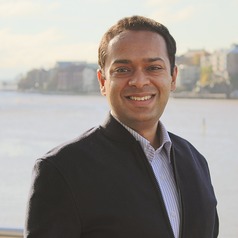
Saurabh Singhal
Associate professor, Lancaster University
Saurabh Singhal is a Senior Lecturer in Economics. His research interests include the political economy of development, human capital development issues and experimental economics. His current projects analyse individual and household decisions related to health and education, and how these interact with political institutions and public policies. He holds a PhD in economics from the University of Southern California, and has previously worked at UNU-WIDER and the University of Delhi.
Less
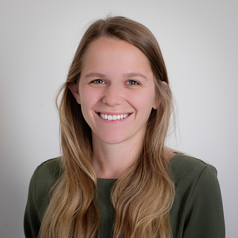
Savannah Dodd
Postdoctoral research fellow, Centre for Creative Ethnography, Queen's University Belfast
Savannah Dodd, PhD holds an ESRC-funded Postdoctoral Research Fellowship in the School of History, Anthropology, Philosophy, and Politics at Queen’s University Belfast (QUB). In 2017, she founded the Photography Ethics Centre, a social enterprise organisation dedicated to promoting ethical, visual, and media literacy. In 2020, her edited volume Ethics and Integrity in Visual Research Methods was published by Emerald. In 2021, she achieved fellowship of the Higher Education Academy.
Savannah earned her PhD in anthropology from Queen’s University Belfast (2023), her master's in anthropology and sociology at the Graduate Institute of International Development Studies in Geneva (2015), and her bachelor's in anthropology at Washington University in St. Louis (2012). Savannah is a member of the Ethical Journalism Network’s UK Committee and of the board of Source Magazine. She previously sat on the Ethics Panel for the Environmental Photographer of the Year Award.
Less
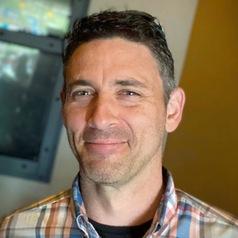
Saverio Eric Spagnolie
Professor of Mathematics, University of Wisconsin-Madison
My interests lie at the interface between fluid and solid structures in soft biological matter. The dynamics of bodies immersed in fluids at small scales is of great practical and biological interest, but fluid interactions on such scales are inherently nonlocal so their analysis and even computation can still be very challenging. I approach problems in biological propulsion, cell mechanics, and fluid-body interaction systems using a number of techniques, from the application of classical methods of applied mathematics to the development of novel numerical methods.
Less
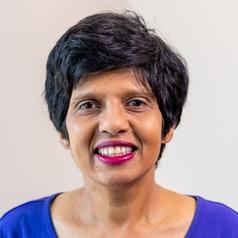
Savitri Taylor
Associate Professor, Law School, La Trobe University
Savitri Taylor's research over the past 30 years has focused on refugee law and asylum policy at the national, regional and international level.
Less
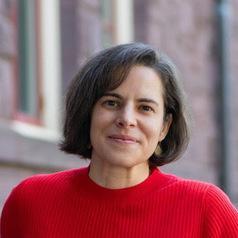
Say Burgin
Assistant Professor of History, Dickinson College
I graduated from St. Olaf College, summa cum laude, in 2006 with a double major in English and Women's Studies and a historical concentration in 19th century women's history. In 2009, I earned an MA in Race & Resistance from the University of Leeds (United Kingdom), and then I completed my PhD in History at the University of Leeds in 2013.
Less
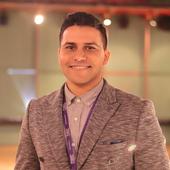
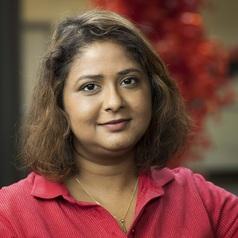
Sayonnha Mandal
Lecturer in Interdisciplinary Informatics, University of Nebraska Omaha
Dr. Sayonnha Mandal is a Lecturer of Cybersecurity in the College of Information Science and Technology at the University of Nebraska at Omaha (UNO). She received a Masters in Telecommunication Engineering from the University of Oklahoma and a Masters in Cybersecurity from UNO. Dr. Mandal earned her doctorate in Information Security from UNO, with a focus on software security requirements modeling and analysis. Her research interests include cybersecurity curriculum development, information security policy and governance and quantum cryptographic implementations. Moreover, she has experience in teaching a variety of cybersecurity courses at both the graduate and undergraduate levels including Digital forensics, Foundations of Cybersecurity, Intro to Cybersecurity, Cryptography, Security Policy and Awareness and Computer and Network Security.
Less
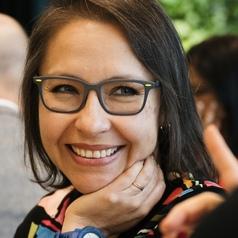
Sayra Cristancho
Associate Professor, Department of Surgery and Faculty of Education; Scientist, Centre for Education Research & Innovation, Western University
My research program investigates how action teams navigate and respond to disruptive events. My goal is to show how best to support training and practice for resilient teaming. To this end, I developed a unique research approach that cross-pollinates qualitative research, sociobiology, and engineering principles with insights from various industries, including healthcare, tactical/military, and emergency response. I am currently interested in understanding how community volunteer initiatives could augment emergency management in Canada, if we are to attain "whole-of-society resilience". As an author and with my research, I am hoping to contribute to the recent discussion around Canada's approach to emergency management that is taking place in The Conversation.
Less
Scarlett Baron
Associate Professor in Department of English, UCL
Scarlett Baron took her B.A. (2003), M.St. (2005), and D.Phil. (2008) at Christ Church, Oxford.
She was affiliated to the École Normale Supérieure and the Institut des Textes et Manuscrits Modernes in Paris in 2006, and spent two months as a Scholar of the Zurich James Joyce Foundation in 2007.
She was a Research Fellow at Magdalen College, Oxford, from 2008 to 2011.
She joined UCL as a Teaching Fellow in 2011, assuming the role of Lecturer in 2012 and Associate Professor in 2018.
She is a member of the Advisory Board of the James Joyce Quarterly and a Trustee of the International James Joyce Foundation.
Less
Scarlett Howard
Lecturer, Monash University
Dr Scarlett Howard is a lecturer and research group leader in the School of Biological Sciences at Monash University. Her research spans cognition, behaviour, pollination, ecology, zoology, neurobiology, environmental change, and bio-inspired solutions. She predominantly works with bees and other insects to explore the cognitive abilities of miniature insect brains. Her work on honeybee cognition and pollination spans between collaborations across the world.
Scarlett has previously worked at the Centre for Integrative Ecology (CIE), School of Life and Environmental Sciences at Deakin University, the Bio-Inspired Digital Sensing (BIDS) Lab, School of Media and Communication at RMIT University, the School of BioSciences at the University of Melbourne, the Experience-Dependent Plasticity in Insects (EXPLAIN) Team in the Research Center on Animal Cognition (CRCA) with CNRS - Université Toulouse III - Paul Sabatier (Toulouse, France).
Less
Schneur Zalman Newfield
Associate Professor of Sociology and Jewish Studies, Hunter College
Schneur Zalman Newfield received his PhD in Sociology from New York University, with a focus on cultural sociology and the study of identity, narrative, and resocialization. He holds an MA from NYU in sociology and a BA from Brooklyn College, CUNY, in psychology. Prior to arriving at Hunter, he was an Assistant Professor at Borough of Manhattan Community College. Before joining CUNY, he taught sociology courses for two years in six New Jersey state prisons through Rutgers University-Newark’s New Jersey Scholarship and Transformative Education in Prisons (NJ-STEP) program.
Dr. Newfield’s research focuses on the process individuals undergo when making major life transitions. His book, Degrees of Separation: Identity Formation While Leaving Ultra-Orthodox Judaism (Temple University Press, 2020), explores the lives of a group of men and women who were raised in ultra-Orthodox Jewish communities and decided to leave that way of life.
Less
Scott Bridges
Scott is a PhD candidate at the University of Canberra where he also teaches communications and journalism.
Less
Scott Cairney
Associate Professor of Psychology, University of York
I lead the Emotion Processing and Offline Consolidation (EPOC) Lab at the University of York. Our research addresses the mechanisms through which sleep disturbances give rise to mental health problems, with a focus on neurobiological perspectives. We use a range of methods to do this, including behavioural studies, sleep electroencephalography (EEG) and functional magnetic resonance imaging (fMRI). Our findings have helped us to better understand what goes wrong in the brains of people who are not sleeping well, and how we can target these impairments to improve the prospects of people at risk of psychiatric disorders.
Less
Scott Campbell
Constance F. and Arnold C. Pohs Professor of Telecommunication, University of Michigan
My research examines the social implications of new media, with an emphasis on mobile telephony. Current projects investigate how mobile communication patterns are linked to both the private and public spheres of social life, such as social networking and civic engagement. Several of these projects use a comparative approach to situate the role of mobile communication technology in the larger media landscape and across different societies.
Less
Scott Carver
Associate Professor, Wildlife Ecology, University of Tasmania
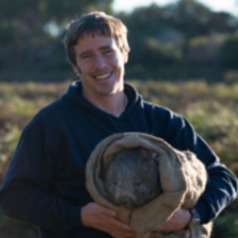
Scott joined the School of Biological Sciences at the University of Tasmania (UTAS) in 2012. He continues his research into disease transmission in puma, bobcats and domestic cats in North America, focussing on Feline Immunodeficiency Virus (an analogue for HIV in humans).
He has reengaged in mosquito-borne disease ecology in Australia, picking up where his PhD finished, with specific emphasis to understand the complex ecology and epidemiology of Ross River virus, particularly the role of marsupial hosts in human epidemic patterns. He has also established new research directions.
A major focus of his lab is studying sarcoptic mange, which is the most threatening disease of wombats in Australia, and infects >100 species of mammal globally. He collaborates and co-supervises students studying Tasmanian Devil Facial Tumour Disease. He also works closely with colleagues studying the epidemiology Chlamydial infections among agricultural animals and koala, and vaccine development.
Less
Scott Chiesa
Senior Research Fellow and Alzheimer's Research UK David Carr Fellow, UCL
I am a senior research fellow in the MRC Unit for Lifelong Health and Ageing at UCL. I hold a BSc(Hons) from the University of Glasgow, MSc from King's College London, and a PhD from Brunel University London. I am currently funded as an Alzheimer's Research UK David Carr Fellow researching early-life risk factors which may underlie the development of both cardiovascular disease and dementia.
Less
Scott Claessens
Postdoctoral Research Fellow, University of Auckland
I am a Postdoctoral Research Fellow in Psychology at the University of Auckland. I study cooperation and prosociality in humans, and how these behaviours relate to other aspects of our social lives, including politics and religion.
Less

Scott Davies
Professor, Ontario Institute for Studies in Education, University of Toronto
My research has several branches. One examines trajectories of student achievement over several years. With various institutional partners I am compiling data sets that track students from their early years into post secondary levels, and to assess the impact of various interventions in reducing educational inequality. Another branch examines educational organizations, paying attention to the variety of school forms that are emerging at all levels of schooling, including various types of private schools and tutoring businesses, and various public schools of choice. In a third branch, I am attempting to contribute to sociological theories of education, variously interpreting how schooling and society have become more deeply ‘interpenetrated’ over time, charting different forms of cultural capital, and attempting to apply Interaction Ritual Theory to schooling.
Less
Scott Ewing
Scott Ewing is a Senior Research Fellow at the Swinburne Institute for Social Research and at the ARC Centre of Excellence in Creative Industries and Innovation. He has fifteen years experience as a social researcher, both at Swinburne and in the private sector. He is currently managing the Australian component of the World Internet Project, a global survey of internet use and non-use.
Less
Scott Hagan
Assistant Professor of Medicine, School of Medicine, University of Washington
Dr. Scott Hagan is an Assistant Professor of Medicine in the Department of Medicine at the University of Washington. He is a primary care physician with board certifications in Internal Medicine and Obesity Medicine. His research interests includes patient-centered obesity care, evidence-based medicine, and primary care quality improvement.
Less


- Market Data




