

 Menu
Menu

 Search

- News

- Economy

- Central Banks
- Investing
- Research
- Roundups
- Digital Currency
- Insights
- Technical Analysis
- Technology
- Business
- Law
- Health
- Nature
- Fintech
- Science
- Topic
- Opinions
- ©Econometrics LLC . All Rights Reserved.
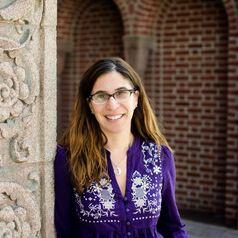
Julie Cederbaum
Associate Professor of Social Work, University of Southern California
Julie Cederbaum is an associate professor in the Suzanne Dworak-Peck School of Social Work. Her work focuses on the impact of childhood adversity and family processes on the well-being of youth. Using a dyad and family systems lens, her research explores the strengths and challenges experienced by diverse families, and ways in which parenting processes and behaviors (i.e. parent–child communication, parental monitoring, parent–child relationship, and parental role modeling) and positively influence mental health, reproductive health, and substance use behaviors in children, adolescents and young adults.

Less 
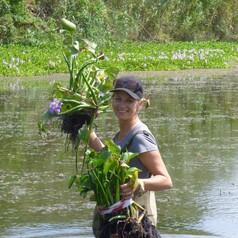
Julie Coetzee
Researcher, Rhodes University
I research the ecology and management of aquatic invasive plants
Less
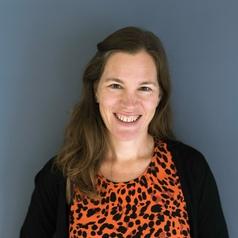
Julie Copelyn
Senior lecturer, University of Cape Town
Julie Copelyn is a paediatric infectious diseases subspecialist. She received her MBBS from the University of
Sydney in 2007, before returning home to South Africa. She holds an MSc in Paediatrics and Child Health (Global
Health) from University College London and is a member of the founding committee of Young WSPID. Her interests include paediatric HIV and TB, vaccine preventable illnesses and antimicrobial stewardship.
Less
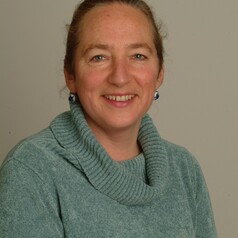
Julie Curtis
Professor of Russian Literature (Emerita), University of Oxford
I retired in September 2021 after a 30-year career teaching and researching Russian literature and culture at the University of Oxford. Most of my publications have related to banned satirical authors of the pre-WWII Stalin era (Bulgakov and Zamiatin), but more recently I led a project and edited a volume on protest theatre in Russia, Ukraine and Belarus during the Putin era.
_____
Professor Curtis’s published research has largely been focused on subversive writers of the early Stalin Period (1920s and 1930s). She has spent a great deal of time working in archives in Russia and abroad, and this has enabled her to publish a range of analytical and biographical studies of the life and works of the satirical novelist and playwright Mikhail Bulgakov (1891-1940). She has also explored the life and works of Bulgakov’s friend and contemporary Evgeny Zamiatin (1884-1937), an anti-utopian writer much admired by George Orwell. In 2013 she published the first full biography of Zamiatin to appear in any language; she has also co-edited (with a St Petersburg colleague) a scholarly edition in Russian of his most famous novel, We / Мы, based on a unique typescript she discovered in an American archive.
After publishing a new biography of Mikhail Bulgakov in 2017 ((Reaktion Books and University of Chicago Press: Critical Lives, 2017), she is currently completing a Companion to ‘The Master and Margarita’, Bulgakov’s most famous novel, for Academic Studies Press (Boston, USA), which will be published in 2018 or 2019.
Professor Curtis has developed a particular interest in Russian drama, and runs a specialist option for students which involves the study of plays from the 1820s right up to the present day. Over the last few years she has been involved in helping with productions of Russian plays in several British theatres (the RSC at Stratford, the Barbican and National Theatres in London, the Belgrade Theatre in Coventry) by providing cast workshops, writing programme features, working on translations, and advising directors and design staff.
She is currently undertaking research on 21st-century drama written in Russian in Russia, Ukraine and Belarus, which has been notably bold in its challenges to the political establishment and to socially conservative values. This research is being developed in association with two parallel research projects (2016-2020) funded by the AHRC Open World Research Initiative (OWRI) at the Universities of Oxford (https://www.creativeml.ox.ac.uk) and Manchester (http://projects.alc.manchester.ac.uk/cross-language-dynamics/). She will be editing a volume of essays and interviews on this topic for I.B. Tauris, due to be published in 2020.
Less

Julie Dean
Health Services Researcher, Institute for Social Science Research, The University of Queensland
Dr. Julie Dean is a social scientist and registered psychologist at the Institute for Social Sciences Research at The University of Queensland. She has training in clinical and community psychology, with wide-ranging professional experience in university, government and non-government sectors. Her research interests focus around linkages between human health/well-being and the multiple contexts in which we live, including support for families experiencing perinatal loss, people with chronic illness and people with intellectual disability, as well as approaches to concurrently foster both human health and environmental sustainability.
Less
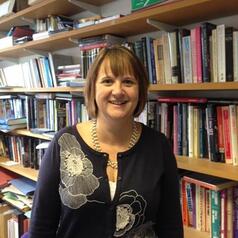
Julie Gammon
Senior Lecturer in History in the School of Humanities, University of Southampton
I am a historian of crime and punishment in eighteenth-century England at the University of Southampton. I am teaching and research gender, sexuality and crime between the late seventeenth and early nineteenth centuries.
I studied at the University of Essex under the supervision of Professor Anthony Fletcher and my research was on the construction of narratives of sexual violence in England from the 17th to early 19th centuries. It used both legal records and petitions for charity to examine how stories of rape were shaped and were changing over time. I also held Lecturing posts at the University of Essex and the University of Warwick before moving to Southampton. My interest in stories of sexual violence has developed into broader research on uncovering histories of groups that are largely absent from the historical record: including, gay and lesbian history, the history of childhood and gypsies/travellers.
Less
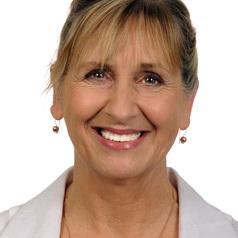
Julie Hodges
Post doctoral research fellow, The University of Queensland
Dr Julie Hodges is currently a Research Fellow in the School of Psychology at the University of Queensland. She is a clinical psychologist and former teacher. Julie has a track record of success in conducting research relevant to schools and publishing in peer reviewed journals.
Twelve years spent ‘at the coal face’ in Queensland primary and secondary schools combined with her work as a trainer in the delivery of parenting programs to parenting practitioners has allowed Julie to develop an understanding of the relationship between home and school from the perspective of both stakeholders.
Julie’s research interests draw on her background as a teacher and her more recent experience as a clinical psychologist. She is keenly interested in supporting the wellbeing and self-regulatory capacity of children and adolescents and the influence that developing a positive relationship between schools and families can have on young people’s developmental outcomes.
Less
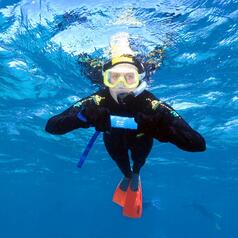
Julie Jakoboski
Oceanographic Data Scientist, Moana Project's Te Tiro Moana Team Lead, MetService — Te Ratonga Tirorangi
Dr Julie Jakoboski is an oceanographer at the MetOcean division of the Meteorological Service of New Zealand, based in Whāingaroa (Raglan). As the Team Lead of the Te Tiro Moana ("Eyes on the Ocean") workstream of the Moana Project, Julie is directing the deployment of the Mangōpare temperature and depth sensors with the goal of obtaining measurements from Aotearoa New Zealand's oceans to better inform the public on changing ocean temperatures.
Bringing her skills in observational oceanography data and ocean models, Julie guides a nation-wide ocean temperature ocean observing system, in partnership with technology partner Zebra-Tech, the commercial fishing sector, and citizen scientists, to improve the availability of ocean measurements Aotearoa New Zealand-wide. She is passionate about collaborating with organisations locally and globally to encourage co-design with fishing vessels in the ocean observing space.
Less
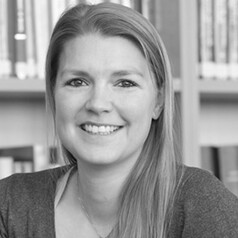
Julie Lasselin
Researcher in Psychoneuroimmunology, Stockholm University
I am a Psychoneuroimmunologist expert in sickness behavior in humans. I aim at better understanding how inflammation influences behavior and what factors underlie the inter-individual differences in the vulnerability to the behavioral effects of cytokines. My work includes basic science research using clinical and experimental models in humans, which characterize in details the overt and subjective behavioral changes induced by inflammation in humans, investigate the adaptive relevance of sickness behavior, analyze the psychological and biological factors that interact with cytokines to affect the brain and behavior, and the underlying mechanisms. My research highlights the complex motivational changes that occur during inflammation by demonstrating that sickness behavior is not only driven by immune signals, but that top-down processes can shape the behavioral effects of pro-inflammatory cytokines. I also investigate how overt changes in behavior during inflammatory sickness affect the relationship with others and the care one receives, and how this in turn modulates health outcomes.
I am part of the steering committee and webmaster of the newly developed European Psychoneuroimmunology Network (https://pnieurope.se). I have received the PNIRS Ader New Investigator Award 2021. This prestigious award is presented to an outstanding new research scientist who has made exciting basic science or clinical contributions to the field of Psychoneuroimmunology.
Less

Julie Maclean
Researcher in Computing, Charles Sturt University
Dr Julie Maclean is a researcher whose experience spans across delivering a range of strategic technology and business research over the last twenty-five years. She started consulting in 2018 to provide advice to businesses to improve engagement, processes and technology with their customers with a key focus on human and technology interactions. A key focus area is implementing digital customer experience to facilitate effective online interactions. She has been completing a range of research studies over the last ten years on online communication, social media, privacy, cyber security, freedom of expression, loneliness, social connectedness, well-being, social rewards and online photo sharing.
Less
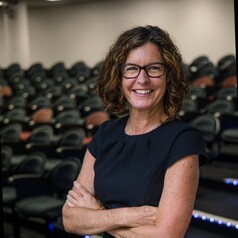
Julie Marsh
PhD Candidate, Accredited Practising Dietitian, BNutrDiet (Hons), The University of Queensland
Julie Marsh is a PhD Candidate with The University of Queensland, an Accredited Practising Dietitian with a Bachelor in Nutrition and Dietetics (Honours), a Bachelor in Holistic Health Sciences, Diploma in Health Science, Diploma of Kinesiology, Certificate IV in Training and Assessment, and Level 1 Instructors Certificate in Calligraphy Health (Qi Gong, Tai Chi & Yoga). Julie graduated with an Honours in Bachelor of Nutrition and Dietetics in 2022 from Griffith University, receiving an Outstanding Excellence Award, numerous Academic Excellence Awards and was the winner of the Health Dean’s Summer Research Scholarship in 2020. She completed her Diploma of Health Science in 2019 from Griffith College, receiving the DUX Award for achieving the highest GPA of both Gold Coast and Brisbane campuses, as well as receiving many academic awards along the way.
Less
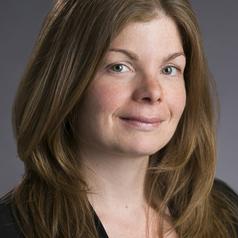
Julie Maslowsky
Associate Professor of Health Behavior and Biological Sciences, University of Michigan
Dr. Julie Maslowsky is a developmental psychologist and population health scientist who studies adolescent health, with a focus on sexual and reproductive health including contraception and abortion. Dr. Maslowsky’s research integrates adolescent developmental science with population and reproductive health to inform developmentally appropriate policies and practices on adolescent sexual and reproductive health. She received her Bachelor's degree in Human Development and Psychological Services summa cum laude from Northwestern University, a Master of Social Work and PhD in Developmental Psychology from the University of Michigan. She completed a postdoctoral fellowship in population health with the Robert Wood Johnson Health and Society Scholars program at the University of Wisconsin.
Less
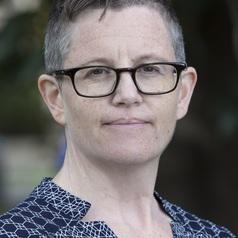
Julie Mooney-Somers
Associate professor, Qualitative Research in Health; Director Master of Public Health, University of Sydney
An Associate Professor at the School of Public Health, University of Sydney, I am a social researcher with expertise in qualitative, creative, and community-based participatory methods working. I’m a leader in research on the health and well-being of LGBTIQ populations. Since 2009, I've been collaborating with community health organisations to run SWASH a periodic survey of lesbian, bisexual and queer women's health. Much of my current work is focused on substance use (smoking, vaping, alcohol and illicit drugs). I’m a member of the NSW Health LGBTIQ+ Health Strategy Implementation committee.
I’m a dedicated educator, having taught qualitative research methods in health for more than a decade. I’m the Director of the Master of Public Health at the Sydney School of Public Health.
Less
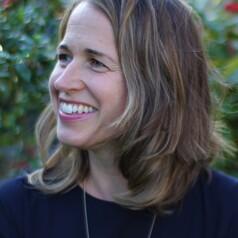
Julie Peconi
Senior Research Officer in Health Data Science, Swansea University
I am a Senior Research Officer in Swansea Trials Unit and have over 20 years’ experience in project, trial and data management across a range of subjects including emergency care, access to healthcare, dementia and skin.
I have always been interested in prevention of ill health and access to healthcare. I obtained my PhD from Swansea University in 2014, exploring issues of demand for, and outcomes of, telephone-based health care by those living in areas of deprivation.
Recently I have combined my research interests with my personal interest in skin health and I am now the Chief Investigator of the Sunproofed study, a 2-year scoping study of sun safety policies in primary schools in Wales. I am an active volunteer with Skin Care Cymru, a charity giving a voice to those with skin conditions in Wales and I am a Trustee PC Project Europe, another skin charity close to my heart.
Less
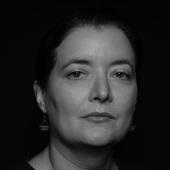
Julie Rae Tucker
Head of Programs and Projects at Art Windsor Essex and Munsee Delaware History and Language group member
Less
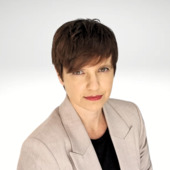
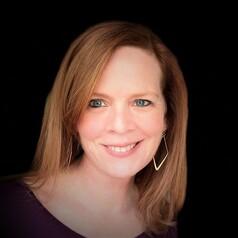
Julie Sullivan
Chief Operating Officer of RADx Tech, Emory University
Julie Sullivan serves as the chief operating officer of Emory University’s National Institutes of Health-funded Rapid Acceleration of Diagnostics (RADx) Center, which has contributed directly to the development of COVID-19 diagnostics used by millions of Americans every day.
Less
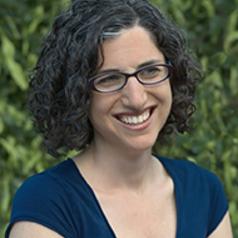
Julie Weise
Associate Professor of History, University of Oregon
Julie M. Weise is an historian of Mexico-U.S. migration and global migration. Her award-winning book, Corazon de Dixie: Mexicanos in the U.S. South since 1910 (UNC Press, 2015), was the first to recount the century-long history of Mexican migration to the U.S. South, a region usually assumed to be only black and white. Thanks to the NEH OpenBook program, the entire book is now free forever at your favorite E-book site.
Her current project, "Guest Worker: Lives across Borders in an Age of Prosperity" (under contract with UNC Press), explores the intertwined social and policy histories of temporary worker programs in the Americas, Europe, and southern Africa from the 1920s through the 1970s.
Weise is also an active public historian and pedagogue. She co-founded the Nuestro South youth social media project (nuestrosouth.org), the Teach in Spanglish bilingual curriculum (teachinspanglish.org), and the University of Oregon DREAMer Ally Training. She has published articles about immigration in outlets including the Los Angeles Times, the Washington Post, and the Atlantic, and as been interviewed by NPR and Univision.com among others.
Prior to joining academia, from 2001-2 Weise worked in the administration of Mexico’s President Vicente Fox as a speechwriter and researcher for the cabinet-level Office of the President for Mexicans Living Abroad. She has also worked as a translator, paralegal, project manager, and policy researcher at immigration-related agencies in New Haven and Los Angeles.
Less

Julie Whiteman
Lecturer in Marketing, University of Birmingham
Dr Julie Whiteman is a Lecturer in Marketing at Birmingham Business School, University of Birmingham. Julie researches the ideological consumption of gender, sexuality, race and social class in popular culture and asks how this interacts with consumer subjectivity and social action. Prior to her career in academia, Julie worked as a marketeer in the creative industries for 15 years.
Julie works to challenge practices of discrimination and exclusion and to promote inclusive, responsible marketing and representation through her research and teaching.
Less
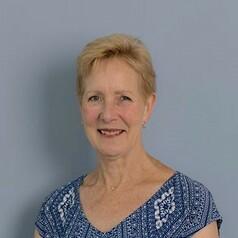
Julie Woods
Honorary Associate Professor of Public Health Nutrition, Deakin University
Julie is a recently retired academic having worked for over 35 years in public health nutrition, teaching and research. She is a Fellow of the Public Health Association of Australia, having been instrumental in setting up and convening the Food and Nutrition Special Interest Group and advocating on a range of food regulatory matters since their inception. Her current research interests are in ultra-processed foods, the food environment and it's impact of consumer food choice and healthy and sustainable diets.
Qualifications:
PhD
Bachelor of Science
Grad Dip Dietetics
Grad Dip Health Education
Grad Cert Higher Education
Less
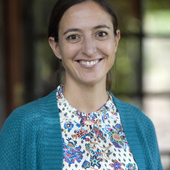

Julie Chami Lindsay
PhD student, Education, Ontario Institute for Studies in Education, University of Toronto
I am an educational researcher dedicated to fair, effective policy. My areas of interest are school choice and equitable access to quality education. I am a qualitative researcher. Also a French Immersion teacher in the public school system for the past 16 years, and the mother of three school-aged children, I am an insider and expert in how policies impact day-to-day experiences of education.
Less
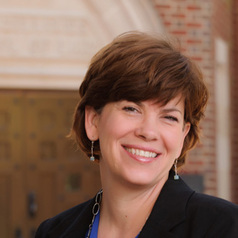
Julie Ellen McConnell
Professor of Law, University of Richmond
Julie E. McConnell is a Professor of Law, Legal Practice and Director of the Children’s Defense Clinic. In addition, she teaches Advanced Clinical Practice and has taught Juvenile Delinquency Law and Procedure and the Science of False Confessions. She has worked in youth justice for more than 25 years and is a frequent speaker, writer, and trainer on best practices in holistic representation, trauma-informed, client-centered practice, the impact of child abuse on children, child mental health, and clinical education. She and her students primarily represent indigent youth on a pro bono basis, handling motions, trials, sentencings, custody proceedings, school-based proceedings, and post-conviction hearings. Clinic students have avoided felonies for almost all their trial clients and gained early release for many adults sentenced as children who have rehabilitated themselves during their incarceration.
Less
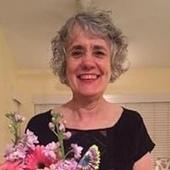
Julie Louise Bacon
Lecturer in Art Edinburgh College of Art, The University of Edinburgh
Julie Louise Bacon is a visual artist, curator, writer and lecturer in art at Edinburgh College of Art, part of the University of Edinburgh.
She has edited and contributed to a wide range of publications on contemporary art and cultural theory. She has presented her performance, installation and video works in art galleries, public sites, and festivals internationally. In tandem with her exhibiting practice, Julie Louise has held curatorial and directorship roles in arts organisations in Northern Ireland, England, and Québec.
Her current research The Habitat of Time explores changes in our experiences of time in the Network Ages. It featured as a new short film in Hull UK Capital of Culture and a solo exhibition at Artspace Sydney. Julie Louise completed a PhD at the University of Ulster with an exhibition of newly commissioned works exploring the role that archives and collections play in history-making.
Less
Julie-Marie Strange
Professor of Modern British History, Durham University
Prof. Julie-Marie Strange studied for her PhD at the University of Liverpool between 1996 and 2000. She began her career at Birkbeck, University of London, before joining the University of Manchester in 2003. She moved to Durham University in October 2019.
Julie-Marie is an historian of modern Britain and Fellow of the Academy of Social Sciences with long standing research interests in the history of inequalities and emotions.
She has published widely on death, grief and poverty, fatherhood and class, charitable fundraising, the emotional politics of money, and on pedigree dogs and pet keeping. More recently she has begun working on social class in the countryside.
Julie-Marie has run research grants funded by the ESRC, AHRC and Leverhulme Trust.
She has experience working with a range of non-HE organisations, including the National Trust, Salvation Army International Heritage Centre, Beamish: the Living Museum of the North and Blue Cross Pet Bereavement Support Service. She is a co-founder of The Pet Loss Network (petlossnetwork.org).
Less
Julie-Pascale Labrecque-Foy
Étudiante au doctorat en paléoécologie et écologie historique, Université du Québec en Abitibi-Témiscamingue (UQAT)
-Baccalauréat en biologie à l'Université du Québec à Chicoutimi (2016-2019)
-Maîtrise en écologie nordique à l'Université Laval (2020-2022)
-Doctorat en paléoécologie et écologie historique à l'Université du Québec en Abitibi-Témiscamingue (2022-en cours)
Less

Julien Dugnoille
Senior Lecturer in Anthropology, University of Exeter
I am anthropologist (DPhil Oxford) of human-animal interactions. For nearly a decade, much of my work has been dedicated to examining the place of dogs and cats in South Korean urban society and culture, a particularly complex and sensitive research topic that touches on mutliple social injustices (animal, gender and racial injustice), cultural relativism and imperialism, the use of animals in national identity rhetoric, the legitimacy of food taboos, speciesism, the question of violence within the debates between welfarist and abolitionist approaches to human-animal interactions, racialisation, and ontological perfusion in urban marketplaces.
Less
Julien Gigault
Chercheur / Professeur en chimie, Université Laval
Directeur de Recherche au CNRS au laboratoire Takuvik et professeur associé au département de chimie de l’Université Laval, Julien Gigault s’intéresse aux particules et nanoparticules anthropiques dans l’environnement. Une des spécialités de Julien Gigault est de mettre au point des stratégies analytiques pour identifier la présence, les sources et les flux de nanoparticules dans les différents compartiments environnementaux. Le comportement et les impacts des nanoparticules sont au cœur de ces préoccupations en collaborant avec des biologistes sur ces questions.
Less
Julien Longhi
Professeur des universités en sciences du langage, AGORA/IDHN, CY Cergy Paris Université
Less

Julien Morton
Lecturer in Social Sciences, London South Bank University
I am a Lecturer in the Division of Social Sciences at LSBU with interests in the theory of agency, philosophy of social science, structuration theory, social theory and modernity, and postmodern social theory. My current focus is on status theory, elites and the modern history of the British and European aristocracies. I have taught at Sussex University and was a visiting scholar at UC Irvine in the USA where I studied under Jacques Derrida.
I am working on a large research project with Dr Matthew Bond in which we are developing an extensive and novel analysis of the British aristocracy. We are utilising new data sets to explore the timings and causes of aristocratic economic and status changes which not only bear on existing historiography, but also can shed light on the conceptualisation and empirical evaluation of the concept of status.
Our first paper 'Trajectories of Aristocratic Wealth 1858-2018: Evidence from Probate.' (2021) has been published in the Journal of British Studies (https://doi.org/10.1017/jbr.2022.52). We currently have further papers in review and in development.
Less
Julien Tourreille
Chargé de cours en science politique et chercheur à la Chaire Raoul-Dandurand en études stratégiques et diplomatiques, Université du Québec à Montréal (UQAM)
Less
Julienne Molineaux
Senior Lecturer, School of Social Sciences and Public Policy, Auckland University of Technology
Julienne's PhD in political studies was a public policy-public sector management mix, looking at reforms of New Zealand's official archives. Central to the analysis of the role and structure of the Archives was an understanding of its democratic function in helping to hold the government and its agencies to account.
Julienne's other research interests (media ownership, online voting) have a strong theme of promoting and protecting liberal democratic values.
Since 2020 she has been an associate editor of the New Zealand Journal of Employment Relations.
Less
Julieta Morais
Researcher in Social Protection, United Nations University
Julieta Morais (MSc) is a quantitative and qualitative researcher at UNU MERIT. She has researched and gained policy advisory experience in the Netherlands, Jordan, The Philippines, Uganda, the Pacific Islands, Vietnam, Serbia, and Moldova. She has worked on projects for UNICEF, WFP, ILO, and The World Bank. In past engagements, Julieta has worked extensively on issues related to assessing the efficiency of cash programmes and evaluating the gender sensitiveness of cash programming. Julieta is also involved in teaching for the Social Protection specialization in the UNU MERIT master’s degree program.
Less



- Market Data




