


 Global PC Makers Eye Chinese Memory Chip Suppliers Amid Ongoing Supply Crunch
  Trump Backs Nexstar–Tegna Merger Amid Shifting U.S. Media Landscape
  Baidu Approves $5 Billion Share Buyback and Plans First-Ever Dividend in 2026
  Missouri Judge Dismisses Lawsuit Challenging Starbucks’ Diversity and Inclusion Policies
  Toyota’s Surprise CEO Change Signals Strategic Shift Amid Global Auto Turmoil
  TSMC Eyes 3nm Chip Production in Japan with $17 Billion Kumamoto Investment
  SoftBank Shares Slide After Arm Earnings Miss Fuels Tech Stock Sell-Off
  Nvidia, ByteDance, and the U.S.-China AI Chip Standoff Over H200 Exports
  Amazon Stock Rebounds After Earnings as $200B Capex Plan Sparks AI Spending Debate
  Alphabet’s Massive AI Spending Surge Signals Confidence in Google’s Growth Engine
  Rio Tinto Shares Hit Record High After Ending Glencore Merger Talks
  Ford and Geely Explore Strategic Manufacturing Partnership in Europe
  Instagram Outage Disrupts Thousands of U.S. Users
  Uber Ordered to Pay $8.5 Million in Bellwether Sexual Assault Lawsuit
  TrumpRx Website Launches to Offer Discounted Prescription Drugs for Cash-Paying Americans
  Nvidia CEO Jensen Huang Says AI Investment Boom Is Just Beginning as NVDA Shares Surge
  Once Upon a Farm Raises Nearly $198 Million in IPO, Valued at Over $724 Million


Written by: James Carnell
Chances are, if you’ve purchased any products in the last 10 years, it’s likely that those products traveled across bodies of water and other continents to get to you. Because of the global business landscape, you could go to the mall and purchase shoes, a bag, and a makeup item that all came from different countries around the world. These items would have been loaded into pallets, put into shipping containers, and transported via plane, vehicle, or even boat.
When large shipping containers get lifted onto a boat to cross the ocean, the loading process can take days or even weeks, putting immense strain on workers to meet deadlines and process containers quickly. Due to the size of these containers, moving them is nearly impossible without special equipment. A crane may be needed to lift the shipping container onto the transport vessel. The item that wraps around the container and gets clipped to the crane is called a lifting sling.
Lifting slings can be made from many different materials, but textile lifting slings made from fabric are some of the most durable, lightweight lifting slings available today. They are used to move heavy items like cars, shipping containers, furniture, and even important medical devices. Because they are made of fabric, users can rely on them to protect the products in situations where their metal counterparts would scratch or otherwise damage those products.
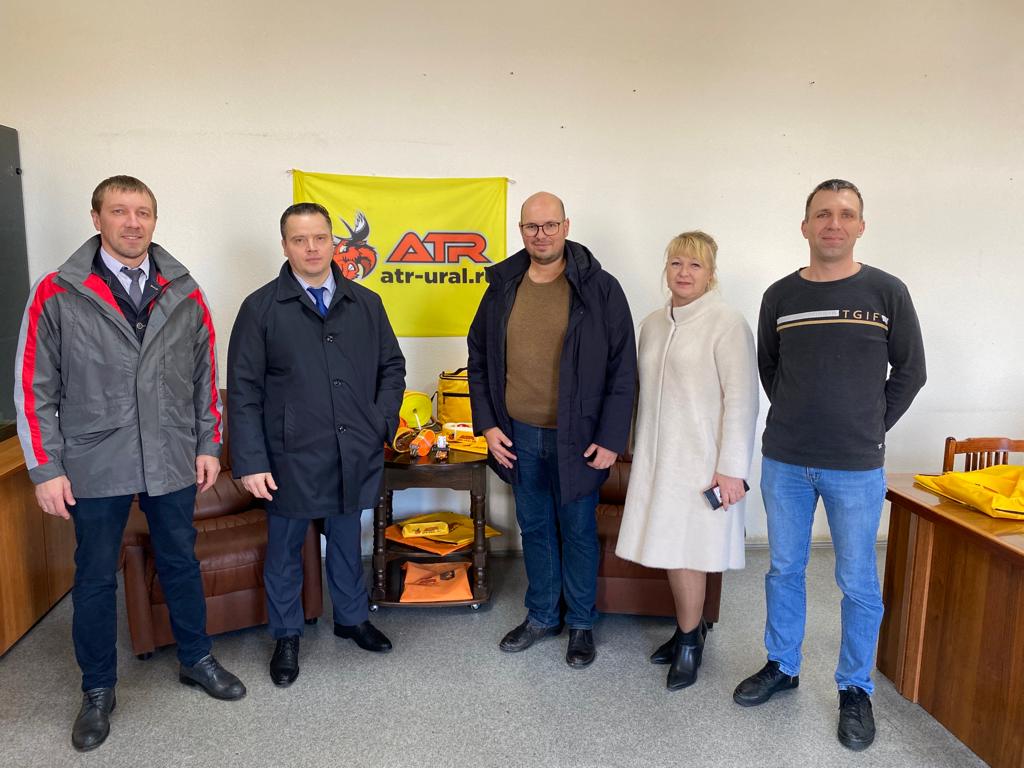
ATR-Ural is a production company that focuses on the production of textile lifting slings, tie-down straps, and customizable textile lifting harnesses. Despite its dominance in this industry, ATR-Ural hasn’t always been in the textile lifting sling business. In fact, for many years, its main offerings were services like landscaping, asphalt laying, gardening, ventilation and plumbing, and more.
When Vasilii Shvets, the current managing director of ATR-Ural, stepped into his role, the business was an entirely different organization than it is today. With business prowess and a fearless approach, Shvets assessed the organization’s viability and made a major discovery: things needed to drastically change if the firm was going to be profitable moving forward. After getting rid of a few underperforming business decisions, Shvets shifted the business focus to production.
Although wooden containers and customized wooden products were the first mass-produced items that came from the organization, Shvets saw an opportunity to break into the textile lifting sling industry and he did exactly that. In 2016, he hired three professional sewers and began to test different products. Now, the team of sewers has over 20 people working to meet the rising demand for these products.
Most consumers fail to consider how certain products get to their country, state, city, and even home address. We’ve become so accustomed to clicking a button and watching something arrive at our doorstep that we forget about everything that happens prior to that. Thankfully, there are people like Vasilii Shvets who are thinking about those steps. The role ATR-Ural plays in product transportation is one that shouldn’t be overlooked. People are working diligently day in and day out to create products that streamline clunky processes, protect worker safety, and ensure the quality of the products you buy.
Next time you pick up your new lipstick or drive your new car, consider the workers who loaded them onto massive ships across the world using the textile lifting slings made by Shvets and his team at ATR-Ural. Only when we learn about and understand these steps can we truly appreciate what we have in our possession.
This article does not necessarily reflect the opinions of the editors or management of EconoTimes.













