


 US Federal Register Drops Alibaba Qwen AI Search Tool
  US Northeast Airports Resume Operations After Telecom Outage Disrupts Thousands of Flights
  OpenAI Urges US-Led Global Standards for Frontier AI
  Westinghouse Targets $50 Billion Valuation in U.S. IPO
  CNN, MS NOW and Politico Sue Trump Over White House Media Ban
  China Reviews Broadcom Switch Use in State Data Centres
  Big AI wants to slow down AI research. Is it a safety pause or a strategic retreat?
  Hyundai CEO Warns Chinese Automakers Could Disrupt US Market
  Meta CEO Zuckerberg Backs Independent AI Safety Reviews Over Development Slowdown
  Trump Bans CNN, MS NOW and Politico From White House
  Guterres Urges Stronger Global AI Safeguards Ahead of UN Assembly
  AI is supercharging money scams – here’s what you can do to protect yourself
  Supertanker Orders Surge as US-Iran War Reshapes Oil Trade
  fnny Beta Launches With a Simple Idea: Find an Event, Show Up, Get Rewarded
  NASA, Boeing Discuss Expanding Starliner Missions
  Qualcomm Gains on $60B Amazon AI Chip Deal
  Goldman Sachs Names Simon Lyons UK Investment Banking Co-Head


 Add as a preferred source on Google
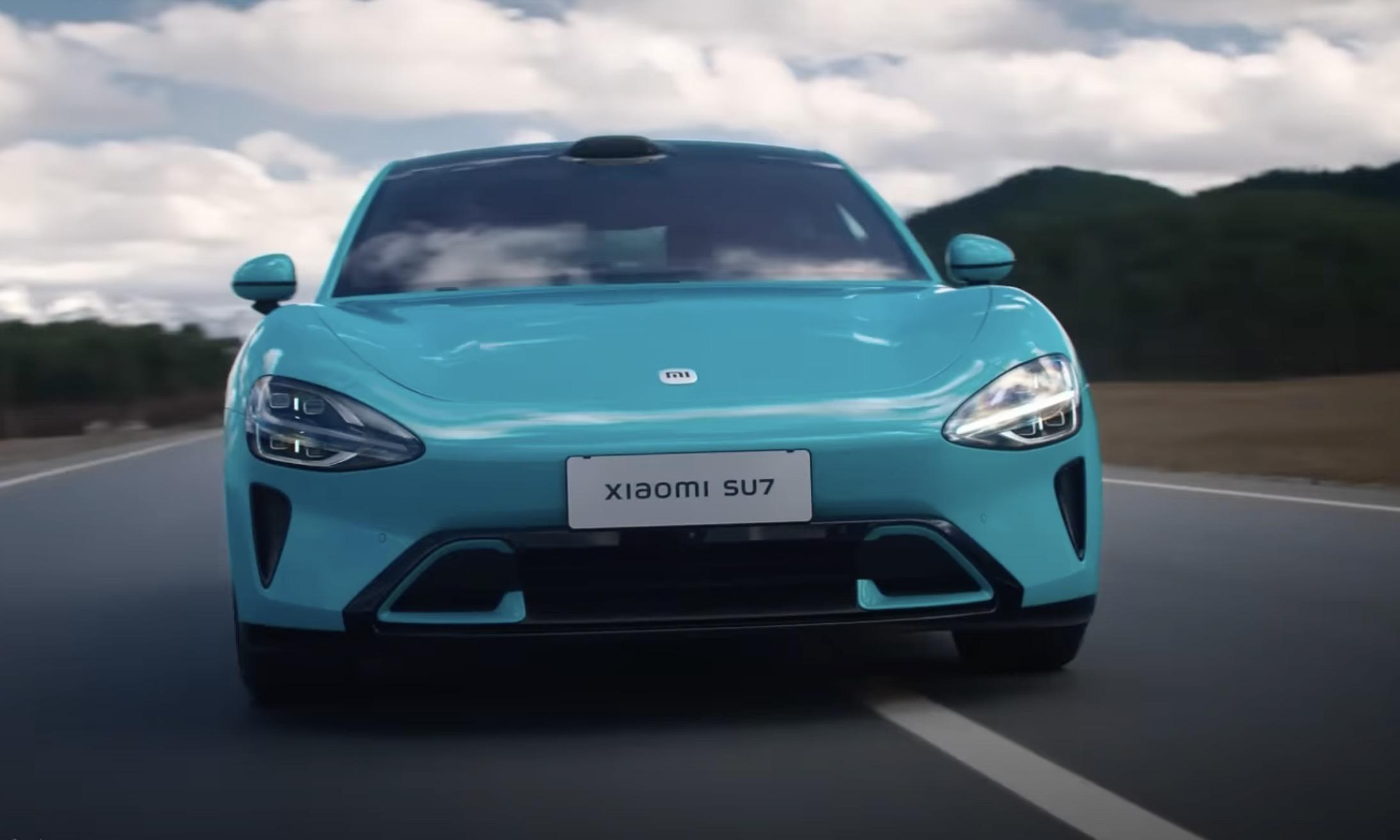
Xiaomi has announced a 24-hour window on April 19 for customers to modify their pre-ordered SU7 vehicles via the Xiaomi Car App. Due to unprecedented demand and production challenges, delivery times have now stretched up to six months.
Xiaomi Ramps Up Production Amid Surging Demand, Aiming for 10,000 Vehicles Monthly to Meet SU7 Pre-orders
Xiaomi responded to the issue of "production capacity bottleneck" by stating that its car factory is currently operating at full capacity to increase production. It is also fully mobilizing supply chain partners to ensure stable delivery of existing orders as soon as possible and orderly processing of future orders, providing users with a seamless delivery experience.
According to Pandaily, Lei Jun announced at the Xiaomi SU7 delivery ceremony earlier this month that within a few days of its launch, over 100,000 customers had pre-ordered the Xiaomi SU7, with locked-in orders totaling over 40,000.
Previously, the media stated that Xiaomi's automobile division asked suppliers to raise production capacity to 10,000 vehicles monthly. The variant of the high-end model was specifically needed to boost production capacity. According to the original manufacturing schedule, monthly production would reach 3,000 vehicles in March this year, increasing to 4,000-5,000 vehicles in April.
As a result, monthly manufacturing capacity is estimated to normalize at approximately 6,000 vehicles by the end of the year. However, Xiaomi's car sales have recently outperformed predictions. If the aforementioned production plan is followed, delivery timeframes for the Xiaomi SU7 will be stretched.
Extended Delivery Times for Xiaomi SU7 as Demand Soars, Some Models Delayed Up to Six Months
The Xiaomi EV app indicates that the delivery period for the Xiaomi SU7 has been prolonged, with some orders slated for approximately a half-year.
If ordered now, the regular version is projected to arrive in 13-16 weeks after the order is verified, while the Pro version is expected in 16-19 weeks. The Max version will take 24–27 weeks to deliver.
According to rumors, the regular and Max versions of the Xiaomi SU7 will likely begin delivery progressively from the end of April, with the Pro version starting at the end of May. The Founder's Edition is now available, with delivery starting on April 3.
On the evening of March 29, Xiaomi officially declared that after 24 hours of listing, the total number of pre-orders for the Xiaomi SU7 had hit 88,898. According to the plans, the Xiaomi Car plant will be developed in two parts.
The first phase, which covers around 720,000 square meters and has an annual production capacity of 150,000 automobiles, was completed in June 2023; the second phase is scheduled to begin building in 2024 and finish by 2025.
Photo: Xiaomi/YouTube Screenshot







