


 Asian Stocks Rebound as Tech Shares Rally on Fed Rate Cut Hopes and Easing Iran Tensions
  ECB Set to Raise Interest Rates as Energy Shock Fuels Eurozone Inflation Concerns
  BOJ Signals More Rate Hikes as Inflation Risks Rise Amid Energy Price Pressures
  Asian Currencies Rise as Dollar Weakens; Yen Holds Steady Amid Japan Intervention Watch
  Gold Price Today: Bullion Heads for First Weekly Gain as Weak U.S. Jobs Data Eases Rate Hike Fears
  South Korea Signals Possible Interest Rate Hike as Inflation Remains Elevated
  US Dollar Rises as Fed Rate Outlook Stays Hawkish, Euro Slips and Yen Near 40-Year Low
  U.S. Dollar Drops as Weak Jobs Data Boosts Fed Pause Bets, Yen Jumps on Intervention Talk
  Fed Chair Kevin Warsh Signals Policy Overhaul as Hawkish Rate Outlook Rattles Markets
  Japan Signals Surprise Yen Intervention Strategy as BOJ Hawkish Stance Puts FX Traders on Alert
  Moody’s Says Peru’s President-Elect Keiko Fujimori Could Boost Investor Confidence


The debate about the cost and benefits of low rates has started heating up. Central bankers like Mario Draghi, Janet Yellen speak in favor of low rates arguing that they have brought stability and without them, the world economy would have been in worse shape than today. The opponents argue that the central banks’ monetary policies have created asset bubbles. US Presidential candidate Donald Trump said they created a false and bubbly economy, former chancellor of exchequer UK George Osborne say that these policies make the rich even richer.
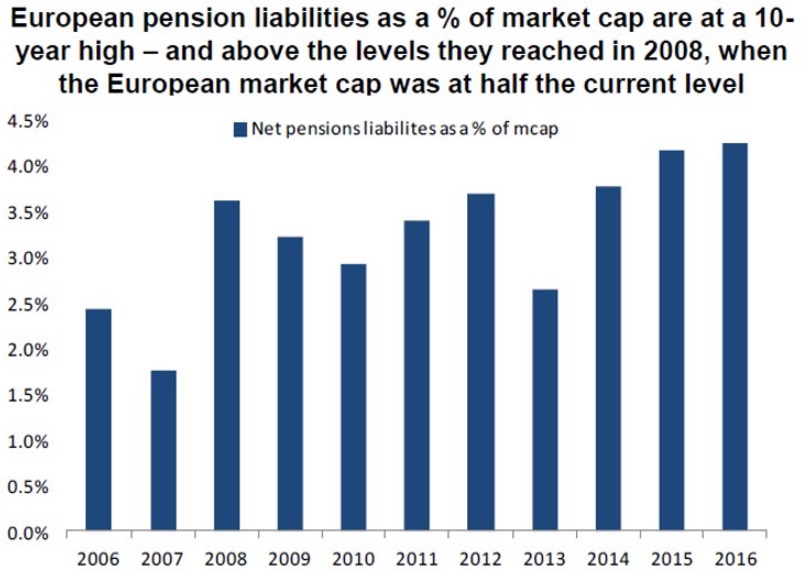
However, there are some worrying signs that even central bankers can’t refute and they are the children of easy monetary policies. The first chart from the Deutsche bank shows, the lower interest rates that have pushed down the global yields have resulted in an increase in the pension liabilities. Even if they cash in on the capital gains there few safe options to reinvest. The chart shows that European pension liabilities as a percentage of market cap has hit the highest level in 10 years, bigger than that seen during 2008 crisis.
The second chart shows the low rates have hurt banks’ profitability. European banks’ profitability has seen a steady drop around, in line with the drop in yields. So, Mr. Draghi’s argument that the current negative rates do not hurt banks, may not be entirely true.







