


 China Home Prices Fall Again in June Despite Slower Pace of Decline
  Japan Core Inflation Seen Rising in June, Strengthening BOJ Rate Hike Outlook
  Gold Prices Slip as Oil Rally Fuels Inflation Fears, Strengthens Dollar
  Asian Stocks Slide as Chip Selloff Deepens Ahead of TSMC Earnings
  US Stock Futures Hold Steady as Soft Inflation Data Eases Fed Rate Hike Fears
  Nikkei Plunges 5% as AI Stock Selloff Spreads Across Asia
  Asian Currencies Hold Steady as Middle East Tensions Offset Weaker US Dollar
  Gold Prices Head for Biggest Weekly Loss Since June as Fed Rate Outlook Weighs
  China Q2 2026 GDP Misses Forecast as Weak Domestic Demand Offsets Export Strength
  U.S. Imposes 25% Tariff on Select Brazilian Imports After Section 301 Trade Investigation
  AI Chip Stocks Face Valuation Pressure as Investors Shift Toward Big Tech and Software


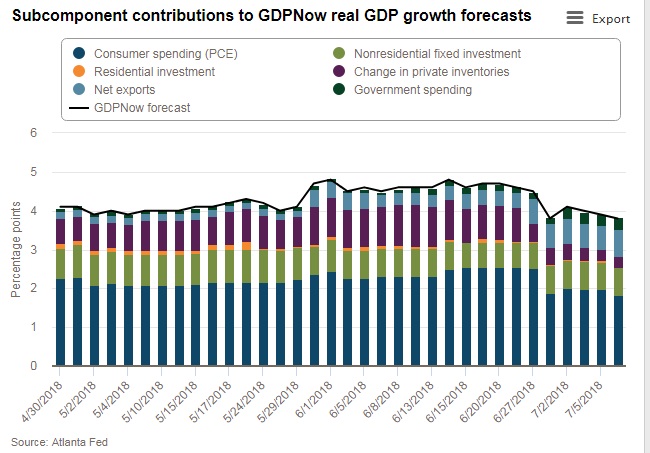
The ‘GDP Now’ data published by the Federal Reserve of Atlanta is posing some concerns over the health of the U.S. economy and more importantly, the effect of the current trade feud on the economy. In mid-June, Atlanta Fed’s GDP Now was forecasting a U.S. economic growth 4.8 percent in the second quarter of this year. It even prompted the Commerce Secretary Wilbur Ross in suggesting while speaking to CNBC that the growth rate will be over 3 percent on an annualized basis and even close to 4 percent.
However, since then the GDP Now has projected a sharp decline in growth. As of latest reading published last week, GDP Now is projecting 3.8 percent growth in the second quarter; not too impressive and most important, down almost a percent.
The major reasons for the slowdown have been a decline and in consumer spending growth and second-quarter real gross private domestic investment growth. Since mid-June, consumer spending has declined by 0.7 percent and private investment growth has slowed to just 6 percent from well over 7 percent.
It can be said that the uncertainties surrounding trade and tariffs are taking its toll on the economy.







