


 South Korea to End Short-Selling Ban as Financial Market Uncertainty Persists
  영국 대형 투자자들, 미국 부동산 가격 하락 시 매수 준비
  Asian Stocks Mixed Ahead of Trump-Xi Meeting
  Vietnam Stocks Join FTSE Emerging Market Indexes, Unlocking Billions in Foreign Investment
  Oil Prices Rise as U.S.-Iran Talks Fuel Diplomacy Hopes
  Australia to Ban Foreign Investors from Buying Existing Homes to Boost Housing Supply
  South Korea to Brief Lawmakers on $350 Billion US Investment Package
  U.S. Stock Futures Rise Ahead of Trump-Xi Summit, Middle East Risks Weigh
  S&P 500 Surges Ahead of Trump Inauguration as Markets Rally
  China's Refining Industry Faces Major Shakeup Amid Challenges
  KiwiSaver shakeup: private asset investment has risks that could outweigh the rewards
  France Debt-to-GDP Ratio Seen Hitting Record 119.3% in 2026
  How the UK’s rollback of banking regulations could risk another financial crisis
  UK Home Asking Prices Rise for First Time Since May
  Elliott Investment Management Takes Significant Stake in BP to Push for Value Growth
  SoftBank Eyes Up to $25B OpenAI Investment Amid AI Boom


 Add as a preferred source on Google


Five million more UK households could feel the effects of recent interest rate increases in coming years. Roughly the same number have already been forced to remortgage since the recent spate of rate rises began in 2021, according to the Bank of England’s latest Financial Stability Report. These borrowers have come off historically low fixed rates and are now often paying hundreds more per month in mortgage repayments.
Households on a fixed rate mortgage deal are not impacted by high interest rates until they remortgage. Out of the 1.4 million households that remortgaged in 2023 alone, most were previously on rates of less than 2%. In contrast, new two-year fixed rate mortgages peaked at 6.86% in July although in December the rate fell to just below 5%.
In addition to the fact that around a fifth of borrowers are on mortgages that track the base rate anyway, it’s surprising that the housing market has not been more deflated as borrowers struggle to borrow enough to get on or move up the property ladder.
The value of the average UK house price fell by £3,000 over the year to October 2023, according to the latest government figures. This means the current UK average house price of £288,000 dropped by 1.2% in the 12 months to October 2023, versus an annual decrease of 0.6% the previous month.
Arrears have been creeping up, of course, but they’re not particularly high in historic terms. Part of the reason for this is that around a third of homeowners in the UK own their homes outright. The rise in mortgage rates has undoubtedly affected discretionary income of many households though, in some cases severely, even if has not yet led to arrears.
Inevitably, as households struggle with their finances, future plans to move have been put on hold. Indeed, the number of residential transactions in the UK has fallen from 2022 levels and is now below 2021 levels. This is important because the most significant dynamic in the housing market is people’s desire and ability to upgrade. And if people don’t move up the ladder, there is no room for others to clamber on to the first rung.
How the economy affects the housing market
UK housing market woes over the last year have been underpinned by uncertainty about the economy as it spluttered on the verge of a recession, as well as very high inflation. Property demand was dampened as wage rises for many did not keep pace with inflation. High inflation led to rising interest rates after more than a decade of low rates. In September 2022 the UK bank base rate was only 1.75%, but eight subsequent increases brought it to 5.25% by August 2023.
In 2024, household finances are likely to improve in the very short term as wages rise above inflation for some. This will combine with a fall in national insurance in January and possibly even income tax cuts in the pre-election budget in March, to buoy up bank accounts a little.
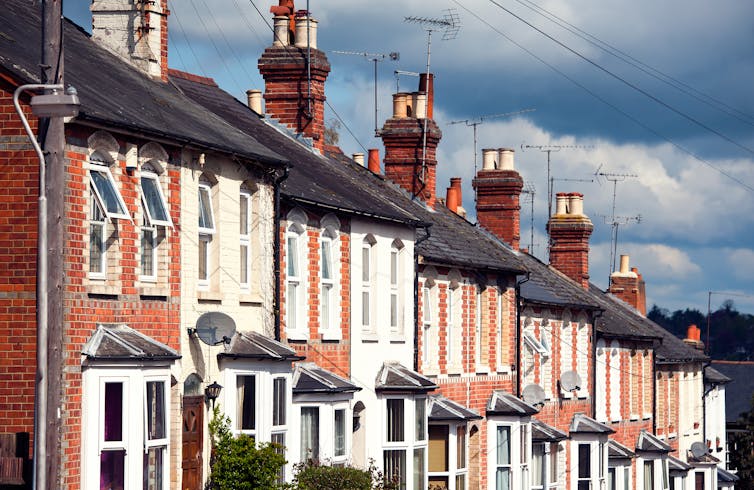
UK house prices are unlikely to rise much in 2024. Jozef Sowa/Shutterstock
On the other hand, energy costs are set to rise in January and inflation is expected to fall only slightly to just over 3% from its current 4.7%. Interest rates are not likely to be cut significantly in 2024 and currently look set to be around 4% by the end of the year. UK economic growth is likely to remain non-existent and living standards will generally continue to fall substantially because of recent rapid consumer price inflation.
So, it’s difficult to see any significant changes to housing market trends next year as 2023’s financial struggles look set to continue. Many households will not be in a position to upgrade their homes, especially those still on low fixed-rate mortgages that are due for renegotiation during 2024. Subdued demand for homes will probably keep property prices lower.
Some pent up demand will be realised and lower interest rates could feed into house prices in the second half of the year, if the Bank of England starts cutting rates again. At best, housing market activity will increase and prices will rise, but probably only in line with inflation.







