


 Nvidia Eyes $10 Billion Investment in Anthropic IPO
  American Airlines Eyes Capacity Cuts as High Fuel Prices Persist
  China’s Global Times Slams Anthropic CEO’s AI Slowdown Plan as ‘Cold War’ Strategy
  SK Hynix, Intel Discuss U.S. Memory Chip Production Deal
  Nvidia CEO Jensen Huang Expected at Trump-Xi State Dinner
  Ares Names James Garforth Principal for Asia Direct Lending
  SoftBank Shares Plunge 11% After OpenAI Rules Out 2026 IPO
  Meta’s AI Shopping Push Grows as Agentic Commerce Remains Below 1%
  BHP Port Hedland Wage Dispute Heads to Arbitration
  OpenAI Rules Out 2026 IPO as Altman Prioritizes AI Safety
  MediaTek Unveils 2nm Dimensity 9600 Pro AI Chip
  Samsung Heavy Wins $1.22 Billion LNG Carrier and Tanker Deal
  Samsung, SK Hynix Reject KEPCO’s $18.7 Billion Power Funding Plan
  Databricks to Invest $350 Million in Singapore AI Expansion
  Qualcomm Gains on $60B Amazon AI Chip Deal
  Ex-Google DeepMind Researcher Warns AI Could Pose Existential Threat


 Add as a preferred source on Google
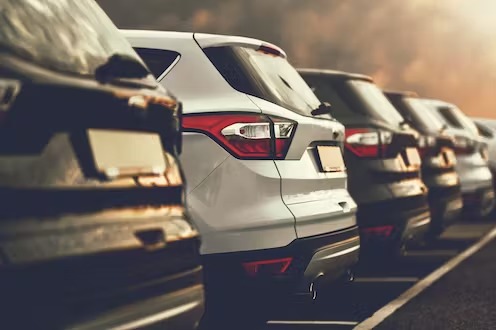


Electric cars are getting bigger and heavier. In 2019, 30% of the electric vehicle (EV) models available worldwide were sports utility vehicles (SUVs).
Fast forward to 2022 and that figure stood at 40% – equivalent to the share of small and medium car options combined. Other large models accounted for more than 15%.
There’s an issue with this. Larger and heavier EVs require bigger batteries to power them. In fact, the battery of an SUV can be double the size of that in a smaller vehicle.
As with many other batteries, the lithium-ion cells that power the majority of electric vehicles rely on raw materials such as cobalt, lithium and nickel. In a standard 60 kWh lithium-ion battery pack designed for smaller EVs, there can be as much as 170kg of minerals, including 39kg of nickel and 5kg of lithium.
Batteries for electric SUVs demand that up to 75% more raw materials are extracted from the environment than this.
However, research suggests that there could be shortages in the supply of battery materials in the future. By 2030, there could be a 55% less lithium and 8% less nickel and manganese than is needed to meet the demand for EV batteries.
If the demand for electric SUVs continues to increase over the coming decade, this could severely escalate the pressure on the already tight supply of critical raw materials.
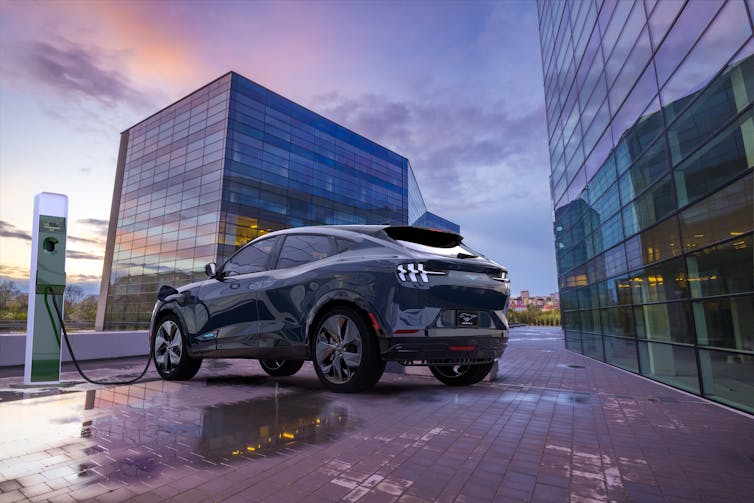
More and more people are opting for larger EVs. Mike Mareen/Shutterstock
But that’s not all
The production of batteries is also a highly carbon-intensive process, with emissions increasing as batteries grow in size. For example, the CO₂ emissions resulting from materials processing and battery manufacturing can soar to levels 70% higher for electric SUVs compared to smaller EVs.
Mining activities have been linked with several negative environmental effects too. For instance, one study found that lithium mining activities in the Salar de Atacama – Chile’s largest salt flat – have disturbed flamingo breeding sites and reduced the birds’ access to food and water.
Expanding mining operations to support the growing SUV market could lead to further habitat destruction, excessive water consumption, increased mining waste and heightened risks to local biodiversity.

Lithium mining has disturbed flamingos in the Salar de Atacama, Chile. SierraLemon/Shutterstock
Adding to the complexity is the EU’s recent decision to mandate a minimum proportion of recycled material in new EV batteries. As of 2021, regulations have required that 6% of the nickel and lithium, and 14% of the cobalt in EV batteries must be sourced from recycled materials.
Given the sharp upswing in battery demand, coupled with the need for more recycled materials, we could once again encounter a strained supply chain, with particular implications for larger batteries.
We need clean electricity
To charge larger batteries in an environmentally friendly manner will require an increased supply of low-carbon electricity. But, as the energy sources used to generate electricity are influenced by factors including availability and the dynamics of the energy market, the carbon intensity of the electricity supply can often vary.
Even if electricity grids do become cleaner, the increasing demand generated by the need to charge these larger batteries could put pressure on power grids.
Transmission and distribution systems were designed at a time when power plants were large and centralised, and electricity demand was relatively low. However, the energy landscape has evolved.
We are now moving towards decentralised energy sources, such as wind turbines and solar panels. These energy sources are often smaller and located in areas where electricity generation was previously absent.
As a result, the grid infrastructure in these locations is less developed. Electricity demand is also growing, as more people buy electric vehicles and install heat pumps.
The overall grid capacity might be sufficient to accommodate these changes. But there could still be periods, especially during specific times of the day or year, when the grid experiences bottlenecks.
For example, there may be a surplus of renewable energy generation in one location and significant demand in a distant area, but the electrical infrastructure might be insufficient to transfer power from one end to the other.
This exact situation often occurs in the UK. In 2022, bottlenecks in the transmission system meant Scottish wind farms were paid to stop generating power on 200 separate occasions and gas power stations in England were paid to increase output to compensate for this.
Utilities companies are working to reinforce electricity grids worldwide by, for example, building more lines to transfer the additional power.
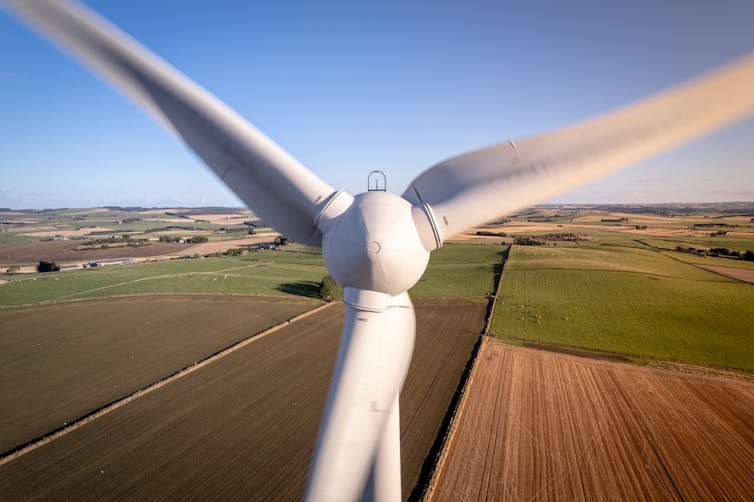
The power generation landscape has evolved. CloudVisual/Shutterstock
Motorists are increasingly opting for large electric SUVs. But the environmental impact of these vehicles should not be underestimated. The relentless demand for battery materials and electricity raises the question of whether SUVs will continue to be a viable green option.







