


 US-Backed Pediatric HIV Treatment Drops After Foreign Aid Changes, Study Finds
  AstraZeneca Halts Phase III Volrustomig Lung Cancer Trial After Efficacy Setback
  Moderna Wins FDA Approval for mFLUSIVA mRNA Flu Vaccine for Adults 50+
  GSK Unveils $2.52 Billion Cost-Cutting Plan to Accelerate Drug Pipeline
  SK Biopharmaceuticals Secures Global Rights to Biohaven Epilepsy Drug Opakalim
  3 clinical-grade skincare creams you really shouldn’t buy online
  France Keeps Top Health Alert as Officials Brace for Another Heatwave
  Venezuela Earthquake Health Risks Rise as Disease Monitoring Intensifies
  Moderna Short Sellers Hit With $4.8 Billion Loss as Stock Soars
  Novartis Shares Plunge After Muscle Drug Fails Phase III Trial
  FDA Weighs Safety Standards for Psychedelic Therapies
  GLP-1 Weight-Loss Drug Use Surges Among U.S. Children
  Hanmi Pharm Soars 30% on $2.3 Billion Genentech Obesity Drug Deal
  Novo Nordisk Eyes Turnaround as Oral Wegovy Challenges Eli Lilly in Weight-Loss Drug Race


 Add as a preferred source on Google


Not many things are as uncomfortable and annoying as a runny or congested nose when you’re sick. Constantly blowing your nose and not being able to breathe through it may leave you wondering: Why does this happen?
I’m a nurse practitioner who works with kids every day and also teaches nursing. The answer is pretty simple. Mucus – or snot – is one of the ways your body helps keep you healthy.
Mucus lines your nose, throat, lungs and other parts of your body to protect it from bad bacteria, viruses and other particles. Your body continuously creates mucus to fight off germs and help get rid of them.
When you’re sick, your immune system ramps up to produce extra mucus to flush out germs. While it might seem gross, mucus is also pretty amazing.
Slimy protector
Your body creates mucus out of a combination of water, proteins and salts. Its sticky consistency traps bad microorganisms and other unwanted particles, like dust, pet dander and mildew, so they can’t get farther into your system.
Some components in mucus stop bacteria from banding together and becoming more dangerous. Other elements can actually kill the invaders that are trying to make you sick. And though scientists don’t completely understand how, the proteins and genes in mucus seem to work together to make it thicker and stickier if necessary.
Once germs or other potentially damaging particles are trapped and neutralized, your body’s way of getting rid of them altogether is to make so much mucus that you have to blow, sneeze or cough them out.
You might have noticed that sometimes when you’re sick, your nose can get red too. This is because your immune system, in addition to making mucus, also sends extra white blood cells to the source of an infection. As they rush to the scene to help fight infection, the extra white blood cells expand the blood vessels in the area, making your nose look red. All the wiping and blowing can make it red, too.
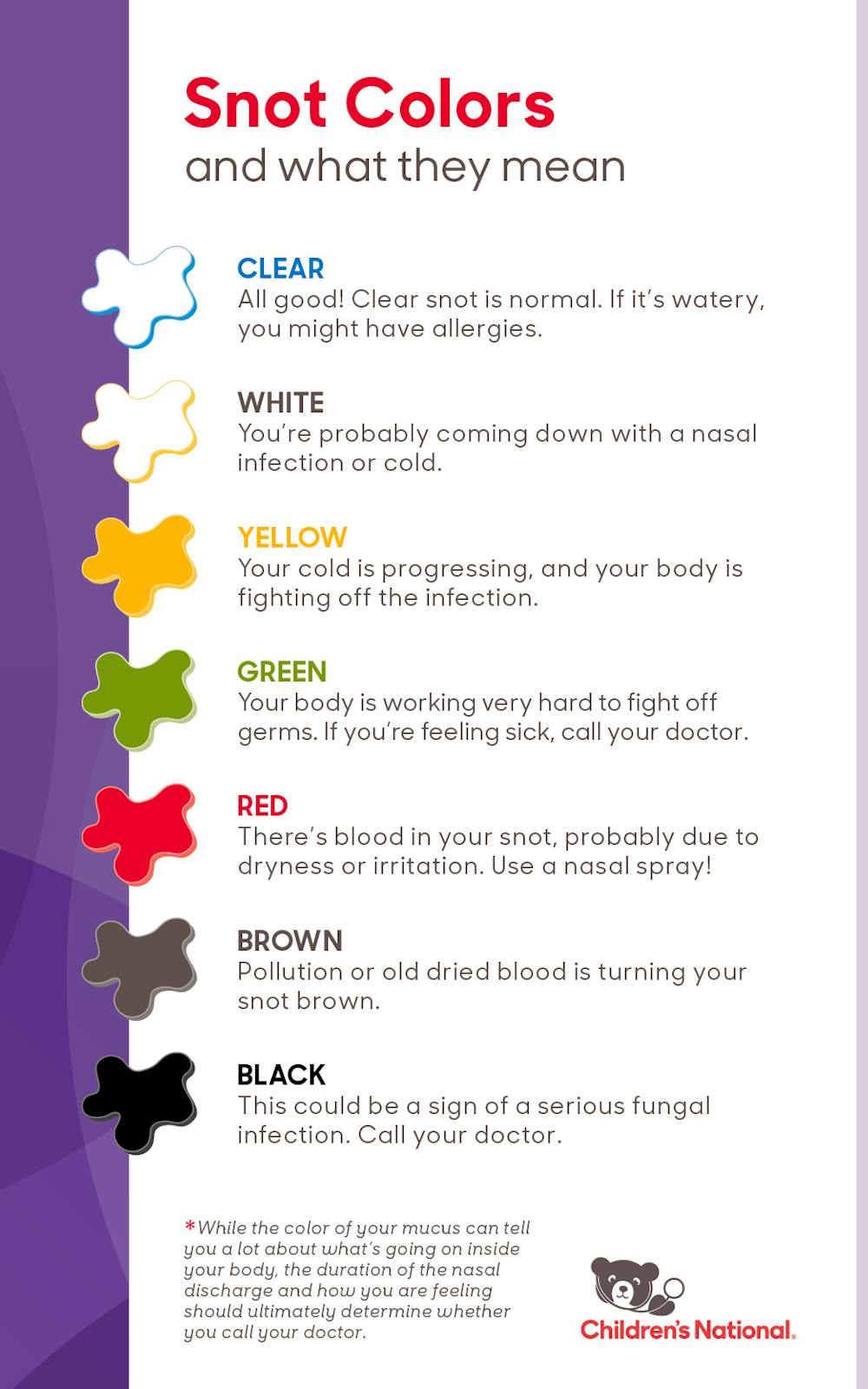
The mucus rainbow. Children's National Hospital, CC BY-NC-SA
Snot can come in a rainbow of yucky colors. When white blood cells are fighting an infection, they release chemicals that may turn your snot yellow. When more of those cells are needed to get the job done, mucus can even turn green. Typically, after a few days, colored mucus changes back to clear and your stuffy nose will go away.
Not just in your nose
Mucus isn’t found just in your nose and lungs.
Your eyes also have a thin layer of mucus that helps protect them from particles in the air. When you get sick or get an eye infection, eye mucus can act the same way it does in your nose – catching and killing germs. Eye mucus can also sometimes turn thick and yellow. If that happens, you’ll want to call your health care provider. Don’t ever touch your eyes with your fingers. That can introduce more germs.
Your stomach and intestines also have protective mucus. If you’ve ever had an upset stomach that led to diarrhea, the mucus in your intestinal track was working overtime to help flush out bad bacteria. That’s why your normal poop goes from a solid mush to something more slimy. There are other reasons you can have stomachaches – like stress, constipation or food allergies – but if you have diarrhea, your mucus is definitely hard at work.
Animals have it too
Humans aren’t the only animals that use mucus. For example, dogs and cats have mucus too.
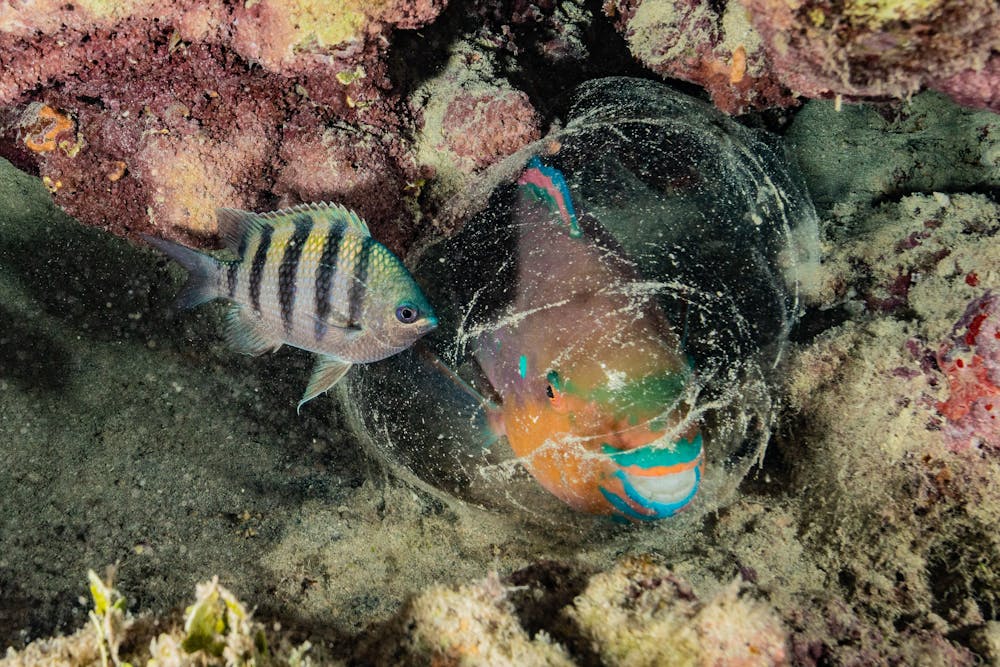
Some fish use mucus for protection while sleeping. RobertoCostaPinto/WikiMedia Commons, CC BY-SA
Parrotfish, wrasses and other sea creatures produce mucus cocoons to help protect them from predators at night.
Chameleons use the sticky mucus on the end of their tongues to reel in their prey. Earthworms secrete mucus to help them move through the soil, which in turn benefits the soil.
In humans, mucus helps neutralize and eliminate the microbial bad guys. So the next time you reach for a tissue to blow your nose, remember: Your body’s natural defenses are doing their best to keep you healthy or make you better. Just think of all that snot as one of your body’s superpowers.








