


 Goldman Sachs Raises USD/JPY Forecast, Sees Yen Weakness Persist Through 2027
  Goldman Sachs Says China Competition Weighs More on EU Growth Than Trade Deficit
  Elon Musk is remaking the world, like Henry Ford before him – but more dangerously
  State of emergency in Crimea as Ukraine focuses pressure on ‘jewel in Putin’s crown’
  JPMorgan Cuts Gold Price Forecast, Sees Bullion Reaching $4,500 by End of 2026
  Trump has made more than $1 billion from crypto in a year. How?
  USA at 250: the Black American struggle for life, liberty and the pursuit of happiness
  In a rebuke to Trump, the Supreme Court rules that birthright citizenship is the law of the land
  Smartphones are helping filmmakers tell the stories the movie industry overlooks


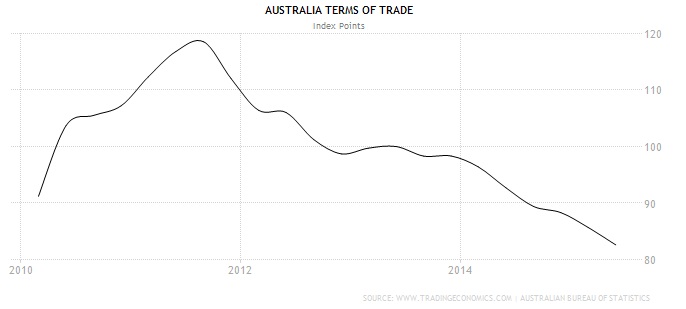
Australia's deteriorating terms of trade remains key concern for Reserve Bank of Australia (RBA). The central bank has even mentioned it in its monetary policy statement.
- Australia's terms of trade, which is ratio of export to import price index has fallen from 118.5 in 2011 to 82.5 as of second quarter 2015.
Weaker Australian Dollar, while protects the exporters from external shocks like current commodity rout, it also contributes to higher import cost.
As of latest data, Australian Dollar, might be contributing to the deterioration.
- In second quarter, while export price index declined by -4.4%, import price index has moved up by 1.4%.
- Since Australia is net exporter of commodities and imports other stuff, it is sitting on a double edged sword in terms of trade.
Moreover lower Australian Dollar and heavy inflow of money from China means higher inflation in real estate, which has remained key concern for RBA. Dwelling prices in Sydney and Melbourne have skyrocketed.
No wonder RBA is sitting mum, worried over lower rates might lead to house bubble and weaker Aussie might lead worsening of terms of trade.
Aussie is currently trading at 0.714 against Dollar.







