


 Nvidia Revenue Soars 106% as AI Demand Hits ‘Inflection Point’
  Australia’s Big Four Banks Face Mortgage Slowdown as Valuations Draw Scrutiny
  Shein Hong Kong IPO to Raise $1.7 Billion at $26.5 Billion Valuation
  Bathla Group Hires Administrators as Australia Housing Slump Deepens
  SK Biopharmaceuticals Secures Global Rights to Biohaven Epilepsy Drug Opakalim
  The pandemic is still disrupting young people’s careers
  Trump Administration Plans New Drug Pricing Deals With Biotech Firms
  Google promotes ‘teacher approved’ apps for kids. Here’s what parents should know
  HP Stock Drops 9% Despite Q3 Earnings Beat and Raised 2026 Outlook
  Why have so few atrocities ever been recognised as genocide?
  The ghost of Robodebt – Federal Court rules billions of dollars in welfare debts must be recalculated
  Meta, U.S. States Discuss Settlement in Teen Addiction Trial
  BNP Paribas, KB Kookmin Eye $2 Billion Techcombank Stake
  Tokio Marine Eyes Multibillion-Dollar Suncorp Takeover
  SK Hynix Shares Fall as Workers Reject Wage Deal


 Add as a preferred source on Google
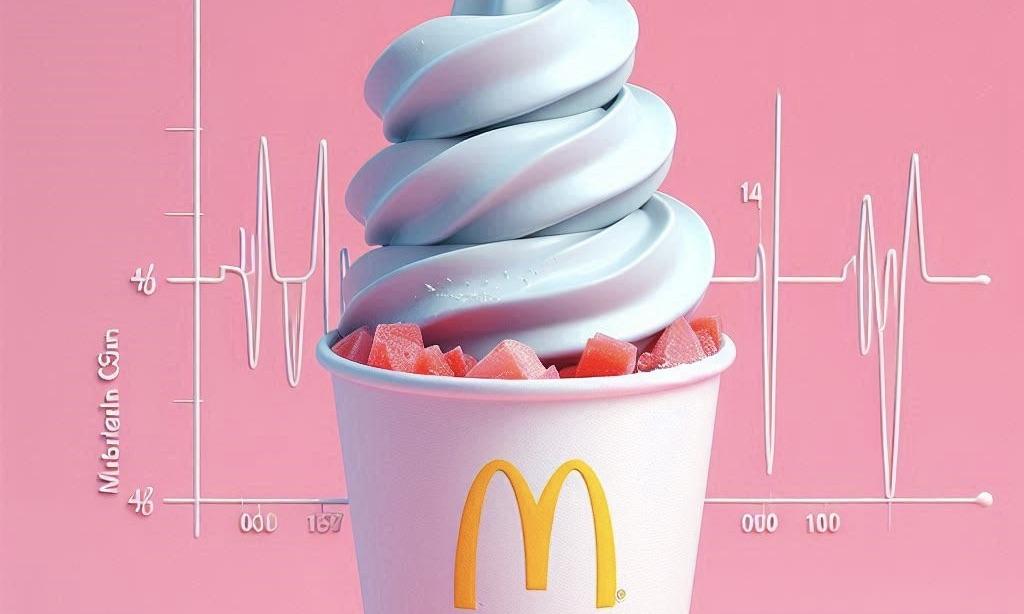
McDonald’s soft serve, a fast-food favorite, is legally classified as reduced-fat ice cream by the FDA. Despite its lighter texture and lower fat content, it still qualifies as ice cream, thanks to its milk-based formulation and carefully selected stabilizers and emulsifiers.
Uncovering the Ingredients and FDA Classification of McDonald's Soft Serve as Reduced-Fat Ice Cream
McDonald's soft serve is widely recognized as a sweet and cold fast-food staple, though its availability often depends on whether the soft serve machines are functional. However, recently, ice cream treats have been subject to increased scrutiny. Upon closer inspection, not all products classified as ice cream meet the Food and Drug Administration (FDA) criteria. For example, Dairy Queen's version is called "soft serve" rather than ice cream, as it does not conform to the FDA's definition of ice cream. Similarly, the unique melting characteristics of Drumsticks present a different set of considerations.
So, is McDonald's soft serve technically ice cream, and what are its ingredients? The answer is yes, McDonald's soft serve is indeed ice cream. Its composition includes milk, sugar, cream, corn syrup, natural flavor, mono and diglycerides, cellulose gum, guar gum, carrageenan, and vitamin A palmitate. Specifically, it is classified as reduced-fat ice cream, meaning it contains 25% less total fat than regular ice cream. Therefore, when enjoying a McDonald's swirly cone, one consumes a treat that legally qualifies as ice cream, albeit with a lower fat content.
The FDA defines reduced-fat ice cream as a product with 25% less fat than its regular counterpart. McDonald's soft serve uses milk as the primary ingredient rather than heavy cream, which typically has a fat content of 38%. As milk plays a more significant role in the formulation than cream, the resulting product is naturally lower in fat. Additional ingredients such as cellulose gum, guar gum, and carrageenan serve as thickeners and stabilizers without contributing to the fat content.
Monoglycerides and diglycerides, commonly found in processed foods, function as emulsifiers in McDonald's soft serve, allowing fat and water to blend seamlessly without separation, similar to mayonnaise. Vitamin A palmitate, meanwhile, is added to low-fat milk products to restore vitamins lost during the fat-removal process.
The Role of Air in McDonald’s Soft Serve: How Overrun Shapes Texture and Taste
One aspect of all ice cream not listed on labels is its air content, incorporated during churning. According to The Takeout, this process, known as overrun, can produce a soft serve containing 50% to 60% air, contributing to the product's volume and fluffy texture. Although McDonald's reduced-fat ice cream may not offer the most luxurious or silky texture, it is easy to consume quickly, especially on a hot summer before it melts.
Technically, the air is not considered an ingredient. Hence, it is absent from labels, but its contribution to the mouthfeel of ice cream is significant. In conclusion, McDonald's soft serve is, without a doubt, ice cream. It is not a frozen dairy dessert or a dairy-adjacent treat but rather reduced-fat ice cream in its most straightforward form.







