


 Soybean Futures Slip as Traders Await Trump-Xi Trade Signals
  US Stock Futures Fall as Treasury Yields Surge Ahead of Trump-Xi Summit
  Asian Stocks Fall as Surging Bond Yields Rattle Markets
  Wall Street Ends Flat as Oil, Treasury Yields and Fed Jitters Rattle Markets
  Fed’s Hammack Says Bond Yield Surge Is Not Driven by Inflation Fears
  Japanese Bank Stocks Surge as Bond Yields Fuel Rate Hike Bets
  Fed Unveils Stablecoin Rules Under GENIUS Act
  Gold Prices Fall as Treasury Yields Rise on Fed Rate Hike Bets
  US Comfortable With Canada Trade Standoff as Import Bans Loom
  Oil Prices Fall on U.S.-Iran Hormuz Deal Hopes
  Fed Unveils Stablecoin Rules Under GENIUS Act
  China’s ‘Lipstick King’ Says AI Won’t Replace Livestream Hosts
  European Stocks Fall as Bond Yields and Geopolitical Risks Weigh
  Oil Prices Jump 3% as Houthi Attack Revives Supply Fears
  Asian Currencies Mixed as Dollar Holds Near Two-Month High
  Asian Stocks Fall as Bond Yields Surge Ahead of Trump-Xi Summit


 Add as a preferred source on Google
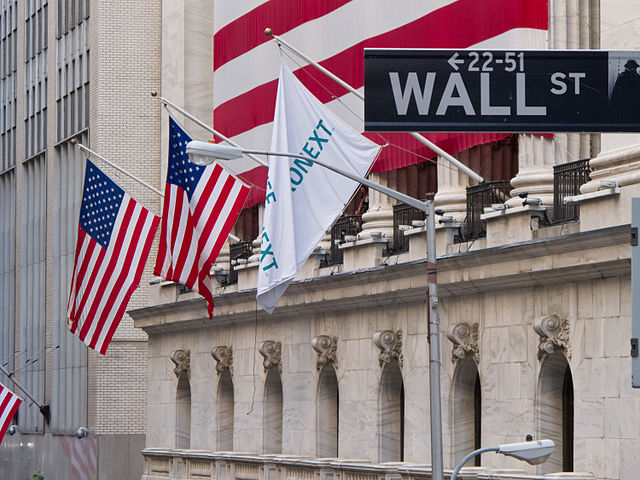
Wall Street ended sharply lower on Friday after U.S. President Donald Trump intensified his trade conflict with China, announcing a sweeping 100% tariff on Chinese imports and new export controls on critical U.S.-made software. The move followed Beijing’s tighter restrictions on rare earth exports, sparking renewed fears of a full-blown trade war between the world’s two largest economies.
The announcement sent Big Tech stocks tumbling, with Nvidia, Tesla, Amazon, and AMD all dropping more than 2% in after-hours trading. During regular trading, the S&P 500 and Nasdaq suffered their biggest one-day percentage losses since April 10, while the Dow Jones Industrial Average fell 878.82 points, or 1.90%, to 45,479.60. The S&P 500 plunged 2.71% to 6,552.51, and the Nasdaq Composite lost 3.56% to 22,204.43. The Philadelphia Semiconductor Index slumped 6.3%, deepening losses in chip stocks.
Analysts say Trump’s surprise announcement amplified investor anxiety. “The two largest economies are arguing again, and markets are reacting with a sell-first, ask-later mentality,” said Carson Group strategist Ryan Detrick. The CBOE Volatility Index hit its highest closing level since June, signaling mounting investor fear.
Chinese tech giants Alibaba, JD.com, and PDD Holdings slid between 5.3% and 8.5%. Meanwhile, Qualcomm dropped 7.3% after reports of a Chinese antitrust probe into its acquisition of Israel’s Autotalks.
The escalating tensions come as the U.S. government remains in its 10th day of shutdown, delaying official economic data releases. Independent surveys, like the University of Michigan’s consumer sentiment index, show confidence hovering near historic lows amid high prices and job market concerns.
Looking ahead, investors await earnings from major U.S. banks including JPMorgan, Goldman Sachs, Citigroup, and Wells Fargo, with analysts forecasting 8.8% year-over-year S&P 500 earnings growth in Q3.
Friday’s rout underscores rising uncertainty as trade, tech, and policy risks collide, leaving markets braced for continued volatility this October.







