


 Physicists zoom into the birth of cosmic rainstorms with new CERN study
  China’s robots can run faster than Usain Bolt – now they are being prepared for war
  1 in 3 uni students experience serious financial hardship. Could concession cards for all help?
  AI is supercharging money scams – here’s what you can do to protect yourself
  Unsustainable – or manageable? We don’t yet know how data centres will impact Australia’s environment
  Who should own the knowledge that underpins AI technology?
  Big AI wants to slow down AI research. Is it a safety pause or a strategic retreat?
  Europe can’t achieve space sovereignty alone. Here’s why
  fnny Beta Launches With a Simple Idea: Find an Event, Show Up, Get Rewarded


 Add as a preferred source on Google
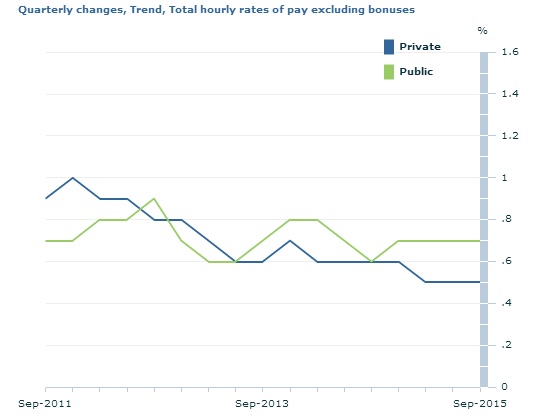
To add to the concern of Reserve Bank of Australia (RBA) is the latest wage report, which showed wage growth is at lowest level since 1998. In October, unemployment rate dropped by 0.3% to 5.9% and employment rose by 58,600, but that doesn't seem to have helped wages much.
- For three months to September quarter, wages grew by 0.6% on quarterly basis and 2.3% annual pace. Annual pace of growth stands at lowest since 1998. Major contributor has been public sector, where wages grew by 2.7%. Public sector growth has been 2.1%.
- Lowest level of growth was registered at 1.5% annually for Professional, scientific and technical services and administrative and support services, while best was seen for education and training at 3% annually.
- On quarterly basis, accommodation and food services recorded best wage growth of 1.6%, while financial and insurance services recorded lowest at 0.2%.
Lower wage growth indicates that Australian Labour market is not tight enough. Without wage growth, it would be difficult for RBA to achieve demand driven inflation.
Aussie is currently trading at 0.71 against Dollar.







