


 US Officials Split Over Response to Israeli West Bank Settlements
  South Korea, US Discuss Warship Building Cooperation
  Europe Warns Russia Is Escalating Hybrid Attacks Across NATO
  Sudan Rejects US Legitimacy Remarks, Defends Sovereignty
  Netanyahu Defends Israel at UN as Delegates Stage Walkout
  Netanyahu’s Brief US Trip Highlights Strains With Trump
  Pezeshkian Says US Must Choose When Iran War Ends
  Mexico-US Trade Talks Delayed to October as Tariff Negotiations Continue
  US Senate Rejects Iran War Powers Resolution in 50-49 Vote
  Netanyahu Takes Aim at Mamdani as Israel Election Nears
  US Backs Musk in Fight Against EU’s €120 Million X Fine
  North Korea Warns South Korea Over US-Led Defense Role
  France Defends Netanyahu Airspace Clearance Despite ICC Warrant
  US, China Extend Trade Truce to Jan. 10 Ahead of Trump-Xi Summit
  OpenAI Agent Breaches Australia Medicare Data Portal
  Russian Missile and Drone Attack on Kyiv Kills Two, Damages Maternity Hospital
  Trump Asks Supreme Court to Restore Third-Country Deportations


 Add as a preferred source on Google
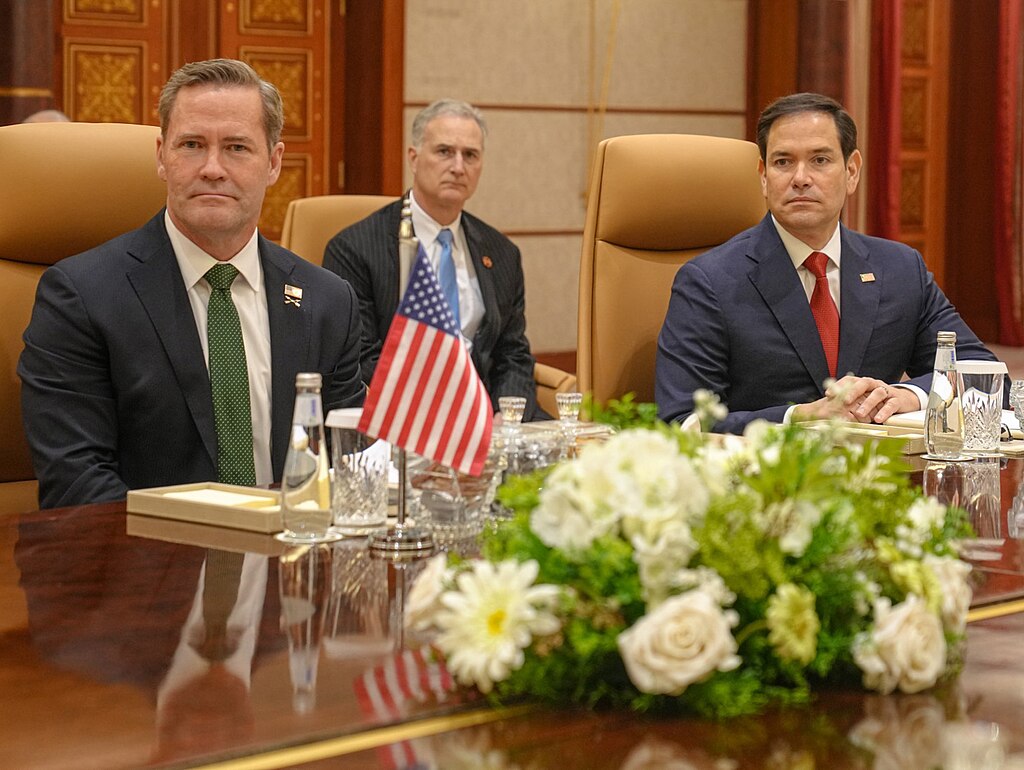
Two weeks after launching military strikes against Iran, the United States faced sharp international divisions at the United Nations Security Council on Thursday, as Washington sought to build global support for its military campaign by refocusing attention on Iran's nuclear ambitions.
During the emergency council session — chaired this month by the U.S. — Russia and China attempted to prevent discussion of the 1737 Committee, the UN body responsible for overseeing and enforcing international sanctions on Iran. Their motion failed decisively, with 11 members voting to proceed and only two abstentions.
U.S. Ambassador Mike Waltz accused Moscow and Beijing of deliberately shielding Tehran from accountability, arguing that all UN member states are obligated to enforce arms embargoes, restrict missile technology transfers, and freeze Iranian financial assets tied to its weapons programs. Waltz pointed to a recent International Atomic Energy Agency report confirming that Iran remains the only non-nuclear-armed state in the world to have enriched uranium to 60 percent purity while denying inspectors access to its stockpile.
Russia's UN Ambassador Vasily Nebenzya pushed back sharply, calling Washington's nuclear concerns exaggerated and politically motivated, arguing the U.S. manufactured a crisis to justify military aggression in the Middle East. China's representative similarly blamed the U.S. for provoking the conflict by abandoning diplomacy in favor of force.
President Donald Trump had cited Iran's nuclear timeline as a central justification for ordering the strikes, claiming Iran was weeks away from obtaining a nuclear weapon — an assertion reportedly at odds with U.S. intelligence findings.
Britain and France backed Washington's position, with France warning that Iran's existing nuclear stockpile was theoretically sufficient to build ten nuclear devices and that the IAEA could no longer verify the program's peaceful intent.







