


 Stuck in a creativity slump at work? Here are some surprising ways to get your spark back
  DOJ Clears Paramount Skydance-Warner Bros. Discovery Merger Without Conditions
  Gold Price Today: Bullion Heads for First Weekly Gain as Weak U.S. Jobs Data Eases Rate Hike Fears
  South Korea Ex-President Yoon Suk Yeol Sentenced to 30 Years Over Martial Law Plot
  US Supreme Court Strikes Down Hawaii Gun Carry Law on Private Property
  Lockheed Martin Emerges as Frontrunner to Acquire Ultra Maritime in $3.5 Billion Defense Deal
  The pandemic is still disrupting young people’s careers
  OpenAI Proposes 5% U.S. Government Stake Amid AI Policy Talks
  Oil Prices Slip as Oversupply Concerns and U.S.-Iran Talks Shape Market Outlook
  Mary Daly Says AI Uncertainty Clouds Fed Rate Outlook Despite Restrictive Policy
  Disaster or digital spectacle? The dangers of using floods to create social media content
  US Appeals Court Limits ICE Detention Without Bond Hearings After 90 Days
  Why a ‘rip-off’ degree might be worth the money after all – research study
  SK Holdings, KKR Launch $1.3B Renewable Energy Venture in South Korea
  Google promotes ‘teacher approved’ apps for kids. Here’s what parents should know


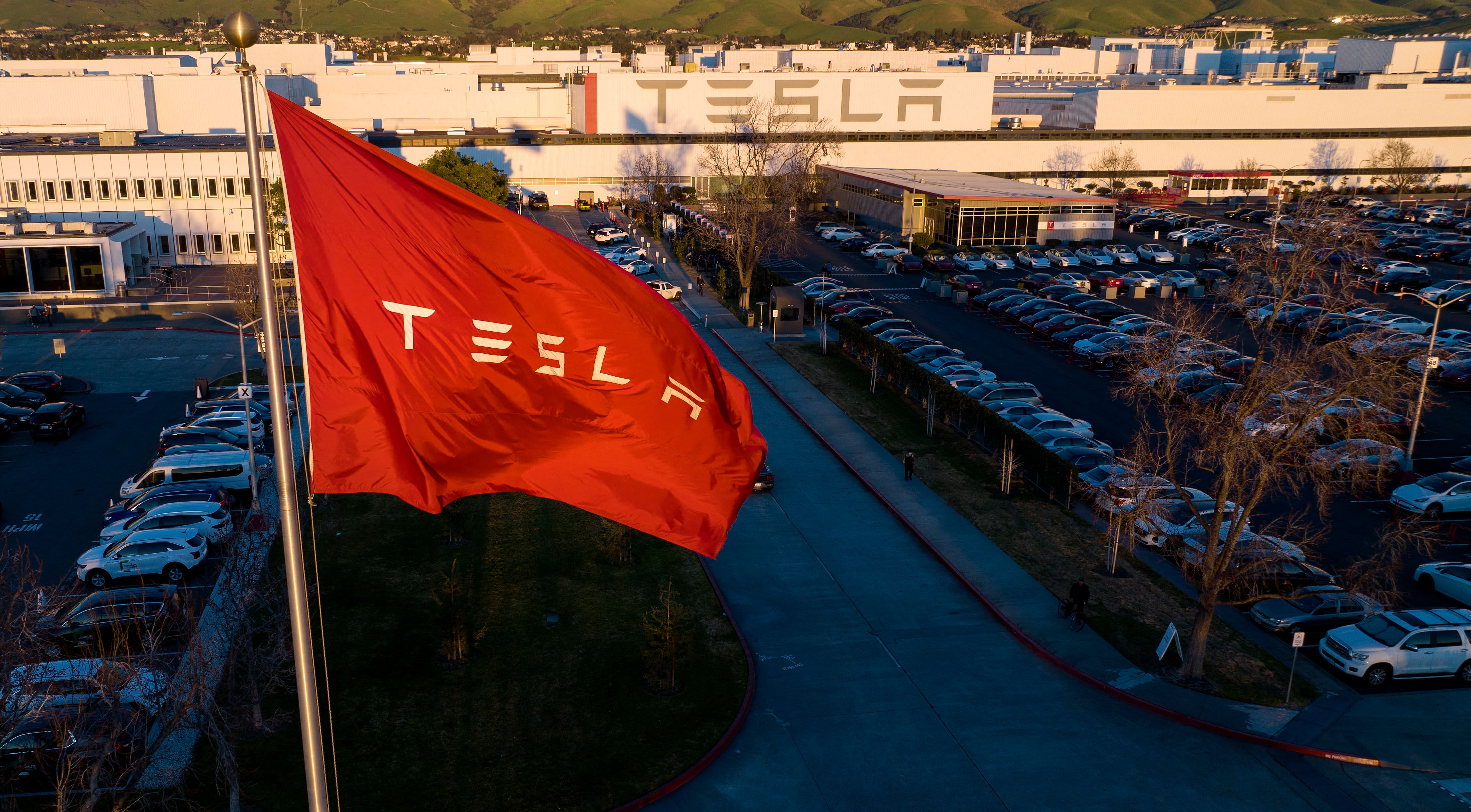
The National Labor Relations Board (NLRB) ruled that it was unlawful for Tesla to prohibit employees from wearing shirts bearing a union insignia.
In a 3-2 decision on a 2017 dispute between Tesla and the United Automobile Workers (UAW) union, the NLRB said that companies interfering with employees' rights to display union insignia have the burden of establishing special circumstances justifying it.
The majority found that the electric car maker failed to establish those special circumstances in this case.
NLRB Chair Lauren McFerran said the decision reaffirms the presumptive unlawfulness of any attempt to restrict the wearing of union clothing or insignia.
A Supreme Court precedent mandates a heightened burden for an employer to justify attempts to limit this right.
Consequently, the NLRB ordered Tesla to rescind its policy prohibiting employees from wearing black union shirts.







