


 US Expands Criminal Investigation Into Nicolas Maduro With New Florida Probe
  Israel Faces Global Backlash Over Gaza Flotilla Activists’ Treatment
  DHS Threatens to Halt International Airport Processing in Sanctuary Cities
  U.S. Removes Francesca Albanese From Sanctions List After Court Ruling
  Trump Signals Tough Stance on Iran Uranium Stockpile as Nuclear Talks Show Limited Progress
  Rubio Pressures NATO Allies as Trump Questions Alliance Commitment
  Chicago U.S. Attorney Drops Charges Against Broadview Protest Defendants
  Trump Warns Iran of Renewed Action as Nuclear Deal Talks Stall
  Canada Condemns Israel Over Gaza Flotilla Activists as Tensions Escalate
  Raul Castro Indicted by U.S.: Cuba’s Revolutionary Leader Faces Renewed Scrutiny in 2026
  Gaza Ceasefire Failure Risks Permanent Division, U.N. Warns
  UN Backs ICJ Climate Ruling Despite U.S. Opposition
  Trump-Taiwan Talks Could Reshape U.S.-China Relations
  NIH Infectious Disease Leadership Shake-Up Raises Concerns Amid Ebola, Hantavirus Outbreaks
  Vance and Rubio Intensify 2028 Republican Succession Battle Amid Trump Approval Slide
  U.S. Sanctions Tanzanian Police Official Over Human Rights Violations
  Sheinbaum Warns Morena Officials to Resign Over Corruption Allegations Amid U.S. Pressure


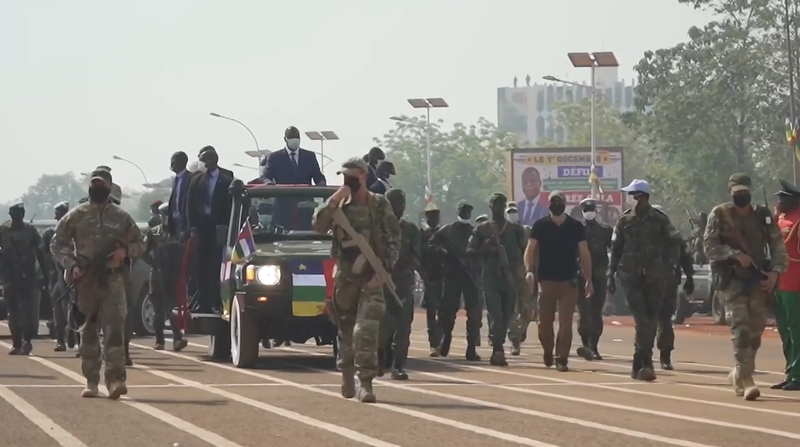
The United States State Department has added the Russian Wagner mercenary group, as well as countries Cuba and Nicaragua, to a blacklist on international religious freedom. The designation would clear the way for potential sanctions to be imposed.
The State Department Friday last week announced that it was placing the Russian mercenary group and longtime US adversaries Cuba and Nicaragua on a blacklist over international religious freedom. Cuba and Nicaragua were listed by the agency as “Countries of Particular Concern,” which would put them at risk of facing further sanctions.
The Wagner mercenary group was designated on the blacklist for alleged abuses in the Central African Republic. The group was also allegedly involved in Mali and was accused of committing human rights violations in Libya, Syria, and Ukraine.
“Around the world, governments and non-state actors harass, threaten, jail, and even kill individuals on account of their beliefs,” said Secretary of State Antony Blinken in a statement. “The United States will not stand by in the face of these abuses.”
Nicaragua’s authoritarian President, Daniel Ortega, has clamped down on the Catholic Church. Ortega accused the Catholic Church of supporting the 2018 anti-government protests.
The designation follows the latest annual assessment on religious freedom by the State Department back in June, citing the violence and arrests of Cuban religious figures over alleged involvement in rare public protests and restrictions on Protestant churches that were not recognized.
Blinken retained the blacklist of the countries that were designated under the category in 2021 - China, Eritrea, North Korea, Myanmar, Pakistan, Russia, Saudi Arabia, Tajikistan, and Turkmenistan.
On Sunday, Blinken warned Israeli Prime Minister Benjamin Netanyahu against annexing the occupied West Bank. Speaking to left-leaning pro-Israel advocacy group J Street, Blinken said that President Joe Biden’s administration would work to preserve a “horizon of hope” for the creation of a Palestinian state.
“We will also continue to unequivocally oppose any acts that undermine the prospects of a two-state solution, including but not limited to settlement expansion, moves toward annexation of the occupied West Bank, disruption to the historic status quo of holy sites, demolitions and evictions, and incitement to violence,” said Blinken.







