


 China’s ‘Lipstick King’ Says AI Won’t Replace Livestream Hosts
  Asian Stocks Fall as Surging Bond Yields Rattle Markets
  Russian Envoy Dmitriev Heads to US for Ukraine Talks
  US, China Extend Trade Truce to Jan. 10 Ahead of Trump-Xi Summit
  Mexico-US Trade Talks Delayed to October as Tariff Negotiations Continue
  U.S. Treasury Yields Surge as 30-Year Hits 22-Year High
  Dollar Holds Near Two-Month High as Yen Approaches 160
  Gold Holds Near $4,275 as Rising Treasury Yields Fuel Fed Rate Hike Bets
  Soybean Futures Slip as Traders Await Trump-Xi Trade Signals
  Trump, Xi Focus on Trade and AI at White House Summit
  Japan Private-Sector Growth Slows as Domestic Demand Weakens
  South Korea, US Discuss Warship Building Cooperation
  European Stocks Fall as Bond Yields and Geopolitical Risks Weigh
  U.S. 10-Year Treasury Yield Hits 2007 High as Fed Rate Hike Bets Rise
  Oil Prices Ease as Iran Tensions Clash With Diplomacy Hopes
  Asian Currencies Mixed as Dollar Holds Near Two-Month High
  Wall Street Falls as Treasury Yields Surge, Oil Rebounds on Iran Tensions


 Add as a preferred source on Google
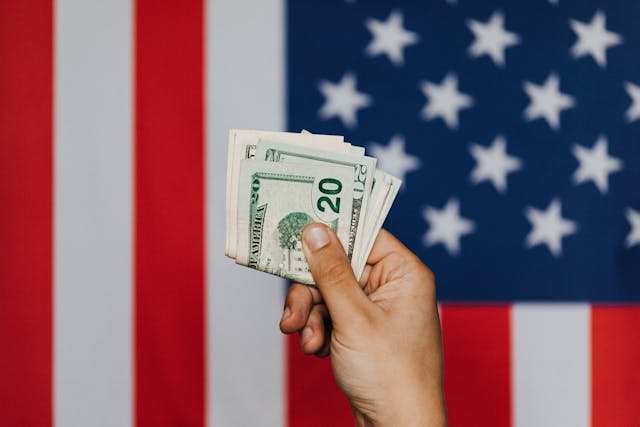
The U.S. dollar edged slightly lower on Monday as geopolitical tensions and monetary policy uncertainty weighed on investor sentiment. The dip followed reports that U.S. forces seized an Iranian cargo vessel over the weekend, raising concerns about whether a temporary ceasefire between the United States and Iran will be extended. This development has added volatility to global currency markets and increased caution among forex traders.
The US Dollar Index (DXY), which measures the greenback against a basket of major currencies, slipped marginally to 98.10 by late trading. Initially, the dollar saw mild gains after news of the vessel seizure, but uncertainty surrounding diplomatic developments quickly reversed momentum. Conflicting reports about upcoming peace talks further complicated the outlook. While President Donald Trump indicated that Vice President JD Vance would soon head to Pakistan for negotiations, multiple sources suggested unclear timing, leaving markets uncertain. The current ceasefire is set to expire midweek, adding urgency to the situation.
Investor focus is also shifting toward domestic economic policy, particularly the upcoming Senate hearing of Kevin Warsh, nominated to replace Jerome Powell as Federal Reserve Chair. Market participants expect the hearing to significantly influence the direction of the U.S. dollar. Warsh is widely viewed as a more hawkish candidate, potentially signaling tighter monetary policy or balance sheet reductions. His stance on inflation, interest rates, and the economic impact of geopolitical tensions will be closely scrutinized.
Persistent inflation pressures in the U.S. have kept traders alert, especially as core inflation remains elevated. Any indication that the Federal Reserve may shift toward a dovish or hawkish stance could trigger sharp movements in both Treasury yields and the forex market.
Globally, central bank activity is also in focus. China’s central bank held interest rates steady following strong economic data, keeping the yuan stable. Meanwhile, the Canadian dollar strengthened on rising inflation data, while the euro and British pound posted modest gains. The Japanese yen weakened slightly against the dollar.
Overall, the combination of geopolitical risks and monetary policy expectations continues to drive U.S. dollar volatility, making it a key focus for global investors.







