


 US, China Extend Trade Truce to Jan. 10 Ahead of Trump-Xi Summit
  Dollar Hits Two-Month High as Fed Rate Hike Bets Rise
  European Stocks Fall as Bond Yields and Geopolitical Risks Weigh
  Mexico-US Trade Talks Delayed to October as Tariff Negotiations Continue
  RBI Uses $10 Billion Currency Swaps to Drain Excess Rupee Liquidity
  Russian Envoy Dmitriev Heads to US for Ukraine Talks
  Soybean Futures Slip as Traders Await Trump-Xi Trade Signals
  South Korea, US Discuss Warship Building Cooperation
  China’s ‘Lipstick King’ Says AI Won’t Replace Livestream Hosts
  Wall Street Ends Flat as Oil, Treasury Yields and Fed Jitters Rattle Markets
  Asian Stocks Fall as Bond Yields Surge Ahead of Trump-Xi Summit
  Wall Street Falls as Treasury Yields Surge, Oil Rebounds on Iran Tensions
  US Dollar Hits Two-Month High as Fed Rate Hike Bets Rise
  Fed Unveils Stablecoin Rules Under GENIUS Act
  Gold Prices Fall as Treasury Yields Rise on Fed Rate Hike Bets
  Trump, Xi Focus on Trade and AI at White House Summit


 Add as a preferred source on Google
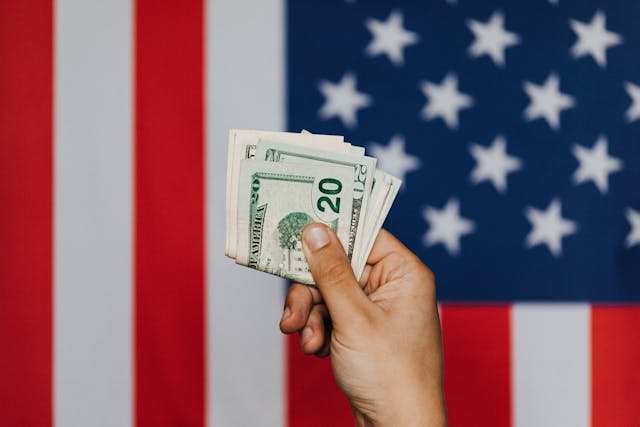
The U.S. dollar was on track for its strongest weekly performance in more than a month on Friday, supported by growing safe-haven demand as the conflict in the Middle East intensified and investors increased expectations for higher U.S. interest rates due to rising inflation risks.
At 4:40 p.m. ET, the U.S. Dollar Index (DXY), which measures the greenback against six major currencies, edged up to 101.49, putting it on course for a weekly gain of 0.7%—its best performance since June 19.
The dollar’s rally was fueled by surging oil prices and renewed trade tensions. Brent crude briefly climbed above $100 per barrel for the first time since May after Iran-backed Houthi militants launched attacks on Saudi oil tankers in the Red Sea, raising concerns over disruptions to global energy supplies through the Bab el-Mandeb Strait and the Strait of Hormuz.
Meanwhile, fighting between the United States and Iran continued, with U.S. Central Command reporting a 13th consecutive night of strikes on Iranian targets. Iran responded with attacks on U.S. military bases in Bahrain, Kuwait, and Jordan, while reports indicated Tehran rejected a U.S.-backed ceasefire proposal.
Trade concerns also added to inflation fears after President Donald Trump imposed new tariffs on imports from 60 major U.S. trading partners, following additional duties on Canadian goods earlier this week.
Rising inflation expectations pushed U.S. Treasury yields higher, with the 10-year yield climbing 14 basis points this week and the two-year yield rising more than 16 basis points. According to the CME FedWatch Tool, markets now see a nearly 38% chance of a quarter-point Federal Reserve rate hike next week, up sharply from around 13% a week earlier.
Interactive Brokers senior economist José Torres said inflation remains on a longer-term cooling path despite recent energy-driven pressure. He noted that easing housing costs could still support the Fed’s inflation goals, while a decline in oil prices would likely benefit longer-term Treasury bonds.
In currency markets, the Japanese yen traded near 163.84 per dollar, heading for its worst weekly decline since mid-May despite repeated intervention warnings from Japanese Finance Minister Satsuki Katayama.
The British pound was set for its biggest weekly loss since mid-June after newly appointed UK Prime Minister Andy Burnham reaffirmed his commitment to fiscal discipline while unveiling his cabinet.
The euro also weakened, falling 0.6% for the week after the European Central Bank left interest rates unchanged but signaled that a September rate hike is increasingly likely. Investors will now turn their attention to next week's policy decisions from the Federal Reserve, Bank of Japan, and Bank of England.







