


 USA at 250: the Black American struggle for life, liberty and the pursuit of happiness
  State of emergency in Crimea as Ukraine focuses pressure on ‘jewel in Putin’s crown’
  Gold Price Surges Above $4,120 as Weak US Jobs Data Lowers Fed Rate Hike Expectations
  New Zealand Consumer Confidence Rises in June as Inflation Expectations Ease
  Trump has made more than $1 billion from crypto in a year. How?
  Asian Currencies Rise as Dollar Weakens; Yen Holds Steady Amid Japan Intervention Watch
  Morgan Stanley Names BAE Systems Top European Defence Stock Despite Lower Price Target
  JPMorgan Cuts Gold Price Forecast, Sees Bullion Reaching $4,500 by End of 2026
  Elon Musk is remaking the world, like Henry Ford before him – but more dangerously
  Gold Surges Past $4150 on Dovish Fed Signals and Weak Jobs Data; Bullish Outlook Prevails
  Trump Administration Declines USMCA Renewal, Opens Talks on New Trade Changes
  Japan Signals Surprise Yen Intervention Strategy as BOJ Hawkish Stance Puts FX Traders on Alert
  Asian Currencies Stay Under Pressure as Dollar Holds Near 13-Month High Ahead of U.S. Jobs Report
  Japan Signals Readiness to Act on Yen as Intervention Speculation Grows


U.K. inflation stood held steady at 2.3 percent in annual terms in the month of March, data from the Office for National Statistics (ONS) showed on Tuesday. Data was in line with economists' forecasts in a Reuters poll. The month-on-month figure fell from 0.7 percent to 0.4 percent. Rising prices for food, alcohol and tobacco, clothing and footwear, miscellaneous goods and services were offset by lower airfares.
U.K. inflation’s likely paused its upward trajectory in March as the timing of Easter led to a drop in airfares. With Easter this year coming later than last year, seasonal increases in ticket prices are likely to be delayed until April's data. The upward push from weaker sterling and the hikes in domestic energy tariffs announced so far will continue to impart clear upward pressure to inflation.
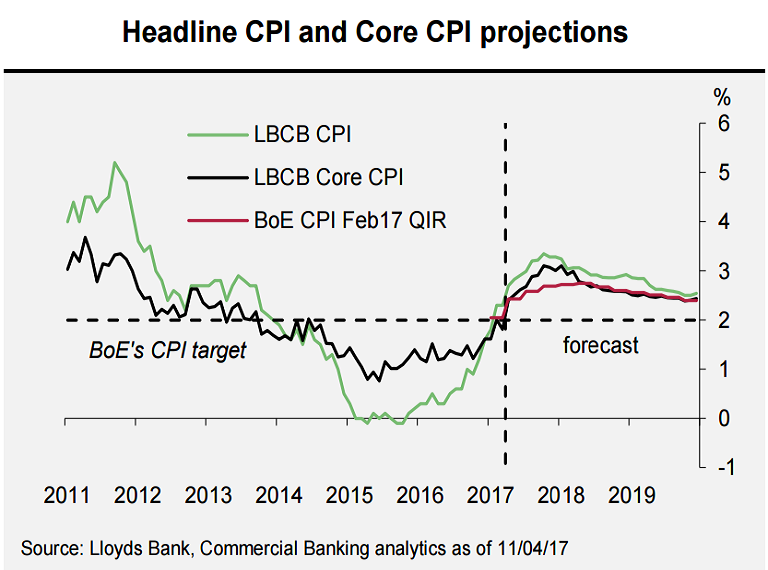
"A sharp rise next month - the echo of the Easter timing effect and boosted by the rise in insurance prices reflecting the change in the personal injury discount rate - will presage an expected peak in CPI inflation of 3.3% by 2017 Q4," said Lloyds bank in a report.
U.K. inflation is now above the Bank of England's (BoE) target of 2 percent for the second month in a row. Inflation has accelerated in recent months, supported by a weakening of the pound and by the rise in oil prices which has fuelled inflation in other countries too. That said, most BoE policymakers have signalled they see no urgency to raise interest rates, even as they predict inflation will peak at 2.8 percent in around a year's time.
Meanwhile, the outlook for consumers also remains tough. A survey by the British Retail Consortium and KPMG on Monday signalled consumers were reining back spending in the face of rising food prices. The report showed spending on non-food items fell by 0.8 percent in the January-to-March period, the survey found, which was the weakest three-month performance for nearly six years.
"While we continue to view the overshoot relative to the 2% target as one the MPC will be willing to look through, such a relaxed approach will require ongoing corroboration in signs of decelerating economic growth, notably in household spending," adds Lloyds Bank.
GBP/USD was trading a narrow range on the day. The pair made a high of 1.2445, with the upside being capped by 20-DMA. It was trading at 1.2425 at around 1130 GMT, up 0.07 percent. Break above 20-DMA could see further gains. On the downside cloud base at 1.2346 offers strong support. We see weakness only on a break below daily cloud.
FxWirePro's Hourly GBP Spot Index was at 14.0693 (Neutral), while Hourly USD Spot Index was at 29.8999 (Neutral) at the same time. For more details on FxWirePro's Currency Strength Index, visit http://www.fxwirepro.com/currencyindex.







