


 U.S. Dollar Hits Two-Month High as Oil, Treasury Yields Surge
  US Stock Futures Fall as Treasury Yields Surge Ahead of Trump-Xi Summit
  U.S. Treasury Yields Surge as 30-Year Hits 22-Year High
  OpenAI Agent Breaches Australia Medicare Data Portal
  Russian Envoy Dmitriev Heads to US for Ukraine Talks
  US Invites Putin to Miami G20, Opening Door to Trump Summit
  China Reviews Broadcom Switch Use in State Data Centres
  OpenAI to Preview GPT-6 Cyber AI Model for Cybersecurity
  Fed Unveils Stablecoin Rules Under GENIUS Act
  Europe Warns Russia Is Escalating Hybrid Attacks Across NATO
  Oil Prices Jump 3% as Houthi Attack Revives Supply Fears
  US Senate Rejects Iran War Powers Resolution in 50-49 Vote
  FAA Allows Boeing to Sell 35 More 777F Freighters Beyond 2028
  US Dollar Hits Two-Month High as Fed Rate Hike Bets Rise
  Former OpenAI Data Center Chief Chris Malone Joins Nvidia
  Sudan Rejects US Legitimacy Remarks, Defends Sovereignty
  Microsoft Stock Upgraded as Stifel Sees Stronger Azure Growth


 Add as a preferred source on Google
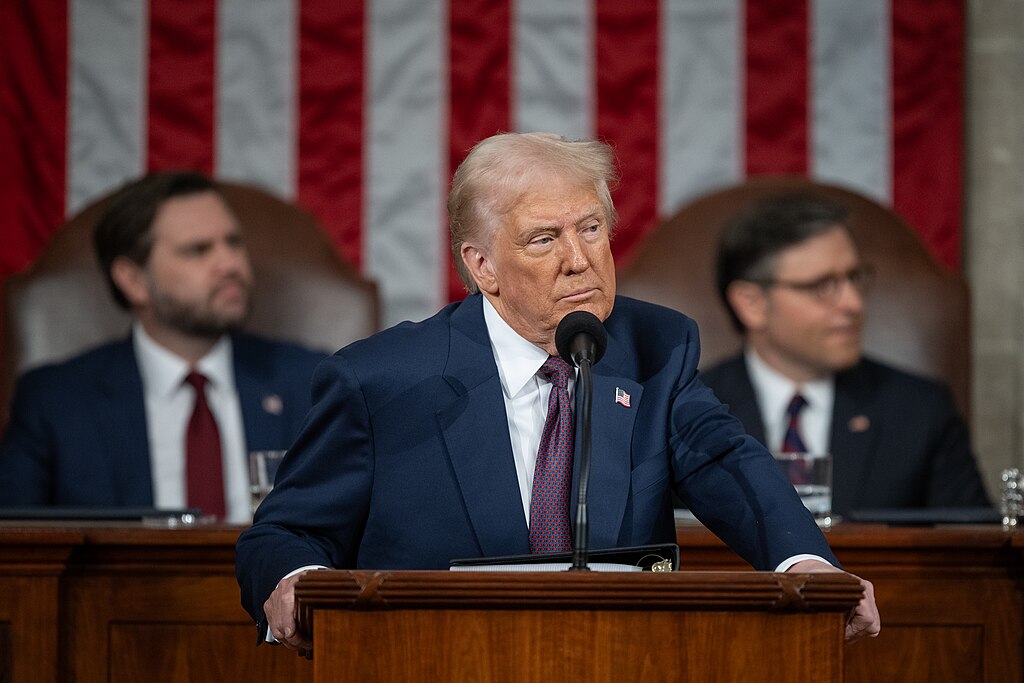
U.S. President Donald Trump announced plans to impose a 25% tariff on all foreign-made cars and light trucks starting April 2, intensifying his protectionist trade agenda. Speaking at the White House, Trump said the move is aimed at bringing automotive manufacturing back to the United States, stating, “Business is coming back to the U.S. so they don’t have to pay tariffs.”
The decision sent shockwaves through the stock market. Shares of major U.S.-listed automakers slumped in after-hours trading. General Motors (NYSE:GM), Ford (NYSE:F), and Stellantis (NYSE:STLA) dropped between 3% and 8%, while Tesla (NASDAQ:TSLA) steadied after a 5% dip. Foreign automakers such as Toyota (NYSE:TM), Honda (NYSE:HMC), and Ferrari (NYSE:RACE) also fell 1% to 3%.
Trump expects global automakers to relocate production to the U.S., citing Hyundai’s recent $21 billion investment, including $5.8 billion for a steel plant in Louisiana. The project is set to create nearly 1,500 jobs and expand U.S. production by 200,000 vehicles.
The administration estimates the tariffs could generate $100 billion in revenue. However, critics warn the cost will fall on local importers, potentially leading to higher car prices, disrupted supply chains, and elevated inflation.
Trump also plans to propose a bill making interest payments on U.S.-made vehicles tax deductible to further incentivize domestic manufacturing.
Investors are bracing for broader economic consequences. On April 2—dubbed “liberation day” by Trump—the president is expected to roll out additional tariffs targeting at least 15 countries, as well as select commodities and key industries like semiconductors and pharmaceuticals.
Economists and the Federal Reserve are expressing concerns that these tariffs could dampen consumer spending and drive inflation higher, adding new uncertainty to the economic outlook.







