


 Kremlin Says No Decision Yet on Putin-Trump December Summit
  NATO Boosts Intelligence Sharing Amid Russia Hybrid Threats
  North Korea Rejects Nuclear Test Warning, Calls Nuclear Status Irreversible
  Trump, Xi Focus on Trade and AI at White House Summit
  Najib Razak Seeks Stay of 15-Year 1MDB Prison Sentence
  Trump, Xi Visit US National Archives After White House Summit
  Ukrainian Drone Attacks Hit Russian Regions, Injuring at Least 12
  Pezeshkian Says US Must Choose When Iran War Ends
  France Defends Netanyahu Airspace Clearance Despite ICC Warrant
  OpenAI Agent Breaches Australia Medicare Data Portal
  EU Defence Build-Up Too Slow for 2030 Russia Readiness Goal
  US Senate Rejects Iran War Powers Resolution in 50-49 Vote
  Xi Calls for Deeper U.S.-China AI Cooperation in Trump Talks
  Netanyahu’s Brief US Trip Highlights Strains With Trump
  South Korea, US Discuss Warship Building Cooperation
  Taiwan Thanks US for Support Ahead of Trump-Xi Summit
  Netanyahu Defends Israel at UN as Delegates Stage Walkout


 Add as a preferred source on Google
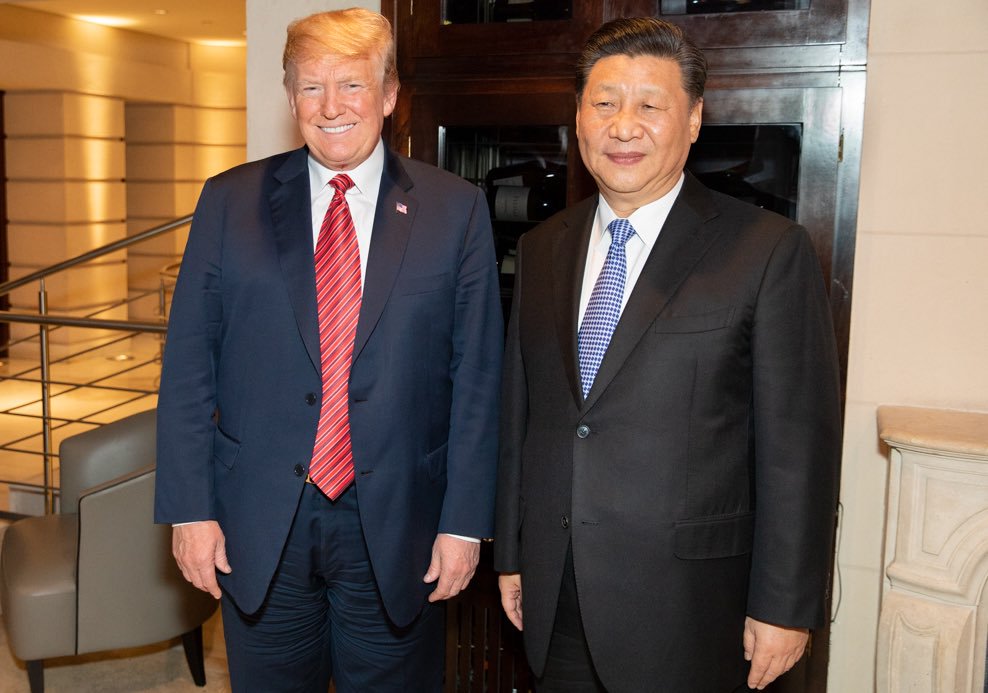
U.S. President Donald Trump said it is ultimately Chinese President Xi Jinping’s decision how China handles Taiwan, but warned he would be “very unhappy” if Beijing moved to change the current status quo. The remarks were made in an interview with The New York Times published Thursday and have drawn renewed attention to U.S.-China relations and cross-strait tensions.
In the interview, Trump said Xi considers Taiwan to be part of China and suggested that any action would be Beijing’s choice. However, Trump emphasized that he has clearly expressed his opposition to any attempt to alter the existing situation surrounding Taiwan. He added that he does not believe Xi would take military action against the island during his presidency, which is set to end in 2029, though he speculated such a move could happen under a future U.S. administration.
Trump made the comments while discussing what lessons Xi might draw from Trump’s aggressive military operation in Venezuela. The president argued the two situations are not comparable, stating that Taiwan does not pose the same type of threat to China as Venezuela’s government under Nicolas Maduro posed to the United States. He reiterated his confidence that China would avoid escalating tensions over Taiwan while he remains in office.
The Trump administration has previously outlined its approach to China in a strategy document, stating that the United States aims to prevent conflict over Taiwan and the South China Sea by strengthening U.S. military capabilities and those of its allies. This policy reflects Washington’s broader effort to deter aggression while avoiding direct confrontation with Beijing.
China continues to view Taiwan as its own territory and has never ruled out the use of force to bring the democratically governed island under its control. Taiwan, however, strongly rejects China’s claims. A spokesperson for China’s embassy in Washington reiterated that the Taiwan issue is an internal Chinese matter and part of China’s sovereign rights.
Although the United States does not maintain formal diplomatic relations with Taiwan, it remains the island’s most important international supporter and is legally required to help Taiwan maintain its self-defense capabilities. The Taiwan issue has long been a sensitive and persistent source of friction in U.S.-China relations, with Trump largely avoiding explicit statements on how the U.S. would respond to a serious escalation.







