


 China Vanke Shares Jump as Beijing Moves to Ease Debt Pressure
  NASA, Boeing Discuss Expanding Starliner Missions
  China Tightens Fentanyl Rules Ahead of Trump-Xi Summit
  US, Denmark and Greenland Set to Sign Arctic Security Deal
  SpaceX Nasdaq 100 Weight to More Than Double in Rebalance
  US Federal Register Drops Alibaba Qwen AI Search Tool
  OpenAI Urges US-Led Global Standards for Frontier AI
  AI is supercharging money scams – here’s what you can do to protect yourself
  Apple Pay Set for India Launch With Axis Bank
  Telix to Acquire Germany’s ITM in $1.65 Billion Radiopharma Deal
  Macron, Trump Discuss Ukraine-Russia Energy Strike Moratorium
  Databricks to Invest $350 Million in Singapore AI Expansion
  Qualcomm Gains on $60B Amazon AI Chip Deal
  Burnham Eyes UK Leadership Role in AI Ahead of Trump Meeting
  Macron Challenges Trump’s Gaza Peace Claims at UN
  Microsoft Stock Upgraded as Stifel Sees Stronger Azure Growth
  US, Japan and South Korea Back Taiwan Ahead of Trump-Xi Summit


 Add as a preferred source on Google
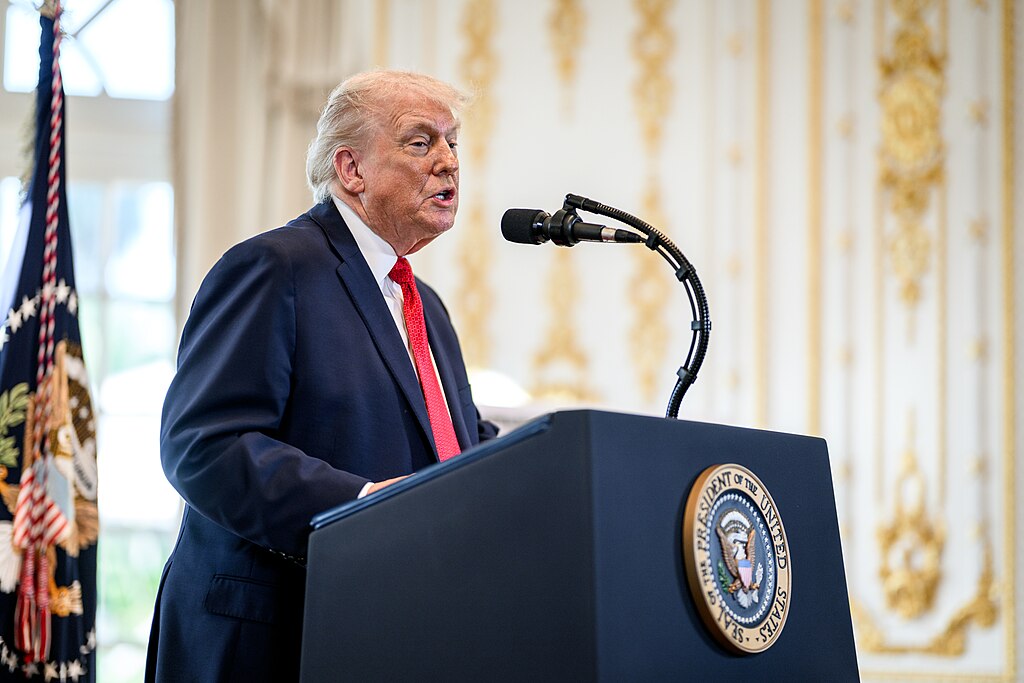
U.S. President Donald Trump said he no longer views artificial intelligence company Anthropic as a national security threat, marking a significant shift from his stance just a week earlier. The comments came during an interview with The Axios Show published on Friday, amid ongoing discussions between the AI company and the Trump administration regarding access to advanced AI models.
The remarks follow a dispute over foreign access to Anthropic’s latest AI systems, Fable 5 and Mythos 5. Earlier this month, the company suspended access to the models for all users after Trump ordered Anthropic to prevent foreign nationals from using the technology. The move sparked concerns across the AI industry about export controls and the future of advanced artificial intelligence development in the United States.
When asked whether he considered Anthropic or CEO Dario Amodei a national security threat, Trump replied, “Well, not now, but a week ago, maybe.” He added that Amodei responded to the administration’s export control requirements “very quickly” and “responsibly,” signaling approval of the company’s cooperation with federal directives.
Senior Anthropic technical staff were scheduled to meet with Trump administration officials earlier this week to discuss the restrictions and explore potential solutions. The issue has drawn attention as governments worldwide increase oversight of cutting-edge AI technologies and their potential national security implications.
Trump also met with several technology executives, including Amodei, during the G7 summit in France this week. Despite softening his stance toward Anthropic, the president did not completely rule out invoking emergency powers under the Defense Production Act (DPA) if necessary.
“I have the power to use a lot of things,” Trump told Axios. “But I’m not sure I have to do that.”
In response, an Anthropic spokesperson welcomed the administration’s engagement and emphasized the company’s commitment to working with U.S. officials. The spokesperson said Anthropic remains focused on protecting critical infrastructure, addressing AI security concerns, and ensuring the United States maintains leadership in artificial intelligence innovation.







