


 RBI Holds Repo Rate at 5.25% as India’s Growth Outlook Strengthens After U.S. Trade Deal
  Trump Allegedly Sought Airport, Penn Station Renaming in Exchange for Hudson River Tunnel Funding
  Asian Stocks Slip as Tech Rout Deepens, Japan Steadies Ahead of Election
  UAE Plans Temporary Housing Complex for Displaced Palestinians in Southern Gaza
  Bank of England Expected to Hold Interest Rates at 3.75% as Inflation Remains Elevated
  Trump Signs Executive Order Threatening 25% Tariffs on Countries Trading With Iran
  Australia’s December Trade Surplus Expands but Falls Short of Expectations
  China Extends Gold Buying Streak as Reserves Surge Despite Volatile Prices
  U.S.-India Trade Framework Signals Major Shift in Tariffs, Energy, and Supply Chains
  Trump Lifts 25% Tariff on Indian Goods in Strategic U.S.–India Trade and Energy Deal
  Dollar Steadies Ahead of ECB and BoE Decisions as Markets Turn Risk-Off
  Silver Prices Plunge in Asian Trade as Dollar Strength Triggers Fresh Precious Metals Sell-Off
  U.S. Sanctions on Russia Could Expand as Ukraine Peace Talks Continue, Says Treasury Secretary Bessent
  Dollar Near Two-Week High as Stock Rout, AI Concerns and Global Events Drive Market Volatility
  Gold and Silver Prices Slide as Dollar Strength and Easing Tensions Weigh on Metals


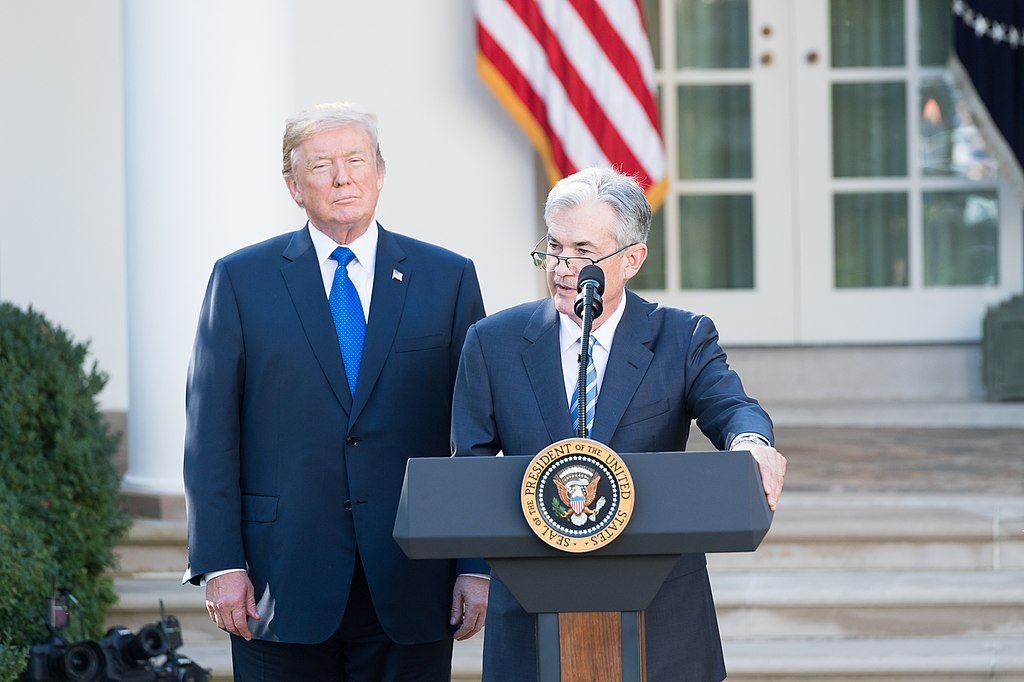
President Donald Trump has intensified his criticism of Federal Reserve Chair Jerome Powell, demanding his resignation over what he calls a failure to cut interest rates in a timely manner. In a post on Truth Social, Trump referred to Powell as “‘Too Late,’” calling for him to “resign immediately.”
Trump linked to an article featuring Federal Housing Finance Agency head Bill Pulte, who has called on Congress to investigate Powell. Pulte alleges that Powell gave “deceptive” testimony to the Senate regarding the Federal Reserve’s planned headquarters renovations. Pulte has also echoed Trump’s calls for immediate rate cuts and Powell’s resignation.
Throughout recent months, Trump has repeatedly argued that interest rates should be at least 2% to 3% lower, claiming that Powell’s policies are hindering economic recovery. Powell, however, has defended the Fed’s stance, citing inflationary risks—particularly those stemming from Trump-era tariffs—as the reason for maintaining higher rates.
The ongoing clash has fueled speculation that Trump, now out of office but still highly influential, may seek to undermine Powell’s authority before his term ends in May 2026. Reports suggest he could even preemptively name Powell’s successor, a move that would raise serious concerns about the central bank’s independence.
As debates over inflation and monetary policy continue, Trump’s pressure campaign has amplified tensions within financial markets and among policymakers. With Powell committed to his cautious approach and Trump pushing for aggressive rate cuts, the standoff highlights deep divisions over the direction of U.S. economic policy.













