


 Deutsche Telekom Shares Rise as Elliott Pushes Against T-Mobile Merger
  Fast Retailing Shares Drop as Uniqlo Japan August Sales Fall
  Audi, SAIC Launch China Innovation Hub for New AUDI Models
  South Korea, US Discuss Chip Investments Amid Tariff Plans
  Xiaomi Shares Jump on Europe EV Expansion Plan
  Brazil Court Suspends Sigma Lithium Mine Operations
  Milei Threatens Falkland Oil Firms With Sanctions
  Volkswagen Approves 50,000 More Job Cuts in Major Restructuring
  Huawei Launches Mate XT2 Foldable Phone in China
  Anthropic IPO Marketing Expected to Start in Mid-October
  Qantas Near-Miss Raises Sydney Air Traffic Controller Fatigue Concerns
  Tesla Cybercab Launch Puts Robotaxi Ambitions in Focus
  Nvidia CEO Says AGI Has Arrived With OpenAI GPT-6 Astra
  SpaceX Turbine Push Unlikely to Threaten Howmet, Bernstein Says
  Amazon Prime Air Cargo Plane Crash Kills Five at Miami Airport
  Tesla Cybercab Rides Launch in Austin as NHTSA Reviews Rollout
  Berkshire Hathaway Eyes Bigger Stakes in Japan’s Top Trading Houses


 Add as a preferred source on Google

Artificial intelligence (AI) – understood as intelligence demonstrated by machines – and machine learning (ML) – a subfield of AI that focuses on machines’ ability to automatically learn from experience without being explicitly programmed – are two of the computer science technologies that will arguably have the biggest impact on our lives in the coming decades. AI and ML are not exactly new – both terms date back to the mid-20th century – but it is mainly in recent years that their huge potential has become evident.
The technologies are now being used more and more extensively across a whole range of fields. Artificial intelligence can be found in autonomous vehicles, search engines, online assistants and spam filtering programs, to name just a few of its numerous common applications. Applications of machine learning include computer vision, DNA sequence classification, financial market analysis, Internet fraud detection, medical diagnosis and speech recognition. Both AI and ML are currently transforming whole sectors and will continue to do so in the future.
Pushing the boundaries
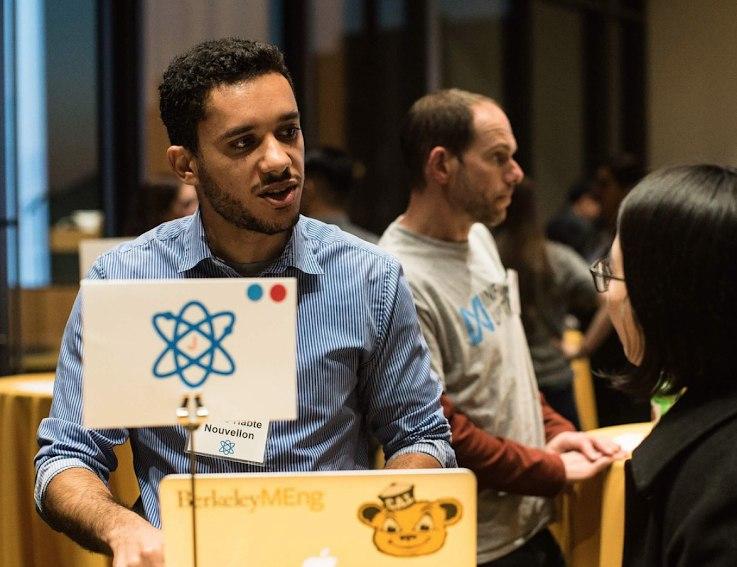
Of course, behind that transformation are concrete people, outstanding engineers and scientists who continue to push the boundaries of how theoretical concepts related to computer science and other similar fields can be turned into practical use. Curious folks, always on the lookout for new possibilities. Consider Pierre-Habté Nouvellon, the CTO at Snipfeed, a California-based startup that has come up with an eponymous AI-based news and information recommendation engine, mainly targeted at young (Generation Z) users.
Snipfeed, which he co-founded, provides daily, highly personalized pieces of news and information (snippets) that are filtered and recommended to its users depending on their needs. The technology used by the engine ensures that Snipfeed avoids recommending articles which do not look credible. An internal tool called Fakebuster detects fake news articles by verifying content, assessing the reliability of the facts in it and the quality of the writing style and the headline.
Falling for ML
Nouvellon discovered machine learning while he was doing a Master’s degree in aerospace engineering in France. He was working on a research project on theoretical supply chain problems and his supervisor advised him to see if reinforcement learning, a subfield of machine learning, could help him complete his task. “I took the well-known Andre Ng course in machine learning and fell in love with it. It was the perfect mix of statistics, algebra and computer science,” he recalled.
After that initial experience, Nouvellon realized that he wanted to study machine learning more thoroughly. He applied for a Master’s program in computer science at the University of California, Berkeley, and was admitted. There he met some of the leading professors in the field. Once in Berkeley, Nouvellon and two of his friends started working on an AI-based tutor called Jenyai, a conversational bot on messenger that was able to answer students’ questions in math, history and science.
One of the application’s features was a selection of news stories meant to help students better understand the discussed topics. This feature proved to be very popular with Jenyai’s users, which inspired Nouvellon and his partners to create Snipfeed. Nouvellon also had a chance to apply his knowledge of machine learning in a completely different field – healthcare. He was involved in a medical research project done by the University of California, Berkeley, and the University of California, San Francisco.
Driven by curiosity
The project’s goal was to apply machine learning algorithms to predict the occurrence of a certain disease among a major pool of patients by analyzing those patients’ electronic medical records and genotype data, provided by a large medical insurance group. The application of ML technologies in medicine and healthcare is set to become more and more commonplace in the near future, but such technologies will also be transforming many other sectors. The revolution will be driven by people like Nouvellon, who are always inspired by the new and unknown.
Becoming an inventor is something that he thought of from his early years. Nouvellon revealed that he had grown up in a family were science and creativity played a central role. Already when he was a child, he liked innovating, playing with such ideas as making up a new language and building a complex electric circuit. He would dream of becoming an astronaut, a chemist or a mathematician. “Inventing is doing something that has not been done before and thus there is an adventurous and exciting aspect to it that I have always loved,” Nouvellon admitted.
This article does not necessarily reflect the opinions of the editors or management of EconoTimes.







