Emma Laurent, Writer on Global Finance, Law and Corporate Risk
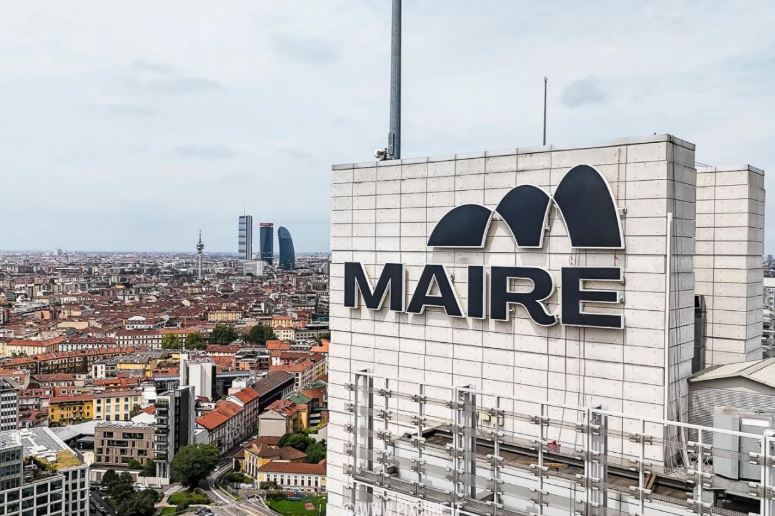
The new year has brought markets many high-profile stories. Among them is a legal battle unfolding across multiple jurisdictions between Eurochem Severo-Zapad-2, a subsidiary of the world’s third-largest fertilizer producer, EuroChem, and Italian engineering heavyweight Maire Group, triggered by the suspension of construction of a major ammonia and urea production plant. The outcomes of this confrontation may have serious practical consequences for international business.
The “EuroChem Severo-Zapad-2” case demonstrates how a seemingly standard legal conflict can trigger a chain of consequences far beyond the legal sphere. International contractors have encountered situations before in which arbitration affects perceptions among clients and partners. But for the first time, these consequences are taking on a systemic character: the combination of a sanctions environment, conflicts of jurisdiction, and competing interests across several key regions is turning a private dispute into a model case for major engineering and EPC companies operating in global markets.
Let us briefly recall the essence of the conflict. Tecnimont, a division of the Italian engineering group Maire, which maintains an impressive global order portfolio in the energy and chemical industries, built an ammonia production plant for EuroChem in Northwest Russia, in the city of Kingisepp; the facility was commissioned in 2019.
Riding the wave of this successful launch, the parties contracted a second plant in 2020, also intended to serve Europe’s ammonia and urea needs. However, implementation of the second project followed a very different trajectory. From the outset, it faced rising costs, logistics disruptions and the effects of the pandemic. In spring 2022, Tecnimont initiated a revision of the terms and suspended construction. Two and a half years later, the parties met in court - or rather, in multiple courts. Meanwhile, EuroChem brought construction of the facility to its final stage; commissioning of the complex is scheduled for September of this year.
In July 2025, a London court sided with the contractor, awarding approximately €800 million. Subsequently, Russian courts upheld counterclaims by EuroChem Severo-Zapad-2 against Maire and Tecnimont totaling more than $2.2 billion. Then, in January 2026, courts in Malaysia and India accepted lawsuits seeking Maire’s asset seizures: in both countries, the Italian company is involved in major investment projects, and both maintain agreements with Russia on the recognition of court decisions.
At the same time, the Maire – EuroChem case should be viewed not only as a legal precedent, but also as a signal to management teams. It highlights three key challenges contractors now face in global markets.
Lesson 1: Jurisdictional Conflict as a Risk Multiplier
Until recently, arbitration was regarded as a universal tool for protecting interests in cross-border projects. However, the Maire situation shows that under conditions of external restrictions, legal predictability is eroding. A ruling by an arbitration court in one jurisdiction no longer guarantees automatic recognition or enforcement in another.
When courts in multiple countries become involved in a dispute, from the UK to India, the legal process loses manageability. Instead of a single final decision, a web of parallel proceedings emerges: in different countries and legal systems, on different claims, and with different risk profiles.
The consequences of each such proceeding are unpredictable. They may extend beyond the original jurisdiction, affect new assets, provoke counterclaims, complicate banking support, and undermine the trust of key counterparties. Taken together, this transforms legal risk from a manageable category into a systemic factor capable of affecting an entire business model.
For management teams, this means legal strategy must account not only for the strength of legal arguments, but also for conflicts between regulatory systems — especially when projects are implemented in politically sensitive jurisdictions.
Lesson 2: How Customers Reassess Risk
One of the least controllable factors is how external counterparties perceive risk. Banks, regulators, and clients - particularly in countries with strong state involvement - tend to act proactively. The mere existence of a legal dispute, combined with any reference to sanctions, is often enough to trigger revisions of financing terms, suspensions of deals, or even changes in contractors.
Maire has become an example of how legal complications, regardless of the letter of the contract, can slow implementation and weaken confidence in a contractor.
This dynamic is especially pronounced in Asia, the Middle East and Africa, where projects are frequently backed by governments and contractor selection involves additional scrutiny of resilience - not only financial, but also political and legal. In such an environment, judicial and sanctions risks become part of a contractor’s overall profile and can play a decisive role in the allocation of future contracts.
Lesson 3: Contract Architecture and Communications Under Pressure
Complex international projects require not only engineering excellence, but also robust contract architecture. The Maire case illustrates how the framework of a classic EPC contract can falter amid external instability. Communications with the customer, responses to force majeure, and mechanisms for revising terms all require clearly defined procedures and channels in advance.
Problems arise when the legal logic of a project comes into conflict with its operational realities. Under such conditions, even a suspension of work that is justified from an engineering or financial perspective may be perceived as an alarming signal, triggering a chain reaction with a difficult-to-predict outcome.