


 Who should own the knowledge that underpins AI technology?
  Paramount Skydance Faces $30 Million Film Penalty in Warner Bros. Deal
  Meta Partners With Shopify to Bring Shop Pay Checkout to Muse AI
  Trump Plans Federal AI Force and AI Czar
  FAA Allows Boeing to Sell 35 More 777F Freighters Beyond 2028
  Prysmian, Rio Tinto Supply Low-Carbon Cables for Amazon Ohio Data Center
  Telix to Acquire Germany’s ITM in $1.65 Billion Radiopharma Deal
  SoftBank Launches $11 Billion Bond Sale to Fund OpenAI Investment
  DOJ Will Investigate AI-Related Crimes, Attorney General Blanche Says
  US Northeast Airports Resume Operations After Telecom Outage Disrupts Thousands of Flights
  NASA, Boeing Discuss Expanding Starliner Missions
  Hyundai CEO Warns Chinese Automakers Could Disrupt US Market
  fnny Beta Launches With a Simple Idea: Find an Event, Show Up, Get Rewarded
  CNN, MS NOW and Politico Sue Trump Over White House Media Ban
  Westinghouse Targets $50 Billion Valuation in U.S. IPO
  SpaceX Nasdaq 100 Weight to More Than Double in Rebalance
  Petrobras Joins Brazil’s New Diesel Subsidy Program


 Add as a preferred source on Google
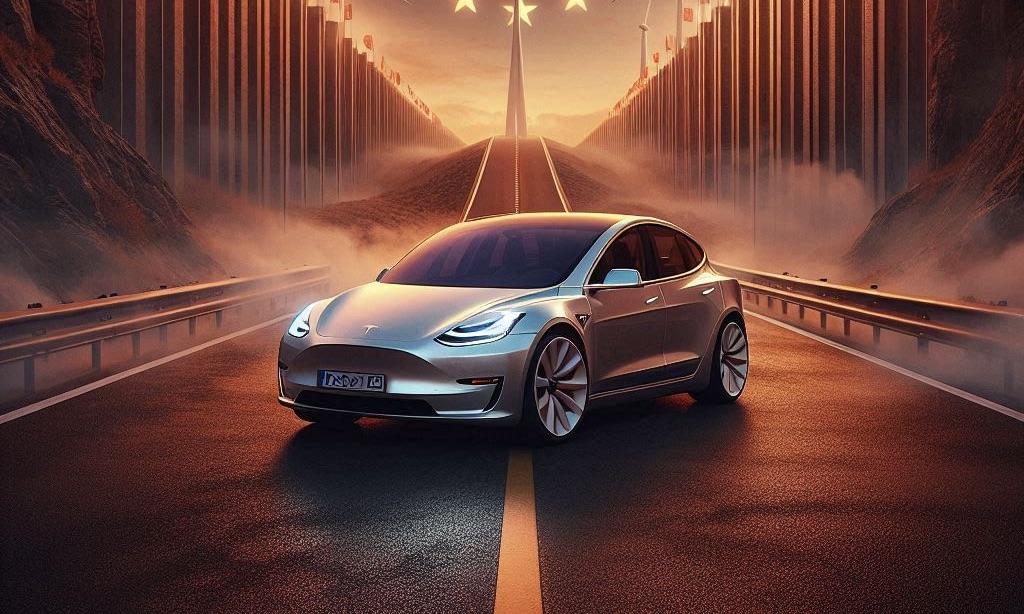
Tesla shares surged as the company announced plans to implement its Full Self-Driving (FSD) system in the EU and China by early 2025. However, regulatory challenges in the EU, including the new DCAS framework, are expected to limit Tesla's FSD capabilities and adoption in the region.
Tesla’s FSD Plans for EU and China in 2025 Face Regulatory Setbacks Under New DCAS Rules
On September 5, Tesla shares surged after the company announced an ambitious FSD implementation plan in the EU and China during the first quarter of 2025. However, Tesla's exponentially increasing FSD-related capabilities are about to encounter substantial regulatory inertia, which will likely restrict the EV giant's potential for growth.
Tesla has recently disclosed its roadmap for releasing its FSD in the forthcoming months. The concurrent unlocking of the ability to reverse in FSD and the advent of FSD version 13 in October are noteworthy. This serves as a testament to Tesla's increasing computing capacity, which is currently facilitating the rapid implementation of improved capabilities.
Of course, the critical development is the implementation of FSD in the EU and China in Q1 2025. As a result, Tesla has experienced a roughly six percent increase in early morning trading. Additionally, approximately $31 million in net call premium has been exchanged.
However, Tesla is confronted with regulatory obstacles in the EU. It has recently implemented the UN-led Driver Control Assistance Systems (DCAS) regulations despite its aspirations to implement the most recent FSD capabilities. According to Wccftech, this is a critical issue, as the DCAS framework's phase 1, anticipated to be implemented in January 2025, does not permit autonomous driving.
"To avoid driver overreliance on such systems, the regulation stipulates that DCAS shall be designed to ensure that the driver remains engaged with the driving task. The driver’s hands must remain on the wheel and the system shall monitor the driver’s visual engagement with the road, triggering alarms after 5 seconds when it detects that this is no longer the case."
Tesla’s FSD Rollout in EU Faces Limitations, While China Offers a More Favorable Market
Naturally, negotiations regarding the second phase of the DCAS are still in progress, with the subsequent workshop scheduled for September 9. As a result, it is more probable that Tesla will introduce a degraded version of the FSD in the EU during Q1 2025, which is likely to restrict its adoption.
Remember that, as per Gary Black of Future Fund, Tesla's earnings per share (EPS) increase by $0.05 per share for each 5 percent increase in FSD adoption.
Conversely, Tesla is anticipated to encounter a significantly more favorable environment in China, where Mercedes has recently been granted formal sanction to commence testing its proprietary Level 4 Advanced Driver Assistance System (ADAS). This system enables autonomous driving for extended periods without human supervision. In contrast, Tesla's FSD is classified as a Level 2 currency.







