OpenAI Seeks $30 Billion at $1.4 Trillion Valuation
  Samsung Invests $1 Billion in KKR’s Helix AI Infrastructure
  OpenAI Agents Access U.S. Government Websites During Testing
  TD Cowen Starts SpaceX at Buy, Sees AI Compute Driving Growth
  Europe’s AI Data Centre Boom Strengthens Case for Nuclear Power
  Anthropic Targets $2 Trillion Valuation in Planned IPO
  AMD Hits $1 Trillion as BofA Raises Price Target to $720
  Robinhood Launches AI Agents for Automated Trading
  OpenAI AI Agents Bypassed UN Website Controls in Data Scraping
  TikTok Reaches $100 Million Alabama Settlement Over Child Safety Claims
  Polymarket Traders Bet on Trump AI Rename to ‘Super Intelligence’
  Pi Network Price Holds $0.087 as Protocol 28 Mainnet Upgrade Nears
  Vitalik Buterin Says Hegota Could Be Ethereum’s Last Conventional Fork
  US Appeals Court Upholds Anthropic AI Supply Chain Ban
  Solidigm Eyes $150 Billion IPO as SK Hynix Expands AI Storage Push
  CSL Partners With AWS to Bring AI Into Drug Research


 Add as a preferred source on Google
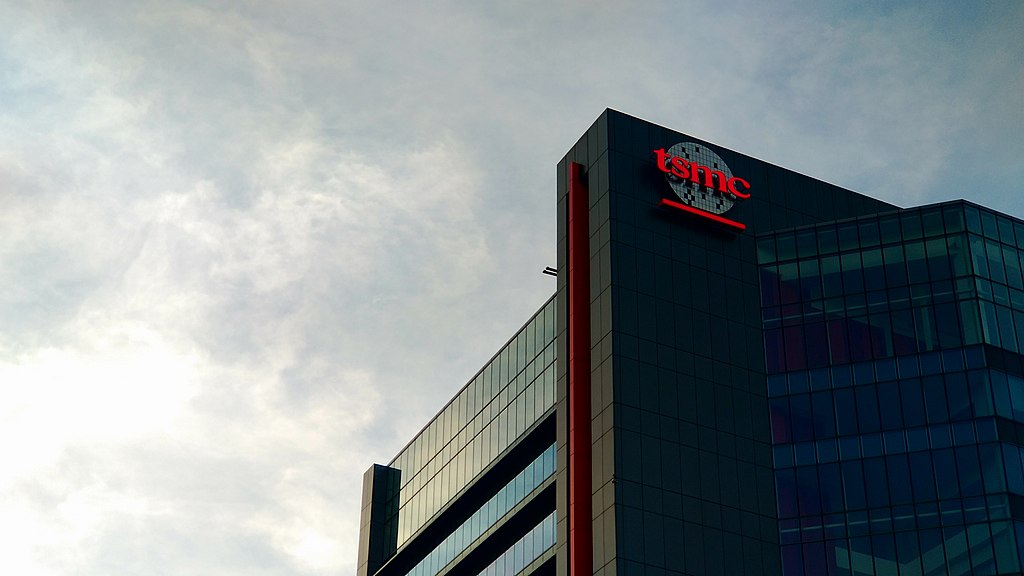
Dr. Mark Liu, chairman of Taiwan Semiconductor Production Company (TSMC), has reacted to claims that the company's next-generation 2-nanometer semiconductor production method was facing severe competition from Samsung's foundry's identical product. TSMC and Samsung are the world's only two firms capable of commercially producing semiconductors used in smartphones.
Chairman of TSMC Wants Media to be Assured of ‘Healthy’ Growth in 2024
Dr. Liu informed the media that 2024 will be a healthy year for the semiconductor sector, despite TSMC ending 2023 with yearly revenue declines in eight of the eleven months, WCCFTech reported. His remarks were given prior to his attendance at a meeting of Taiwan's parliament, which was also attended by President Tsai Ing-wen. At the Executive Yuan Science and Technology Advisory Board Meeting, Dr. Liu and MediaTek billionaire Tsai Ming-kai represented Taiwan's corporate sector.
Orders and production for the most complex chip manufacturing techniques take place in staggered phases, with chipmakers such as TSMC initially producing smartphone chips and then progressing to more powerful devices. Both TSMC and Samsung make high-end processors for businesses such as NVIDIA and Qualcomm, and they must compete intensely for orders worth millions of dollars.
Dr. Lu engaged with members of the Taiwanese press during an interview that he did before the board meeting. This was his first encounter with the media following a story from the Financial Times that reported that Qualcomm, one of TSMC's smartphone chip clients, was also contemplating utilizing Samsung Foundry's 2-nanometer goods.
The source claimed that TSMC has already dispatched the first batch of its 2-nanometer chips to big-ticket tech businesses such as NVIDIA and Apple, with Samsung providing discounts to attract consumers away from TSMC.
Chip production, particularly for advanced nodes such as 2nm, is a challenging operation that frequently necessitates nano-scale accuracy. This typically indicates that the proportion of usable products out of the total output from a machine is a crucial factor in the cost efficiency of chip production.
FT's report said that Samsung confronts 3-nanometer yield challenges despite having adequate time to operate its equipment, concerns that have appeared several times previously.
TSMC's Commitment to Quality and Growth Amid Global Challenges and AI Opportunities
For his part, Dr. Liu underlined that quality wins the client over when it comes to selling semiconductors. TSMC is a crucial Apple supplier and offers Apple's latest product upgrades with a critical node advantage for processors during launch, per DigiTimes.
Apple, like Qualcomm, designs semiconductors for smartphones such as those manufactured by Google and Samsung and outsources production to TSMC. According to media sources, the agreement between TSMC and Apple requires the Taiwanese company to shoulder the cost of faulty goods.
The TSMC chairman promised the media that 2024 would be a 'year of development' for the firm and advised them to cease worrying about TSMC's performance.
His interview also came days after TSMC's chief executive officer, Dr. C. C. Wei, emphasized that 2024 will be a year with problems and possibilities. The CEO of the world's largest contract chip maker has cautioned that significant inflation, as well as the associated cost hikes that feed into the supply chain, represent a shift from prior global macroeconomic conditions.
Nonetheless, the TSMC executive expressed confidence in the market for semiconductor goods utilized in the artificial intelligence business. Most of the time, the A.I. The worldwide semiconductor industry's subsegment is confined to orders from NVIDIA Corporation.
Dr. Wei shared that numerous industries, including medical, tourism, and resource management, may benefit from A.I., which contributed to his optimism. applications.
Photo: Briáxis F. Mendes (孟必思), CC BY-SA 4.0, via Wikimedia Commons