


 OpenAI Rules Out 2026 IPO as Altman Prioritizes AI Safety
  Syngenta Files for Hong Kong IPO, Eyes $5 Billion Raise
  US Court Approves airBaltic Chapter 11 Restructuring
  Rosenblatt Starts Nokia at Buy on AI Networking Growth
  SpaceX Nasdaq 100 Weight Set to More Than Double
  Trip.com Shares Rise as Q2 Earnings Beat Estimates
  Databricks to Invest $350 Million in Singapore AI Expansion
  SoftBank Shares Plunge 11% After OpenAI Rules Out 2026 IPO
  Hyundai Delays In-House ADAS, Turns to Nvidia
  Qualcomm Gains on $60B Amazon AI Chip Deal
  Anthropic Eyes Second Straight Profitable Quarter Ahead of Potential IPO
  Cathie Wood Backs AI Slowdown as Safety Concerns Grow
  Meta CEO Zuckerberg Backs Independent AI Safety Reviews Over Development Slowdown
  SoftBank Shares Jump 8% as SB Energy IPO Optimism Builds
  SK Hynix, Intel Discuss U.S. Memory Chip Production Deal
  Nvidia Eyes $10 Billion Investment in Anthropic IPO


 Add as a preferred source on Google





Maple syrup, Canada’s “liquid gold,” is among the 10 most adulterated foods globally.
Maple syrup’s desirability has made it a target for delinquent activities, including food fraud and theft. In 2011 and 2012, almost 3,000 tonnes of maple syrup were stolen from the Strategic Reserve in Québec.
The Great Maple Syrup Heist reflects the food’s status as a highly valuable commodity and the target of delinquent activities.
CBC’s The National takes a look at the Global Strategic Maple Syrup Reserve in Laurierville, Que.
In addition to the threat posed to maple syrup by thieves and smugglers, unreliable production yields due to climate events have required establishing production quotas to stabilize pricing and supply.
As a consequence, there have been reports of prohibition-style smuggling and sugar syrups labelled as maple syrup permeating the market. These actions cheat consumers and introduce food safety risks into the supply chain.
Consumers pay more for a lower value product. In addition, the introduction of other sugars or sugar syrups may pose risks to individuals with sugar sensitivities, as maple syrup has a lower glycemic index than white sugar or corn syrups.
Fingerprinting maple syrup glow
As such, there is a need for the development of more accurate and rapid testing tools to monitor maple syrup fraud.
Our research team at the University of Guelph has been developing methods to detect maple syrup fraud. We use fluorescence fingerprinting, which analyzes how certain molecules in maple syrup glow when exposed to UV and visible light, to see if there is any potential maple syrup adulteration.
In UV light, maple syrup naturally glows. Fluorescence fingerprinting maps the intensity of the light emitted by these specific fluorescent (glowing) compounds, and can provide a unique 3D rendering of a sample’s composition while also reporting on its quality, safety and identity.
Using key features found in the fluorescence fingerprints, we explored ways to better detect maple syrup adulteration even when the levels are as low as one per cent.
Our study examines the adulteration of dark and amber maple syrups with common maple syrup adulterants, at percentages ranging from one to 50 per cent.
Distinct fluorescence fingerprints were found for each tested syrup and mixture, revealing features that can be used to distinguish pure from adulterated samples.
Machine learning and identification
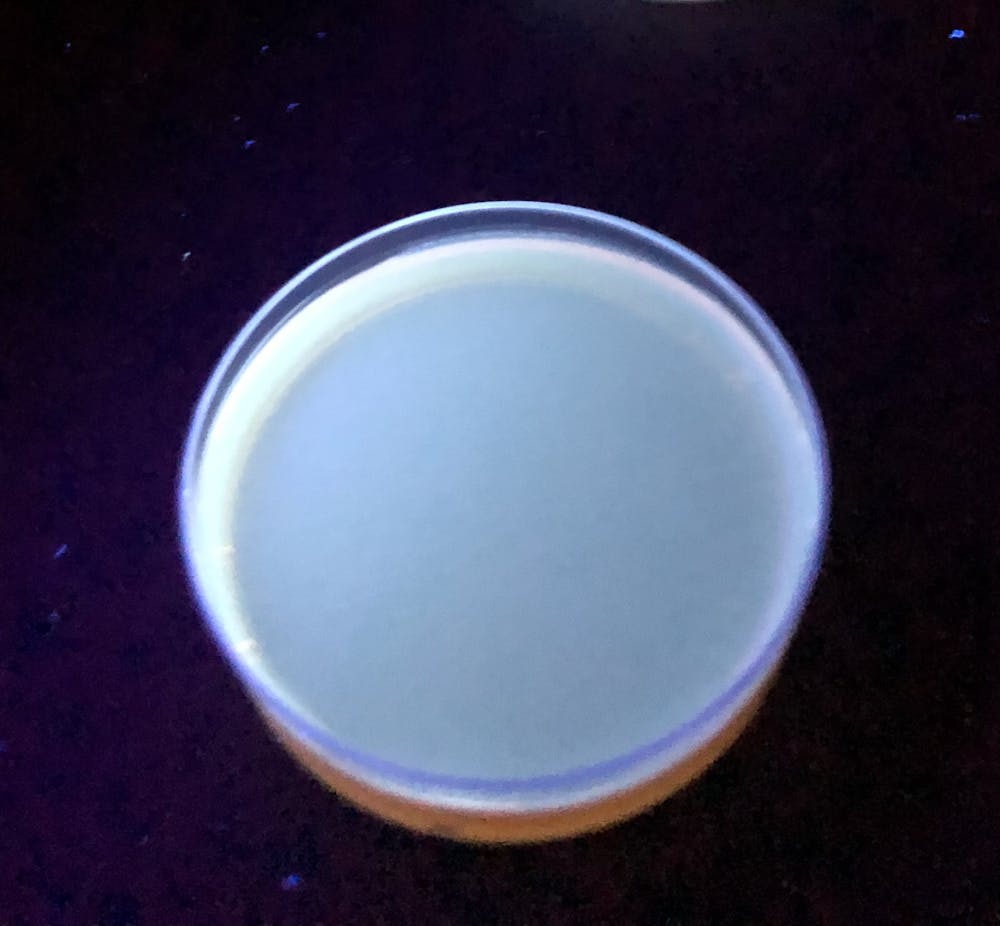
Maple syrup glows under UV light. (M. Singh), Author provided
The fluorescence fingerprints obtained when the samples were exposed to UV and visible light show several features (or peaks) that gradually changed in samples tampered with adulterants. We were able to correctly detect adulteration in 70 to 100 per cent of samples, depending on how the features were quantified and analyzed, by creating a fluorescence index or by using machine learning techniques.
To fully validate this approach, we will need to use larger datasets that will help us control for other factors — like the environments maple trees grow in — that may affect the content of the syrups.
Other common fingerprinting techniques, such as DNA barcoding that examines short DNA fragments, can detect adulteration in other foods, like fish or sausages.
These methods don’t work well for maple syrup because the extensive processing required to transform sap into syrup potentially degrades the DNA.
In contrast, fluorescence fingerprints rely on a food’s chemical composition, so identifying the presence of adulterants can happen even in highly processed samples. Most foods naturally contain intrinsic fluorescent compounds, which means they glow under UV and visible light — the amount of and type of glow represent distinguishing characteristics.
Quality control
Since using fluorescent fingerprinting only requires the use of light, it is a non-invasive, efficient and affordable strategy for checking whether maple syrup contains any other sugar syrups. It is also fast, providing information about a sample within minutes.
This approach can be applied at different points in the supply chain as part of quality assurance and control. This would ensure that consumers receive safe, high-quality foods, and that they are not cheated financially. Confirming the quality of maple syrup would also protect the brand reputation of Canadian products.
Maia Zhang, research assistant at the University of Guelph, co-authored this article.







