


 Trump Requests $11 Billion More in Farm Aid as Rising Costs Pressure U.S. Farmers
  Australian Household Spending Rebounds Strongly in May as Travel and Dining Drive Consumer Growth
  Trump Threatens 100% Tariffs on Countries Imposing Digital Services Taxes on U.S. Tech Firms
  S&P Affirms Brazil’s BB Credit Rating with Stable Outlook Amid Fiscal Challenges
  US Dollar Slips After PCE Inflation Data as Fed Rate Hike Expectations Stay Elevated
  Morgan Stanley Sees Chinese Auto Market Recovery Gaining Momentum in Late Summer
  Asian Currencies Trade Mixed as Yen Hovers Near 40-Year Low, Dollar Holds Firm on Fed Outlook
  SpaceX Eyes Starlink Mobile Phone Service to Challenge Verizon, AT&T, and T-Mobile
  Oil Prices Drop as Middle East Supply Recovery Eases Market Concerns


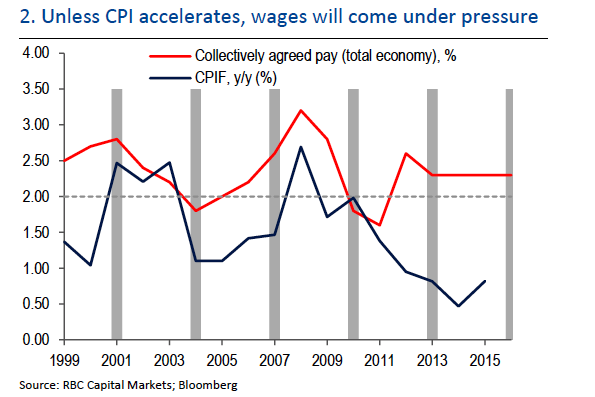
The Riksbank wants to see is EUR/SEK staying at its current levels of 9.30, given the emphasis put on SEK in supporting the CPI recovery. A rise in import prices via SEK devaluation is likely the quickest and most direct route towards increasing CPI back to the Riksbank's target of 2%, given the limited timing, as the 2016 wage negotiations come into focus and the lag effect of monetary policy on general price levels.
"This asymmetry suggests greater upside risk for EUR/SEK and the EUR/SEK is forecasted at 9.60 by year-end 2015 and Q1 2016 before seeing a gradual grind lower", noted RBC capital markets.

- News

- Economy

- Central Banks
- Investing
- Research
- Roundups
- Digital Currency
- Insights
- Technical Analysis
- Technology
- Business
- Law
- Health
- Nature
- Fintech
- Science
- Topic
- Opinions
- ©Econometrics LLC . All Rights Reserved.
Sweden 2016 wage negotiations round in focus
Thursday, July 9, 2015 9:45 AM UTC
Editor's Picks



- Market Data
Most Popular




