


 Asian Currencies Rise as Dollar Weakens; Yen Holds Steady Amid Japan Intervention Watch
  Japan Signals Surprise Yen Intervention Strategy as BOJ Hawkish Stance Puts FX Traders on Alert
  Asian Currencies Stay Under Pressure as Dollar Holds Near 13-Month High Ahead of U.S. Jobs Report
  New Zealand Consumer Confidence Rises in June as Inflation Expectations Ease
  US Jobs Report Preview: June Payroll Growth Seen Slowing as Fed Rate Decision Looms
  Goldman Sachs Says China Competition Weighs More on EU Growth Than Trade Deficit
  Oil Prices Steady as U.S.-Iran Talks Ease Supply Fears Ahead of Holiday Weekend
  Gold Prices Fall Amid Rate Jitters; Copper Steady as China Stimulus Eyed
  Gold Price Surges Above $4,120 as Weak US Jobs Data Lowers Fed Rate Hike Expectations


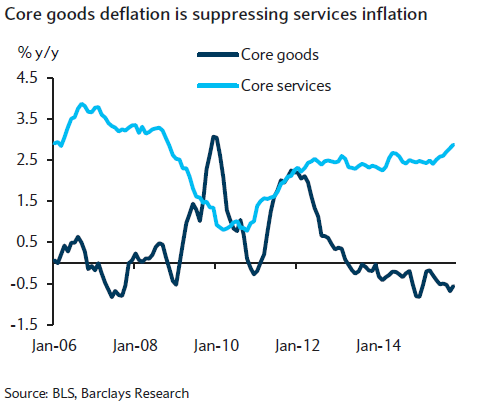
The Federal Reserve's recent rate hike decision caused the U.S. interest rate to be higher than global interest rate, and thereby the economy is receiving more capital inflows.
The economy recorded a marginal fall in net trade, which is mainly because of weaker global demand. If the expansionary monetary policy adopted by Europe, China, and Japan boosts the domestic demand, the U.S. will be a beneficiary. This is because, most of the global trades take place in USD only. Therefore, there is further scope for USD to increase.
"We expect further pass-through from dollar appreciation to weigh on core goods prices through mid-2016. Renewed strength in the dollar since mid-year, particularly against EM currencies, and an accelerated decline in China PPI lead us to project a modest softening in core inflation in the months ahead - a factor which informs our believe that the Fed will execute three additional rate increases in 2016 instead of the expected four", says Barclays in a research note.







