


 Citi Raises Bitcoin Target to $113,000 as Crypto Outlook Improves
  DeepSeek, Huawei Partner on Ascend AI Chip Programming Tools
  TD Cowen Starts SpaceX at Buy, Sees AI Compute Driving Growth
  Zcash Awards $8 Million in Grants After Orchard Bug Crisis
  Boeing Wins $20 Billion Navy F/A-XX Stealth Fighter Contract
  Binance Pay Goes Live at PayPay Merchants in Japan
  Airbus Spain Workers Approve Deal to End Months of Strikes
  Ripple and Cardano Expand Blockchain Adoption in Brazil
  NASA's Artemis II Mission: First Crewed Lunar Journey Since Apollo
  Trump Praises Boeing 737 Max After Flydubai Crash Attempt
  Google Pays Publishers for AI Search Content in New Pilot
  CFTC Moves to Define Prediction Markets as Swaps
  Coinbase, Visa Back Open USD Stablecoin Launch
  OpenAI Seeks $30 Billion at $1.4 Trillion Valuation
  Nvidia China Chip Sales Report Sends Chinese Semiconductor Stocks Lower


 Add as a preferred source on Google
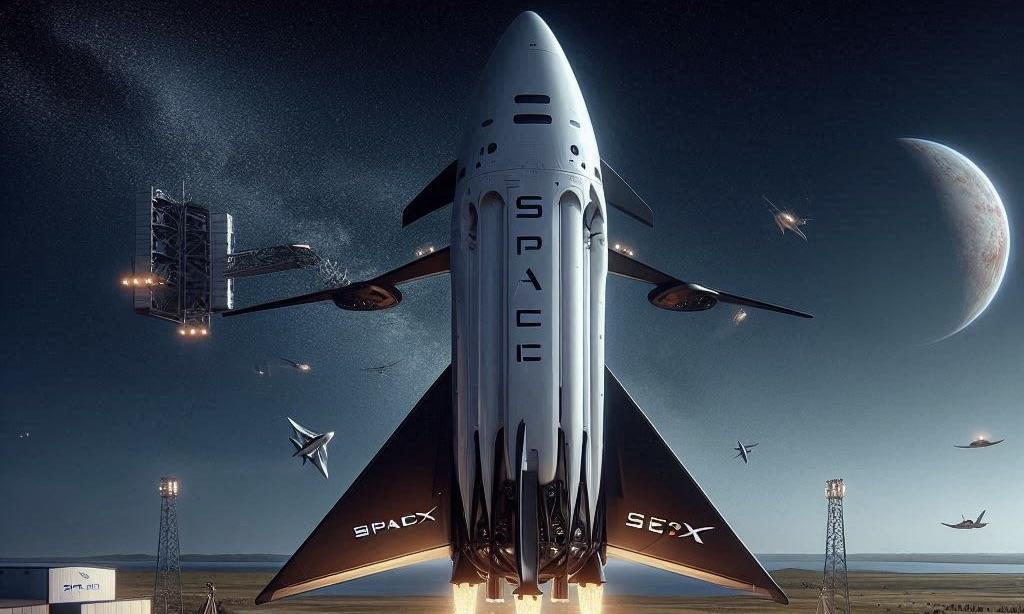
SpaceX has successfully tested its latest Raptor 3 engine, boasting a 51% increase in thrust compared to its predecessor. The new engine features a simplified design that reduces weight and complexity, marking a significant advancement in rocket technology and pushing the boundaries of space exploration.
SpaceX Achieves Milestone with Raptor 3, the Most Powerful and Simplified Rocket Engine Yet
Elon Musk, SpaceX's CEO, and Gwynne Shotwell, its president, have announced a significant milestone in space technology. The company has successfully tested its most recent Raptor engine, the Raptor 3, which is now the most powerful rocket engine developed. According to the information shared by Wccftech, this achievement is a testament to SpaceX's continuous innovation and commitment to pushing the boundaries of space exploration.
Several Raptor 2 engine failures have occurred during SpaceX's Starship complete stack tests, some of which have resulted in fires within the engine bay. The engine has encountered a problem with hot gas leakage, which has caused the flames. The Raptor 3 also significantly enhances its thrust compared to its progenitor and reduces its weight compared to the current Raptor 2 engines that power Starship.
The Starship rocket's most intricate component is SpaceX's Raptor. Starship is the sole rocket in human history to employ 33 Raptor 2 engines. These engines are also one of SpaceX's most significant constraints, as the sheer quantity of them used on the rocket could result in a shortage of inventory if SpaceX were to conduct test flights at a rapid tempo.
SpaceX is presently in a comfortable position with its engines, as Raptor production has increased, and Starship launches are currently limited to under five per year. Earlier this year, Elon Musk presented a Raptor engine enhancement known as Raptor 3. Musk and SpaceX president Gwynne Shotwell have verified that the Raptor 3 has been fired up for the first time after sharing an image of the engine last month. The engine was touted with a significantly more straightforward design than its predecessor.
SpaceX claims that the Raptor 3 can produce a thrust of 280 tons at sea level, which is 51% more than the 185 tons of thrust produced by the first-generation Raptor. Compared to the Raptor 2, which presently powers Starship at the seal level, the Raptor 3 makes 22% more thrust. Furthermore, the engine's design has been considerably simplified compared to its predecessor, resulting in a lower weight than the Raptors 1 and 2. Without the apparatus that connects them to Starship, the Raptor 1 and Raptor 2 weigh 2,080 kilograms and 1,630 kilograms, respectively, according to SpaceX's specifications. The two engines weigh 3,630 kilograms and 2,875 kilograms, respectively when equipped with this equipment.
SpaceX’s Raptor 3 Engine Cuts Weight and Complexity, Eliminating Need for Thermal Shield
Conversely, the Raptor 3 and the Raptor 4 each weigh 1,525 kilograms and 1,720 kilograms, respectively. This implies that the Raptor 3 is less than half the weight of the first-generation Raptor design when equipped with the necessary equipment.
The objective of this weight reduction and reduced external complexity is to eliminate the necessity for a thermal shield in the engine. SpaceX was compelled to implement a heat shield on its engines due to the substantial heat that a rocket experiences during reentry, which can cause damage to its engines. Nevertheless, the Raptor 3 will not necessitate the shield, as Elon Musk's disclosures last month confirmed.
Sharing that the "next gen Raptor engine needs no heat shield," Musk revealed that "because it's exposed, it has to have cooling. So there's integral cooling circuits throughout the, all the parts. So it looks very simple on the outside, but it's complicated on the inside." The engine's "secondary circuits and integral cooling are part of each part," explained Musk. Not only do these circuits flow through each part, but SpaceX also eliminated "a whole bunch of bolted and welded joints. So, especially the bolted joints," added Musk, since "bolted flanges and seals are hell, especially if they are hot."
This simplification comes at a cost, though. According to Musk, the Raptor 3 "is actually a little difficult to service because there are parts that don't have a flange anymore; it's just welded shut." To make repairs, SpaceX will have to cut the engine open, and a critical flange that's removed appears to be the "massive bolted flange for the hot gas manifold that's transferring hot gas from the fuel rich hot gas from fuel pump side" on the Raptor 2 engine that was responsible for some complications on the first Starship test flight.







