


 Marco Rubio to Meet Russia’s Lavrov in New York
  South Korea, US Discuss Warship Building Cooperation
  Sudan Rejects US Legitimacy Remarks, Defends Sovereignty
  China Tightens Fentanyl Rules Ahead of Trump-Xi Summit
  Canada Unveils Bill to Fast-Track Major Resource Projects
  Zelenskiy Warns Russia Preparing Major Attack on Ukraine
  Trump Meets Venezuela’s Delcy Rodriguez at UN Assembly
  Venezuela Promises Elections as Delcy Rodriguez Pledges Democratic Transition
  Vietnam, US Trade Deal Could Be Signed Soon, To Lam Says
  US Invites Putin to Miami G20, Opening Door to Trump Summit
  Gaza Faces Evacuation Crisis as War-Damaged Buildings Risk Collapse
  Europe Warns Russia Is Escalating Hybrid Attacks Across NATO
  Macron, Trump Discuss Ukraine-Russia Energy Strike Moratorium
  Scott Bessent Eyed as Trump’s New AI Czar
  Trump Administration Plans Faster FDA Reviews for Smoke-Free Nicotine Products
  Lula and Flavio Bolsonaro Tied in Brazil Runoff Poll
  Trump Board of Peace Unveils $2.45 Billion Gaza Recovery Plan


 Add as a preferred source on Google
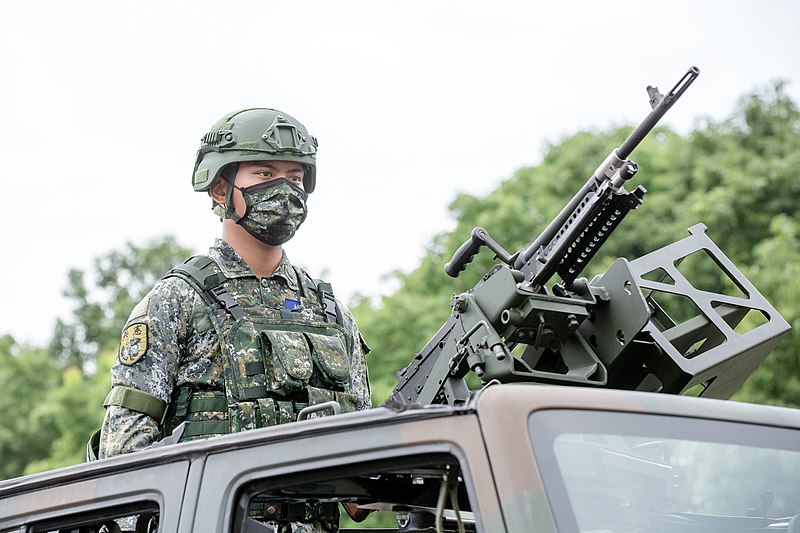
Tensions between China and Taiwan remain at a high in the South China Sea, with a possibility of an all-out conflict. Taiwan’s military recently conducted drills targeting simulated Chinese warplanes.
The recent military exercises by Taiwanese forces were meant to highlight Taiwan’s military readiness ahead of the Lunar New Year holidays at the end of the month. This also comes as Chinese fighter jets have repeatedly made incursions over Taiwanese airspace. China’s People’s Liberation Army has also conducted military exercises near the Taiwan-controlled Pratas islands in the South China Sea.
“With the very high frequency of Communist planes entering our ADIZ, pilots from our wing are very experienced and have dealt with almost all types of their aircraft,” said Taiwan Major Hsiang-sheng.
China has claimed Taiwan as part of its territory and has been engaging in a pressure campaign on the democratically-ruled island nation. Taiwan has insisted on its autonomy and independence, angering Beijing. The island nation has also been a key ally to western countries in the region.
This has also prompted fears that Chinese President Xi Jinping may consider carrying out an invasion to reunify Taiwan with the mainland. The members of the “Quad” alliance of countries – the US, Australia, Japan, and India – are also facing pressure to counter China’s increasing aggression in the region, especially on Taiwan.
Aside from claiming Taiwan, China also claims sovereignty over the majority of the South China Sea, angering the surrounding countries that have their respective claims over the body of water.
During her new year’s remarks, Taiwanese leader Tsai Ing-wen warned China against attempting any “military adventurism.” Tsai said that military conflict is not the answer, citing that it would only cause economic instability in the region. Tsai said that the island nation’s stance has always been never to go give in to pressure and to maintain caution when receiving support.
“We must remind the Beijing authorities to not misjudge the situation and to prevent the internal expansion of military adventurism,” said the Taiwanese leader.
“The military is definitely not an option for solving cross-strait disagreements. Military conflicts would impact economic stability. Our two sides jointly shoulder the responsibility of maintaining regional peace and stability,” said Tsai.







