


 NASA's Artemis II Mission: First Crewed Lunar Journey Since Apollo
  NASA Artemis II: First Crewed Moon Mission Since Apollo Takes Four Astronauts on 10-Day Lunar Journey
  Rubio Directs U.S. Diplomats to Use X and Military Psyops to Counter Foreign Propaganda
  Cybersecurity Stocks Tumble After Anthropic's Claude Mythos AI Leak Sparks Market Fears
  MATCH Act Targets ASML and Chinese Chipmakers in New U.S. Export Crackdown
  Makemation: a Nollywood movie that shows AI in action in Africa
  China's Push to Steal Taiwan's Chip Technology and Talent Raises Security Alarms
  Meta and Google just lost a landmark social media addiction case. A tech law expert explains the fallout
  SpaceX Eyes Historic IPO at $1.75 Trillion Valuation
  Britain Courts Anthropic Amid US Defense Department Dispute
  Chinese Universities with PLA Ties Found Purchasing Restricted U.S. AI Chips Through Super Micro Servers
  Reflection AI Eyes $25 Billion Valuation in Massive $2.5 Billion Funding Round
  Federal Judge Blocks Pentagon's Blacklisting of AI Company Anthropic
  SMIC Allegedly Supplies Chipmaking Tools to Iran's Military, U.S. Officials Warn
  SK Hynix Eyes Up to $14 Billion U.S. IPO to Fund AI Chip Expansion
  Nanya Technology Shares Surge 10% After $2.5 Billion Private Placement from Sandisk and Cisco


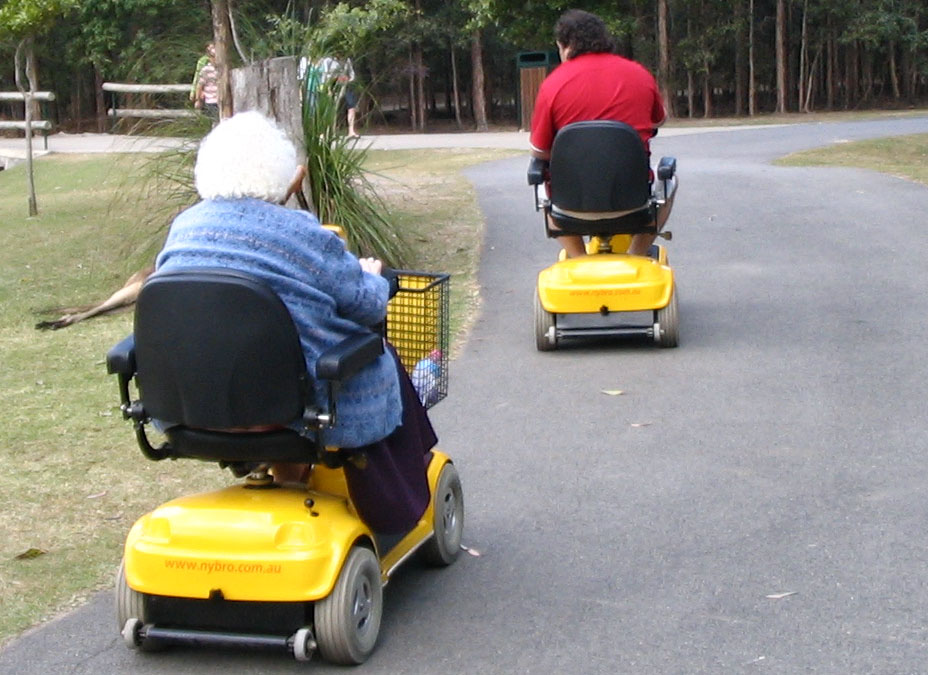
It would seem that the tiny port city of Singapore is quickly becoming a hotspot for emerging self-driving trends. Last August, a startup company launched the first test of self-driving taxi cabs, beating Uber to the punch in the process. Now, self-driving scooters have made their debut, which is perfect for helping to minimize accidents involving people who simply can’t let go of their phones while walking.
Scooter enthusiasts might want to curb their surge of interest, however, as these self-driving mopeds are only meant to be driven on sidewalks or footpaths, Reuters reports. At about 110 lbs in weight and going for 4 mph, the vehicle isn’t exactly fit for the actual road. Aside from the fact that it is far too slow, it also wouldn’t stand up to getting hit by other vehicles.
The scooter was developed by researchers at the National University of Singapore. It’s one of their many experiments involving driverless vehicles, which is something that the city-state is pushing for right now. Thanks to the limited space and the sparseness of labor, autonomous vehicles and machinery would be a huge help in helping to supplement productivity.
As for the self-driving technology installed in the vehicle itself, laser sensors are installed in the vehicle to detect obstacles, including objects and people. Once it detects an obstruction, the scooter slows down or stops, depending on the situation.
The sensors work for up to 2.5 meters directed at the front of the vehicle and 10 centimeters on the sides, TechXplore reports. Those figures might not seem much, but it’s worth remembering that this is meant to be a pedestrian vehicle. It can also be used indoors for places like malls, hotels, the many food arcades of Singapore, and really big houses.
The scooter still requires some more adjustments in order to function effectively, especially since its avoidance system still lags by a few seconds. The university is still doing more tests in order to refine the scooter’s functionality.







