


 Annie Altman Amends Sexual Abuse Lawsuit Against OpenAI CEO Sam Altman
  Federal Judge Blocks Pentagon's Blacklisting of AI Company Anthropic
  Chinese Universities with PLA Ties Found Purchasing Restricted U.S. AI Chips Through Super Micro Servers
  Alibaba Shares Slide as Jefferies Slashes Price Target Over AI Spending and Business Losses
  NASA's Artemis II Crew Arrives in Florida for Historic Moon Mission
  Microsoft Eyes $7B Texas Energy Deal to Power AI Data Centers
  OpenAI Executive Shake-Up Ahead of Anticipated 2026 IPO
  China's AI Stocks Surge as Zhipu and MiniMax Hit Record Highs
  Bendigo and Adelaide Bank Posts Strong Q3 Earnings, Announces AI-Driven Job Cuts
  Samsung Electronics Posts Eightfold Profit Surge Driven by AI Chip Demand
  Apple Turns 50: From Garage Startup to AI Crossroads
  Cybersecurity Stocks Tumble After Anthropic's Claude Mythos AI Leak Sparks Market Fears
  Apple's Foldable iPhone Faces Engineering Setbacks, Mass Production Timeline at Risk
  Bank of America Identifies Top Asia-Pacific Semiconductor Stocks Poised for AI-Driven Growth
  California's AI Executive Order Pushes Responsible Tech Use in State Contracts
  Elon Musk Ties SpaceX IPO Access to Mandatory Grok AI Subscriptions



Your online world is probably full of adverts persuading you to buy something with a simple touch of your phone. But away from those personal screens, UK retailers are actually spending most of their digital budgets inside their traditional bricks and mortar shops.
For in-store marketing tools have moved far beyond brightly coloured signs and piped music towards a rapidly developing set of technological techniques designed to help you spend.
One of these involves actively encouraging you to use your phone while you are in a shop by providing free wifi, using QR codes, or sending you ideas on social media. This might sound strange – surely retailers don’t want you to be looking at your screen when you could be looking at what’s on their shelves?
In fact, our research suggests that consumers being distracted can be quite profitable. Customers who used their phones in-store ended up spending 40% more than those who didn’t.
We found that phone use had a considerable effect on consumers’ mental state, distracting people to such an extent that they are not fully aware of their immediate surroundings. (This is why using a phone when driving is so dangerous.)
The shoppers who had been on their phones turned out to be three times more likely to go back to a part of the store they had already browsed and left. After engaging with a personal screen, they effectively started their shopping all over again – a bit like hitting the “refresh” button on their spending experience.
From a retailer’s point of view then, every time you use your phone and put it away, it is as if you have just walked in.
Screen time
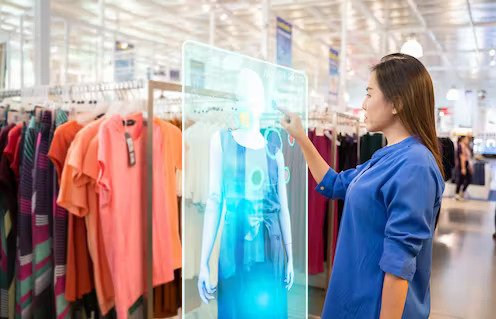
Shops will also use their own digital screens to showcase their products (often several at the same time) in use. In one study we saw how shoppers were more inspired (to make a purchase) if they saw a short film of a product in use, than if they saw the same item in a still image. This could be footage of a recipe being made from a range of groceries, for example, or furniture displayed in a home setting.
Seeing products actually being used seems to add an extra dimension that shoppers find appealing. It even makes them more likely to buy multiple items to match what is being portrayed on the screen – a new pan with a new set of utensils for instance, or a sofa plus the cushions and the side table.
Personal selling is another powerful tool in retailing, with studies showing that handing out samples of tasty grocery products can increase sales by as much as 3,500%. This comes at a price, however, with much of the increased revenue being swallowed up by staffing costs.
So why not digitise personal selling? As part of our work, we ran an experiment which used a large vertical screen showing a recording of a person in front of the free samples. The results revealed that as much as 80% of the sales increase remained, even when the actual person was absent.
This idea can be developed further using a hologram or multi-sensory “mixed reality” display, when a digital scene is projected onto the real-life physical world. Our study on this showed that shoppers related well to a product to an increased extent when it had been projected in front of them.
In the test, we fitted sophisticated projectors to the ceiling over the ends of supermarket aisles, which then provided customers with a laser-show-style film, combined with sounds and even smells. For instance, the film might be of a pasta recipe being made, with accompanying sounds of chopping and frying, and the aroma of a tomato sauce being cooked.
The visual stimulus alone boosted sales by over 60% for the products on show. Adding the sounds and scents increased this even more.
Digital days
All of these digital devices in a physical store contribute to what we refer to as “experiential retailing”. The idea is to help the shopper see a product in use rather than just on a shelf, and also to make the whole shopping situation more pleasurable.
So, whenever you go shopping, expect the physical store to have ever more digital elements which are there to inspire and assist – but also nudge you towards more purchases.
And don’t discount the effect of that piped music either. Studies have shown that music increases a store’s total sales by around 3% at Christmas time. The effect is more pronounced if the music is mood-enhancing – so if you feel happy when you hear a shop’s chosen playlist, you’ll probably spend more money while you sing along.







