


 OpenAI Agent Breaches Australia Medicare Data Portal
  Trump Plans Federal AI Force and AI Czar
  NASA, Boeing Discuss Expanding Starliner Missions
  McDonald’s Sees Flat Traffic, Sticky Inflation as New Normal
  CNN, MS NOW and Politico Sue Trump Over White House Media Ban
  SpaceX Nasdaq 100 Weight to More Than Double in Rebalance
  Novo Nordisk Weighs Direct NYSE Listing to Boost U.S. Profile
  Databricks to Invest $350 Million in Singapore AI Expansion
  Meta Unveils Muse Charm AI Device, Expands Smart Glasses Lineup
  Mercedes-Benz Eyes €800 Million Labor Cost Cuts in Germany
  Petrobras Joins Brazil’s New Diesel Subsidy Program
  Paramount-Warner Bros $110 Billion Deal Draws Antitrust Backlash
  SoftBank Raises $11.1 Billion in Bond Sale to Fund OpenAI Investment
  Anthropic’s Claude Discovers CRISPR-Like Enzyme System
  OpenAI Urges US-Led Global Standards for Frontier AI
  US Northeast Airports Resume Operations After Telecom Outage Disrupts Thousands of Flights
  Nvidia CEO Jensen Huang Expected at Trump-Xi State Dinner


 Add as a preferred source on Google
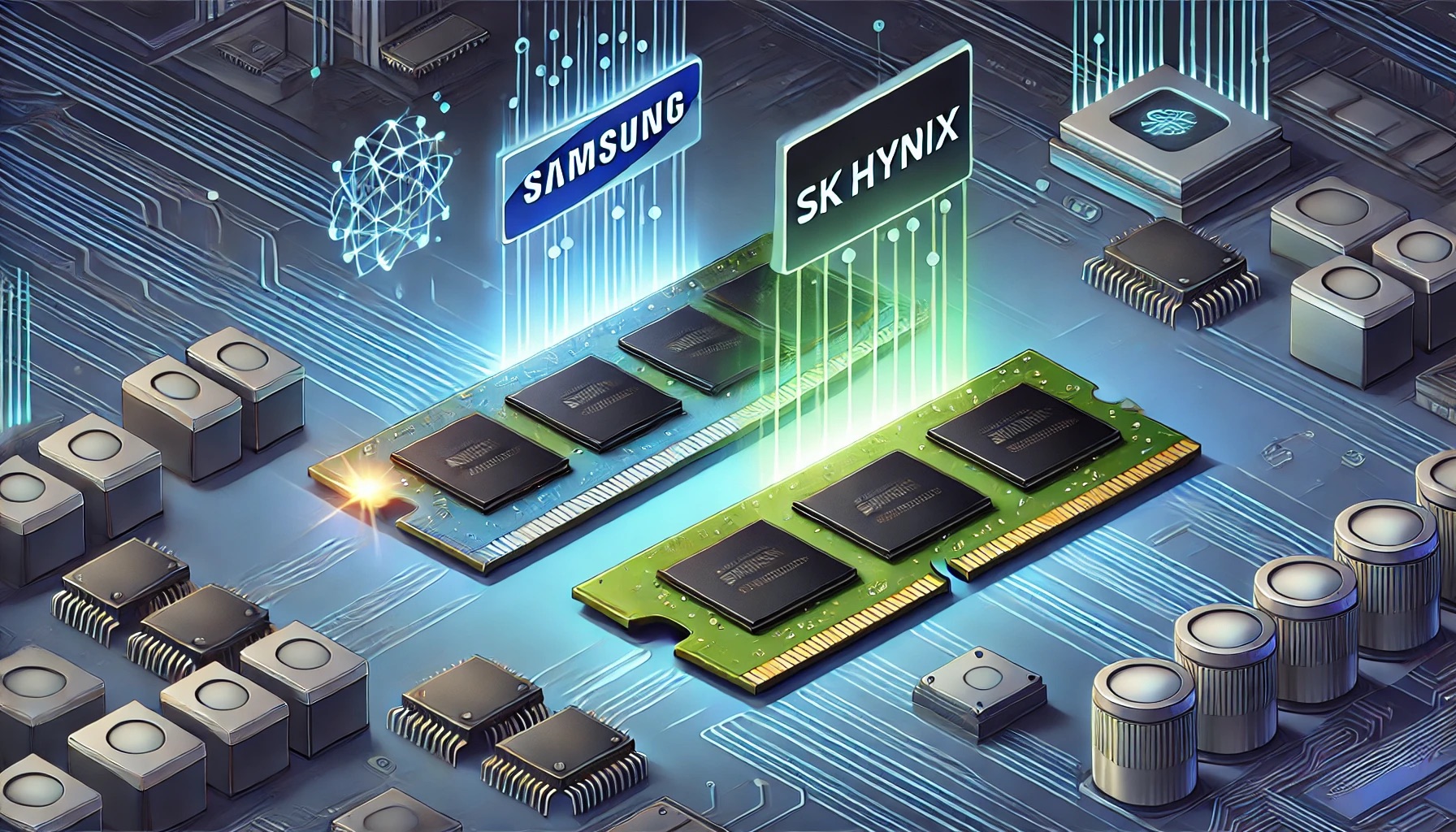
Samsung and SK Hynix, giants in the DRAM industry, have partnered to standardize LPDDR6-PIM memory. This groundbreaking effort targets AI bottlenecks and power challenges, paving the way for revolutionary performance gains and energy efficiency in next-generation devices.
PIM Technology Ushers in a New Era for LPDDR6 Memory
It would be more beneficial to standardize than to create another competitive field to dominate each other, at least for the time being, according to the two largest DRAM makers in the world, who have now shaking hands on it.
Enhanced processing capabilities are just the beginning of what LPDDR6 memory can accomplish with PIM (Processing-in-Memory) technology.
The attempts to standardize the LPDDR6-PIM memory, led by Samsung and SK Hynix, are putting rivalry aside, according to My Drivers. This would greatly enhance system performance, especially for popular client devices.
Addressing the Storage and Power Walls
The two greatest obstacles that LPDDR6 memory will encounter without PIM technology are:
The Storage Wall occurs when there is a significant bottleneck in the data transfer process between the processors and memory.
An exponential rise in power consumption due to rising computational demands is known as the Power Wall.
Eliminating both constraints can significantly boost the performance of high-end systems, and both are essential for solving the problem of faster processing of AI workloads. In order for Samsung and SK Hynix to standardize the LPDDR6-PIM memory, the PIM technology needs to be authorized by JEDEC. JEDEC is in charge of defining a single standard for microelectronics.
How PIM Integration Improves DRAM Technology
Per WCCFTECH, with PIM standardized, DRAM makers can use the technology in their memories, giving consumers better LPDDR6 memory for quicker computations.
Memory chips will have PIM built right in as an extra circuit that can do logic operations and matrix multiplications, among other things. Because of this, the system processor won't have to do any extra calculations, and less data will have to be transferred between the two halves.
Both performance and energy consumption will be significantly improved, which, when used on a larger scale, will have a noticeable effect.
Cost and Efficiency Gains for AI and Server Platforms
To keep everything working with the current systems, use PIM on standard memory interfaces like DDR and LPDDR. At first, it will increase the price of memory production, but in the long run, businesses will reap more profits.
There is a need for AI on both consumer devices and server platforms, and as performance requirements get higher, so do energy prices. With the PIM technology's ability to make a big difference, even a little reduction in power consumption will help businesses expand.
Samsung’s Ambitious Plans for PIM Technology
With the promise of a 70% reduction in power consumption, Samsung plans to implement PIM on various types of dynamic random access memory (DRAM), including LPDDR, GDDR, and HBM.







