


 Instagram Outage Disrupts Thousands of U.S. Users
  TrumpRx Website Launches to Offer Discounted Prescription Drugs for Cash-Paying Americans
  OpenAI Expands Enterprise AI Strategy With Major Hiring Push Ahead of New Business Offering
  Sony Q3 Profit Jumps on Gaming and Image Sensors, Full-Year Outlook Raised
  Tencent Shares Slide After WeChat Restricts YuanBao AI Promotional Links
  Nvidia, ByteDance, and the U.S.-China AI Chip Standoff Over H200 Exports
  AMD Shares Slide Despite Earnings Beat as Cautious Revenue Outlook Weighs on Stock
  Jensen Huang Urges Taiwan Suppliers to Boost AI Chip Production Amid Surging Demand
  Missouri Judge Dismisses Lawsuit Challenging Starbucks’ Diversity and Inclusion Policies
  Once Upon a Farm Raises Nearly $198 Million in IPO, Valued at Over $724 Million
  Amazon Stock Rebounds After Earnings as $200B Capex Plan Sparks AI Spending Debate
  TSMC Eyes 3nm Chip Production in Japan with $17 Billion Kumamoto Investment
  Global PC Makers Eye Chinese Memory Chip Suppliers Amid Ongoing Supply Crunch
  SoftBank and Intel Partner to Develop Next-Generation Memory Chips for AI Data Centers
  Baidu Approves $5 Billion Share Buyback and Plans First-Ever Dividend in 2026
  Hims & Hers Halts Compounded Semaglutide Pill After FDA Warning
  Google Cloud and Liberty Global Forge Strategic AI Partnership to Transform European Telecom Services


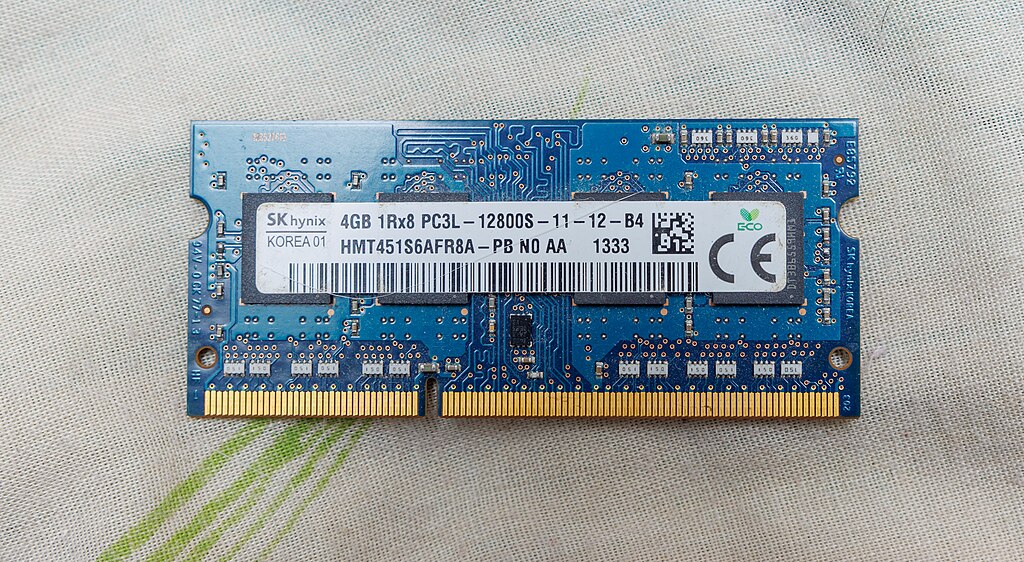
SK Hynix, the world’s second-largest memory chipmaker, revealed that customers are rushing orders in anticipation of potential U.S. semiconductor tariffs. Speaking at the company’s annual shareholder meeting, Lee Sang-rak, Head of Global Sales and Marketing, attributed the recent favorable market conditions to this "pull-in" demand and declining inventory levels among clients.
Although the short-term outlook has improved, the company remains cautious. In January, SK Hynix predicted a 10–20% drop in DRAM and NAND flash memory shipments for Q1 compared to the previous quarter.
Concerns were amplified after U.S. President Donald Trump announced plans to impose tariffs of up to 25% on imported semiconductors. According to a recent Nomura report, fears of April tariffs have driven early inventory transfers to the U.S., though the actual implementation remains uncertain. If imposed, these tariffs could raise prices for electronics, possibly dampening consumer demand.
Despite this, SK Hynix remains bullish on its high bandwidth memory (HBM) chip business, projecting explosive growth driven by surging data center investments. CEO Kwak Noh-Jung reaffirmed January’s forecast that HBM sales would more than double in 2024. As a key supplier to Nvidia, SK Hynix is well-positioned to benefit from ongoing AI infrastructure expansion.
While some skepticism emerged over AI chip demand—particularly after China’s DeepSeek claimed to develop competitive AI models at lower costs—Kwak sees the development as a positive. “We believe this will support long-term demand for AI memory, especially high-performance HBM,” he said.
Shares of SK Hynix slipped 2.1% in morning trade, underperforming the KOSPI’s 0.9% decline, as investors weighed the impact of potential tariffs and shifting global dynamics.













