


 US Federal Register Drops Alibaba Qwen AI Search Tool
  Rosenblatt Starts Nokia at Buy on AI Networking Growth
  Scott Bessent Eyed as Trump’s New AI Czar
  FxWirePro- Major Crypto levels and bias summary
  AI is supercharging money scams – here’s what you can do to protect yourself
  MediaTek Unveils 2nm Dimensity 9600 Pro AI Chip
  Guterres Urges Stronger Global AI Safeguards Ahead of UN Assembly
  SK Hynix, Intel Discuss U.S. Memory Chip Production Deal
  France Urges Faster AI Push Despite Safety Risks
  Big AI wants to slow down AI research. Is it a safety pause or a strategic retreat?


 Add as a preferred source on Google
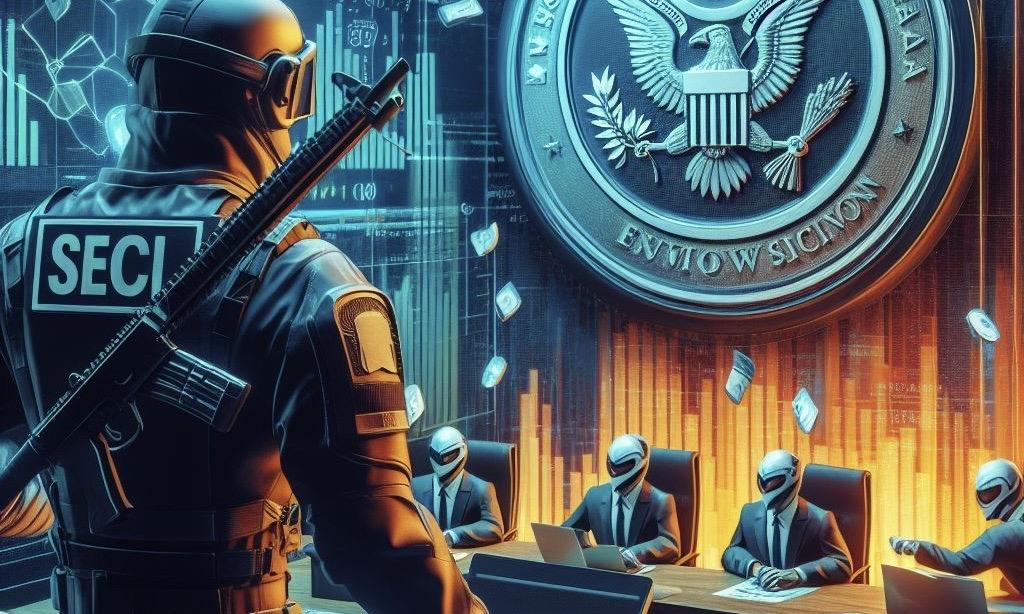
The U.S. Securities and Exchange Commission (SEC) intensifies its oversight of the cryptocurrency industry by issuing a Wells Notice to Uniswap Labs, the entity behind the world's largest decentralized exchange (DEX), on April 10. Amid regulatory escalations, Uniswap Labs vows to defend its operations, asserting the legality of its platform and the non-security status of traded assets, including its native UNI token.
Uniswap Labs Braces for SEC Battle, Affirms Protocol, and Operations Remain Unchanged
In a recent report by CryptoPotato, Uniswap Labs confirmed the news in a press release on April 10, reassuring followers that the team is "ready to fight."
"This is the latest political effort to target even the best actors in crypto like Uniswap and Coinbase," the team stated, referring to the SEC's June 2023 lawsuit against the nation's largest centralized crypto exchange.
"All Uniswap products and the Uniswap Protocol are unaffected," they added.
Uniswap Labs is a New York City-based software company that primarily contributes and develops the Uniswap protocol for Ethereum.
Unlike traditional competitors, the protocol allows users to access trading and liquidity crypto tokens without permission, trust, globalization, or centralization.
Uniswap Labs did not specify what the SEC intended to sue over, but the agency's history provides clear indications. Last year, it sued some exchanges, including Binance, Coinbase, and Kraken, for illegally listing alleged securities.
It has also sued several project teams, including Ripple, Terraform Labs, and others, for issuing unregistered securities in cryptocurrency tokens.
Uniswap Labs could be considered guilty of both activities. Not only does its protocol support the trading of thousands of tokens, but it also has its native token, UNI, which provides holders with a share of protocol revenue and voting power on development proposals.
Uniswap Defends Legal Standing, Argues UNI Token and Operations Not Securities
Uniswap argued that the assets "overwhelmingly traded" on its protocol are not securities, citing the court decision in SEC v. Ripple. That includes the UNI token, which it claims does not pass the Howey Test because it does not require investment in a single joint enterprise.
"Even if the Ripple decision and the Supreme Court's Howey test did not foreclose the SEC's arguments, the Uniswap Protocol, web app, and wallet would still not meet the legal definitions of securities exchange or broker," the firm added.
As a decentralized exchange, the firm claimed that current law does not give the SEC authority over self-custodial, on-chain trading decisions.
"The Uniswap technology ecosystem is sufficiently decentralized, much like Bitcoin and Ethereum," Uniswap Labs concluded. "We are confident that our products are on the right side of the law."
Photo: Microsoft Bing







